You might ask if taste is worth losing nutrition when picking dog food. Both taste and function are important for your dog’s health and happiness. New studies show that balancing taste and function helps your dog keep a healthy gut and supports immune function. Dog owners often care most about their pet’s happiness with food, with taste being the fifth most important thing.
Many owners think their dog will like foods if they like them too.
Taste is still a big factor, even for catfood.
You can make smart choices by thinking about both taste and nutrition.
Key Takeaways
Pick dog food that tastes good and is healthy. A good diet helps your dog feel better and stay healthy.
Pay attention to how your dog eats. See which foods your dog likes and which ones your dog does not eat. This helps you pick better food.
Check pet food labels closely. Find food with all the nutrients your dog needs. Make sure it meets AAFCO rules.
Ask your vet for advice that fits your dog. Your vet can help you pick the best food for your dog’s needs.
Think about palatability enhancers. These make food taste better and still give important nutrients.
Palatability in Pet Food
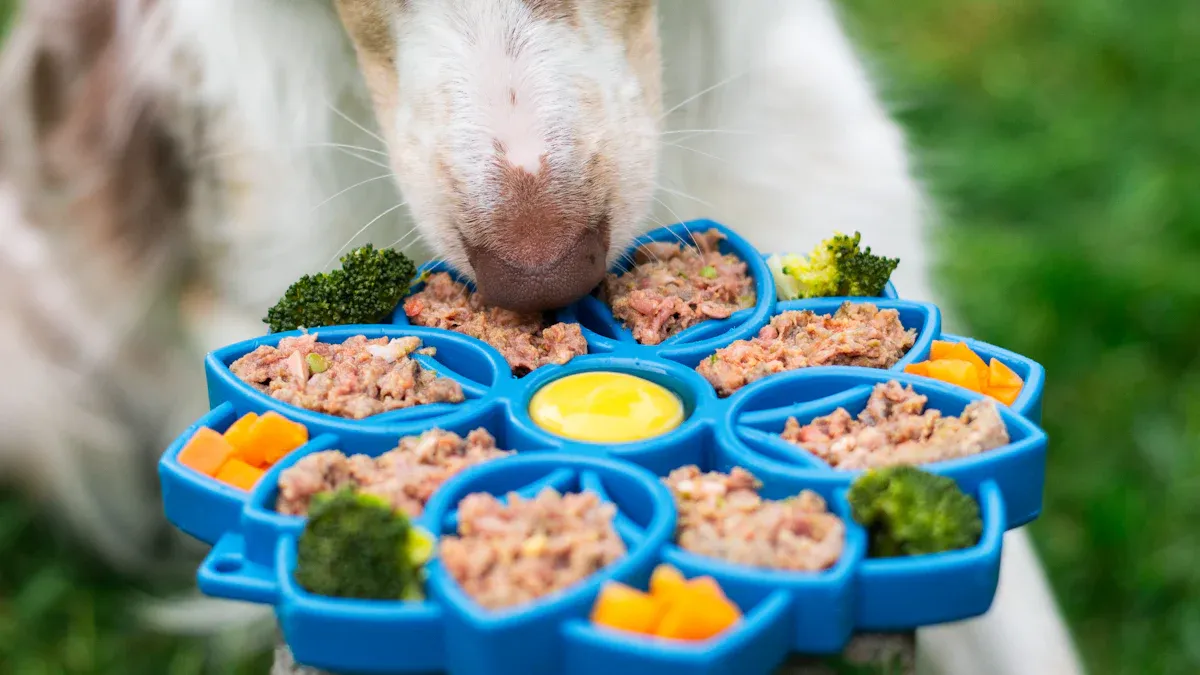
What Influences Palatability
Sometimes your dog gets happy about certain foods. Other times, your dog ignores food. This is because palatability affects what your dog eats. Palatability means how much your dog likes a food. Many things can change palatability in pet food.
Odor preference: Dogs use their strong noses to pick food. Smell is often more important than taste.
Types of meat: Dogs usually like beef best. They like beef more than lamb, chicken, or horsemeat. Cooked or canned meats are liked more than fresh meat.
Nutrient components: Some nutrients, like extra fiber or minerals, can make food taste worse for dogs.
Physical properties: Wet food is often tastier than dry food. Dogs like wet food because it feels and tastes more like real meat.
Palatability is not just about flavor. Texture, smell, and how food looks can change your dog’s interest.
Role of Palatability Enhancers
Palatability enhancers make dog food more appealing. These ingredients boost taste, smell, and texture. They work by making your dog’s senses stronger. Meals become more fun for your dog.
Evidence Type | Description |
|---|---|
Sensory Enhancement | Palatability enhancers improve taste, smell, and texture. This leads to higher food acceptance. |
Volatile Compounds | Certain compounds make dogs eat more food. This shows they are important for palatability. |
Maillard Reaction | This reaction creates flavors and smells. These appeal to dogs’ natural instincts. |
Dogs have about 300 million olfactory receptors. This means smell is very important for palatability. Palatability enhancers use special compounds to make food smell and taste better. Some enhancers hide bad flavors or add new ones. Studies show palatability enhancers help dogs eat more food. They also help dogs try new foods faster. Coating techniques improve the texture and look of dog food.
Palatability enhancers make meals more fun for your dog. They help you pick food your dog will enjoy. They also support good nutrition.
Canine Food Preference and Nutrition
How Dogs Choose Their Food
You might see your dog sniff or lick the bowl before eating. Sometimes, your dog walks around the bowl first. This shows the first bite is very important. That first taste helps your dog decide to eat or not. Dogs pick food based on many things. Smell, taste, and texture all matter. Dogs use their strong noses to check food before tasting. The first bite tells your dog about flavor and texture. If your dog likes it, you will see happy eating. Your dog will want more of that food.
Veterinary research says food preference is not just about taste. Many things affect what your dog likes to eat. Here is a table that shows these things:
Nutritional Factor | Influence on Preferences |
|---|---|
Nutritional Composition | Pet owners pick foods they think are complete and healthy. |
Physiological Status | Dogs’ needs change with age, size, breed, and if they are neutered. |
Convenience and Shelf Life | Owners like foods that are easy to store and prepare. Dry food is popular because it keeps longer. |
Health Needs | Owners choose foods for health, like hydration or weight control. |
You can check what your dog likes by watching at mealtime. Notice which foods make your dog excited. See which foods your dog ignores.
Balancing Taste and Health
You want your dog to enjoy food and stay healthy. It is important to balance taste and nutrition. If you only care about taste, your dog may get sick. Foods with lots of sugar or fake colors can cause health problems. Your dog could get fat, get diabetes, or have bad teeth. Some foods, like corn or some meats, can cause allergies or tummy trouble. If your dog feels sick after eating, feeding habits may change. You might see vomiting, diarrhea, or no appetite.
Pick foods with good nutrition for your dog’s needs. Choose products that fit your dog’s age, size, and health. Check labels and watch how your dog acts at meals. The first bite should make your dog happy and healthy. When you balance taste and nutrition, your dog will like healthy food more.
Tip: If your dog eats less or seems sick, call your vet. Acting early can stop bigger health problems.
Pet Food Formulations and Function
Key Nutritional Components
You want your dog to be healthy and full of energy. To help with this, you should know what is in pet food. Every nutrient helps your dog’s body in a different way. Here is a table that lists the main nutrients and why they are important:
Nutrient Group | Role in Canine Health |
|---|---|
Proteins | Muscle development and repair |
Fats | Energy and cellular function |
Carbohydrates | Sustained metabolic activity |
Vitamins | Enzymatic processes |
Minerals | Structural support |
Water | Hydration and cellular transport |
You should also check for fiber, macro-minerals, and trace minerals. These nutrients help your dog digest food and keep their body working well. Good pet food has the right balance of nutrients and is easy to digest. This helps your dog get the nutrition they need.
Science-Driven Formulations by Nuzoko
You might see new things in pet food today. Some brands use multi-coated kibble, flavor enhancers, and special ingredients. These changes make food taste better but still keep it healthy. Some companies add prebiotic fibers to help older dogs with digestion. Others use special things to make food taste and feel better.
Nuzoko uses science to make better pet food. The brand adds ingredients that help your dog’s brain and feelings. Nuzoko follows rules from groups like AAFCO. This means every food is made for dogs at different ages. You can trust that each recipe helps your dog grow, have energy, and stay healthy.
Nuzoko’s team works to make food tasty and good for your dog. You get food your dog likes and that keeps them healthy. When you pick Nuzoko, you help your dog feel good at every meal.
Risks of Prioritizing Palatability
When Taste Overrides Nutrition
Sometimes, your dog likes tasty food more than healthy food. If you only pick food for taste, your dog may get less nutrition. Many special diets for sick dogs do not taste good. They use ingredients that help with health problems. If your dog is sick, you might want to find tastier food. These foods often do not have the right nutrients. This can make your dog’s health worse.
Choosing tasty food can mean your dog eats meals with poor nutrition, especially with special diets.
Veterinary diets do not taste as good because of their special recipes. This can be hard for dogs that do not want to eat.
You might pick tastier foods that do not help your dog’s health, making sickness harder to fix.
You should pay attention to how your dog eats. Dogs who eat only for taste may skip foods that help them get better. Pet food makers add things to make food taste better. These things can change how your dog eats and cause obesity. Body condition shows your dog’s health better than body weight. Obesity can make your dog want even tastier food. This can change how your dog eats and uses energy.
Obesity in dogs can make them want more tasty ingredients, so less tasty food is not liked.
Body condition is a better way than body weight to see how obesity changes eating and energy use.
Tasty additives in pet food can mess up how much your dog eats and cause obesity.
Long-Term Health Impacts
Giving your dog tasty but weak food can cause health problems over time. Some studies show certain diets can cause heart issues in dogs. Other studies show no effect, but you should always check what your dog eats. Here is a table with results from new research:
Study | Findings |
|---|---|
Chloe et al. | Pea-based diet linked to DCM in dogs. |
Transition to grain diet | DCM symptoms got better and heart health improved. |
Leach et al. | No DCM signs in dogs eating different diets for 30 weeks. |
Donadelli et al. | No change in taurine or health in Labradors on grain-free diet for 26 weeks. |
You should watch how your dog eats and looks. If you see changes in appetite or energy, check the food’s nutrition. Tasty diets may make your dog eat more, but they can hide health risks. Always balance taste and nutrition to keep your dog healthy.
Tip: Watch how your dog eats and looks. If you see changes, ask your vet.
Finding the Right Balance
Reading Labels for Palatability and Function
You want your dog to like meals and stay healthy. Reading pet food labels helps you pick food that tastes good and is healthy. First, check if the food meets AAFCO rules for complete and balanced nutrition. This makes sure your dog gets all the nutrients needed for their age.
Look for good animal proteins and fats. These help food taste better and keep muscles strong. Many brands use flavor coatings or spray fat on food to make it tastier. You can also look at the label for eight main things, like meat as the first ingredient. Salt can make food taste better, but too much is not good for your dog. Always compare what is in the food, not just how it tastes.
Here is a simple checklist for reading labels:
Criteria | Description |
|---|---|
Nutritional Completeness | Make sure the food is complete and balanced for your dog’s age. |
Life Stage | Check if the food fits your dog’s age and activity. |
Formulation Method | See if the food was tested in feeding trials or by recipe. |
Manufacturer Expertise | Pick brands with trained nutritionists. |
Learn about the brand’s safety checks. | |
Research Conducted | Choose foods that are backed by science. |
You can try a two-bowl test at home. Give your dog two foods and see which one they like more. Serve food at room temperature to make it smell and taste better. Change to new foods slowly over a week to avoid stomach problems.
Tips for Choosing Dog Food
Picking the best food for your dog can be hard. You want food that tastes good, is healthy, and makes your dog happy. Here are some tips to help you choose:
Pick foods tested in feeding trials. This means the food tastes good and is healthy.
Look for contact info on the label. You can ask the company questions.
Choose brands with veterinary nutritionists. Experts make sure the food is good for your dog.
Stay away from strange ingredients. These can cause allergies.
Check how the food is made. How it is made changes taste and nutrition.
Pick foods with good ingredients. Meat should come first, with less fillers and fake stuff.
Feed your dog a commercial diet that is complete and balanced. Treats should be low in calories, like carrots or snap peas. Change foods slowly and think about probiotics for digestion.
Nuzoko uses science to make food that tastes good and is healthy. The brand uses good proteins, careful ingredient choices, and recipes backed by research. You can trust each meal helps your dog stay healthy and enjoy eating.
Consulting Your Veterinarian
Your vet is important for your dog’s nutrition. They give advice based on what your dog needs. Vets help you read labels and explain which nutrients matter most.
If your dog needs special food, your vet can help you pick the right one. They also help with allergies, weight, or health problems. Here is how your vet helps:
Benefit of Consulting a Veterinarian | Description |
|---|---|
Tailored Nutrition Guidance | Advice just for your dog’s needs. |
Understanding Nutritional Labels | Help with reading pet food labels. |
Managing Special Dietary Needs | Tips for dogs with health problems. |
Always talk to your vet before making big changes to your dog’s food. This helps your dog get the best care and nutrition. Your vet can also help you watch your dog’s health and change food if needed.
Tip: Keep a list of your dog’s favorite foods and any problems. Share this with your vet for better advice.
By reading labels, using these tips, and talking to your vet, you can find the right balance between taste and nutrition. This helps your dog stay healthy, happy, and enjoy meals.
Catfood vs Dog Food: A Brief Comparison
Differences in Palatability Needs
You might see your cat and dog act differently at mealtime. Cats are picky and like certain foods more. Dogs eat many kinds of food and are less choosy. This is because cats and dogs have their own taste and smell needs. Catfood must smell strong and taste good to cats. Cats like soft, moist food with a strong smell. Dogs eat both wet and dry food, but wet food is their favorite.
Here is a table that compares wet and dry foods for cats and dogs:
Aspect | Wet Food | Dry Food |
|---|---|---|
Palatability | Pets usually like wet food more | Pets like dry food less |
Sensory Characteristics | Wet food is softer and smells stronger | Dry food is harder and smells less |
Nutrient Profile | Wet food is closer to what cats eat in nature | Dry food has more carbs |
Taste Sensitivity | Cats notice amino acids in meat | Dogs can taste sweet things |
Serving Size | Wet food needs more volume for same calories | Dry food needs less volume for same calories |
Cats need food with lots of protein and fat. They cannot taste sweet things, but they sense amino acids in meat. Dogs can taste sweetness and need less protein than cats. Never feed catfood to dogs or dog food to cats. Each food is made for different health needs.
Nuzoko’s Approach to Pet Nutrition
You want your pets to eat healthy food. Nuzoko knows cats and dogs need different diets. Cats are obligate carnivores. They need more protein, fat, and special nutrients like taurine and arginine. Dogs are omnivores. They need protein, fat, and more carbs for energy.
Here is a table that shows the main nutrition differences:
Nutrient | Cats (Obligate Carnivores) | Dogs (Omnivores) |
|---|---|---|
Protein | At least 26% | At least 18% |
Crude Fat | At least 9% | At least 5.5% |
Carbohydrates | Cats need less carbs | Dogs need more carbs |
Taurine | Cats must have taurine | Dogs do not need taurine |
Arginine | Cats must have arginine | Dogs do not need arginine |
Vitamin A | Cats need vitamin A in food | Dogs make their own vitamin A |
Niacin | Cats need more niacin | Dogs need less niacin |
Nuzoko uses science to make catfood that fits what cats eat in nature. The brand also makes dog food that gives energy and keeps dogs healthy. You can trust Nuzoko to give your pets tasty and healthy meals. This helps your pets feel good and stay happy every day.
You want your dog to enjoy meals and stay healthy. Do not sacrifice nutrition for taste or ignore what your dog likes. A healthy diet must be complete and balanced. Look for foods that meet AAFCO standards.
Balanced nutrition supports growth, weight control, and long-term health.
Ignoring nutrition or taste can lead to health issues or picky eating.
Brands like Nuzoko use science to create food that is both tasty and nutritious.
Choose wisely. Your informed choices help your dog live a happy, healthy life.
FAQ
What makes dog food taste good to dogs?
Dogs like food with strong smells, meaty flavors, and soft textures. You can look for foods with real meat and natural fats. Wet food often tastes better than dry food.
How do I know if my dog food is healthy?
Check the label for complete and balanced nutrition. Look for quality proteins, vitamins, and minerals. Foods that meet AAFCO standards help your dog stay healthy.
Can I switch my dog’s food quickly?
You should change food slowly. Mix new food with old food over a week. This helps your dog avoid stomach upset and makes the transition easier.
Should I ask my vet before changing dog food?
Always talk to your vet before making big changes. Your vet knows your dog’s needs and can help you pick the best food for health and happiness.