You want to build a pet food brand that stands out. Choosing between OEM and ODM models shapes how much control, customization, and investment you need. OEM lets you design your own recipes and packaging, while ODM offers ready-made solutions you can brand as your own. Nuzoko supports both paths, helping you decide what fits best. Many brands pick OEM or ODM for reasons like cost savings, faster launch, more customization, and access to expert innovation. Understanding the differences in the OEM vs ODM debate helps you make the right choice for your business.
Key Takeaways
OEM lets you decide everything about your pet food recipes and packaging. You can make your brand special with OEM.
ODM helps you start your pet food brand quickly. It costs less and uses products that are already made.
Think about what your brand wants. Pick OEM if you want to change things and have control. Pick ODM if you want to save money and go fast.
Nuzoko works with both OEM and ODM. They help you look at your choices and find what works best for you.
Use a checklist to see what your brand needs. This helps you pick the right way to make your pet food.
OEM vs ODM: Quick Overview
Which Model Fits Your Brand?
You want your pet food brand to stand out in a busy market. The oem vs odm decision shapes your path. If you want to create a unique recipe or design your own packaging, oem gives you full control. You can work with a manufacturer like Nuzoko to bring your vision to life without building your own factory or hiring a research team. This model works well if you have a clear idea and want to protect your brand’s identity.
If you want to launch quickly, odm offers a faster route. You choose from ready-made pet food formulas and packaging. You can add your brand name and start selling right away. Odm helps you respond to trends and meet customer needs fast. Many brands use odm to test new products or enter new markets with less risk.
Tip: Think about your goals. Do you want full control and a custom product? Oem fits best. Do you want speed and lower costs? Odm may be the answer.
Key Factors for Pet Food Brands
When you choose between oem and odm, consider what matters most to your business. Here are some key points:
Oem lets you create high-quality pet food without owning a factory or research team.
Odm and private label services help you enter the market quickly with products tailored to pet owners’ needs.
Many pet owners want unique and personalized products for their pets.
Custom flavors, special packaging, and dietary options attract more customers.
Retailers who offer customizable options often see higher sales and stronger customer loyalty.
Small retailers prefer low minimum order quantities and fast delivery, so flexible supply chains matter.
You should match your choice to your brand’s needs, resources, and customer expectations. Nuzoko supports both oem and odm, helping you find the right fit for your goals.
OEM Pet Food Explained
OEM Definition
You might wonder what OEM means in pet food. OEM stands for original equipment manufacturer. In pet food, OEM is when a company makes special pet food formulas. You can sell these formulas with your own brand name. OEM is a lot like contract manufacturing. For example, a factory that makes a famous vet diet can also make a private-label formula for another store. You get good nutrition for pets at fair prices. The OEM pet food market is important in pet care. Manufacturers make products the way you want. You sell these products with your brand name. OEM lets you offer special recipes and packaging. You get to control how your pet food looks and what is in it.
Note: OEM pet foods help you build your brand. You pick what goes in your products and how they look.
OEM Process for Brands Like Nuzoko
You begin the OEM process by telling a company like Nuzoko your ideas. You talk about your goals for design and development. Nuzoko listens and helps you make a custom recipe. You pick the ingredients, flavors, and nutrition. Nuzoko uses its modern factory to make the pet food. You work together on how the product will look. You choose the packaging and branding. Nuzoko takes care of making the food, checking quality, and shipping. You get finished products ready to sell. You can spend more time on marketing and growing your brand. OEM gives you lots of choices and control. You can change your recipes or packaging as your business grows. Nuzoko helps you at every step of design and making the food. You get help from their knowledge about OEM and pet nutrition.
Steps in the OEM process with Nuzoko:
Share your brand ideas and product goals.
Work together on recipe design and development.
Pick packaging and branding styles.
Nuzoko makes the food and checks quality.
Get finished products for your market.
You can look at oem vs odm to see what fits you best. OEM lets you make a pet food line that matches your brand values. You get control over design and development, and you can sell products that are different from others.
ODM Pet Food Explained
ODM Definition
You may hear the term odm when you look for pet food suppliers. odm stands for original design manufacturer. odm means you choose from ready-made pet food recipes and packaging. You do not need to create a new formula or design. odm manufacturing lets you pick a product, add your brand name, and start selling. Many brands use odm to enter the market quickly. You can test new ideas without a big investment. odm gives you a simple way to offer quality pet food under your own label.
Note: odm is a smart choice if you want to launch fast and keep costs low. You get expert support from the original design manufacturer.
ODM Process with Nuzoko
You can use odm manufacturing with Nuzoko to build your pet food brand. Nuzoko has a wide range of pet food products ready for you. You start by looking at their odm catalog. You pick the recipes and packaging that fit your market. Nuzoko helps you add your logo and brand details. You do not need to worry about research or development. Nuzoko handles the science, safety, and production.
Here is how the odm manufacturing process works with Nuzoko:
Review Nuzoko’s odm product catalog.
Select the pet food formulas and packaging you want.
Share your brand name and design ideas.
Nuzoko customizes the packaging with your brand.
Nuzoko produces and checks the quality of your products.
You receive finished goods, ready to sell.
odm manufacturing saves you time and money. You can respond to market trends quickly. You do not need to manage a factory or hire a research team. Nuzoko’s odm manufacturing gives you access to proven recipes and safe production. You can focus on sales and building your brand. Many brands use odm manufacturing to test new products or enter new markets. You can compare oem vs odm to see which model fits your goals. odm manufacturing with Nuzoko gives you a simple and reliable way to grow your pet food business.
Key Differences Between OEM and ODM

When you look at oem vs odm, you see big differences. These differences can change your brand’s future. Knowing these key differences helps you pick the right model for your pet food business. Let’s see how each model changes things like customization, control, cost, and speed.
Product Design & Customization
Customization is a main difference between oem and odm. With oem, you control your product’s recipe, ingredients, and packaging. You can make a pet food line that matches your brand’s ideas. This helps your products stand out from others. You can pick special flavors, nutrition, and packaging. These choices help your brand get noticed.
Odm works in a different way. You pick from ready-made products and packaging. You can add your brand name and logo. But you cannot change much else. Odm is good if you want to launch fast or try new ideas. You still get some choices, like picking packaging or adding your logo. But the main recipe stays the same. Odm is a good choice for brands that want to move fast.
Tip: If you want a unique product with lots of choices, oem is best. If you want speed and easy changes, odm is better.
Intellectual Property & Control
Intellectual property and control are also big differences between oem and odm. The table below shows how they compare:
Aspect | OEM (Original Equipment Manufacturing) | ODM (Original Design Manufacturing) |
|---|---|---|
Design Ownership | You keep ownership of your design and intellectual property. | ODM owns the design and intellectual property. |
Control | You have full control over the product design. | You have limited control; you select from ODM’s catalog. |
Manufacturing Focus | Manufacturer follows your specifications. | ODM designs and manufactures products independently. |
With oem, you decide every part of your product. You own your recipes, packaging, and branding. This helps you protect your ideas and build your brand. Odm gives you less control. You use the manufacturer’s designs. You do not own the intellectual property. You focus on branding and selling. The odm supplier does the rest.
Cost & Investment
Cost and investment are also important differences between oem and odm. Oem usually needs more money at the start. You pay for research, development, and custom packaging. This helps you make a special product for your brand. Oem lets you create something unique.
Odm costs less to start. You do not pay for new recipes or packaging. You pick from products that already exist. This saves money and lowers risk. Odm is good for brands with small budgets or those trying new markets. You can grow bigger later if your products do well.
Note: Oem costs more at first but gives you more control. Odm costs less and helps you start with less risk.
Time to Market
Speed is important in pet food. Time to market is a key difference between oem and odm. Here is how they compare:
Odm lets you start selling fast. You use existing designs and get to market quickly.
Oem can be fast if you only make small changes.
Full oem takes longer because you make new recipes and packaging.
Odm gives you a full solution, but special changes can take more time.
If you want to follow trends or try new ideas, odm helps you move fast. Oem takes longer but gives you a product that is all yours.
How Nuzoko Helps You Leverage Both Models
Brands like Nuzoko help you use both models. You can use oem to make special products with lots of control. This helps you stand out and protect your ideas. You can also use odm to launch new products fast and see what customers like. This mix helps you grow your business, keep your brand strong, and offer many products. Nuzoko knows both oem and odm, so you get expert help no matter what you choose.
Pros & Cons of OEM
OEM Advantages for Pet Food Brands
Choosing the oem model gives your pet food brand many good things. You get to control how your products are made. You can make special recipes and pick your own packaging. A partner like Nuzoko helps you with every step. Here are some main benefits:
You can launch your products faster than building your own factory. This means you reach customers sooner.
You use advanced technology like extrusion or freeze-drying without spending a lot at first. You can offer high-quality pet food right away.
Your partner knows a lot about making pet food. Nuzoko’s team follows safety rules and understands pet nutrition.
You get help with making recipes and designing packaging. This makes your brand stand out from others.
If your oem partner has export licenses, you can sell in other countries. This gives your brand more chances to grow.
You save money because you do not need your own factory or a big team.
Tip: OEM lets you change your recipes and packaging as your brand grows.
OEM Drawbacks
There are also some hard parts with oem. Making new products takes time and planning. You must explain your ideas clearly to your partner. Sometimes, you wait longer for custom recipes or packaging. You need to trust your partner to make good products. If you want to change something, you may need to follow many steps. OEM is best if you have a clear idea and want a strong, unique brand.
Note: OEM is a good choice if you want full control and are ready to spend time making your products.
Pros & Cons of ODM
ODM Advantages for Pet Food Brands
You can find many reasons why pet food brands choose odm. This model helps you enter the market quickly and with less risk. You do not need to build your own factory or buy expensive equipment. Instead, you work with a partner who already has the tools and knowledge. This makes odm a cost-effective way to start your brand.
Some of the main benefits of odm manufacturing include:
Cost-Effective Entry: You save money because you do not need to invest in your own plant or machines.
Faster Time to Market: You can launch your products quickly, which is important in a fast-changing industry.
Customization and Branding: You can choose from different formulas and packaging options to match your brand’s style.
Scalability: You can increase your orders as your business grows without worrying about production limits.
Many brands in Europe, North America, and Japan use odm to stay ahead in the market. They get innovative designs, lower costs, and quick product launches.
You also get to own your brand and focus on marketing. Odm lets you test new ideas with less risk. You can improve product quality and shorten production cycles. This flexibility helps you respond to trends and customer needs.
ODM Drawbacks
Odm does have some limits. You may not have full control over the product’s recipe or design. Most of the time, you pick from existing options. This means your product might look or taste similar to others using the same odm supplier. If you want a unique formula or special features, odm may not offer enough choices.
You also depend on your manufacturing partner for quality and supply. If you want to make big changes, you might need to switch to oem. Odm works best if you want to move fast and keep costs low, but it may not fit brands that want total control over every detail.
Choosing Between OEM and ODM
Assessing Your Brand’s Needs
Picking between oem and odm starts with knowing your brand’s goals. You need to think about what you want to sell and how much control you want. Some brands want to make new recipes and be different. Others want to move fast and use products that already work. Both models can help your business grow, but each one fits different needs.
You should ask yourself these questions:
Do you want to make a new recipe or use one that works?
Is it important for you to control every part of your product?
Are you ready to spend money on research, or do you want to save time and money?
Does your brand want to create new things, or do you want to follow trends quickly?
You also need to look at what you have. Knowing how the factory works helps you see what you can do. Quality control is important for both models. You want your pet food to be safe and healthy. Nutritionists help make good recipes. Their skills can help your brand stand out with better food and new ideas.
Decision Checklist
You can use this checklist to help you pick between oem and odm. It shows you the main steps for both models:
Decide what kind of pet food you want. Pick dry or wet food, age group, and any special diet.
Make a list of suppliers that have the products and changes you want.
Check if the supplier delivers on time at least 95% of the time. Make sure they answer your questions in one day.
Ask for ingredient lists and how the food is made.
Order samples. Test how the food feels, smells, and how the package looks.
Make sure they have certifications like HACCP, ISO, or FDA.
Talk about the smallest order you can make, how long it takes, and how you pay. Get all the details in writing.
Ask about after-sales help. Make sure you know the rules for fixing problems, recalls, and talking to them.
Tip: Use this checklist for both oem and odm. It helps you compare and pick what is best for your brand.
Here is a table to help you compare the two models:
Step | OEM Model | ODM Model |
|---|---|---|
Product Design | Full customization | Limited to catalog options |
Control | High | Moderate |
Investment | Higher upfront | Lower upfront |
Time to Market | Longer | Faster |
Product Innovation | High potential | Moderate |
Quality Control | Direct involvement | Relies on supplier |
Flexibility | High | Moderate |
Nuzoko’s Strategic Sourcing Support
Nuzoko helps you do well no matter which model you pick. The team supports both oem and odm for pet food brands around the world. You get many product choices, which makes picking between oem and odm easier. Nuzoko’s experts help you with new ideas, quality checks, and working with suppliers.
You can work with Nuzoko to make a special recipe or pick a ready-made one. The company’s nutritionists help you make products that fit your brand’s promise. Nuzoko’s modern factory makes sure every product is high quality. You also get help with shipping, certifications, and after-sales service.
Nuzoko is your partner for finding the right products. You save time, spend less money, and get new ideas. The team helps you compare models and choose the best one for your market plan.
Picking between oem and odm does not have to be hard. With the right partner, you can focus on growing your brand and making new products. Nuzoko gives you the tools and help to make the best choice for your business.
You have learned about the big differences between OEM and ODM pet food models. The table below shows the main points:
Factor | OEM Description | ODM Description |
|---|---|---|
Costs | OEM costs more because you pay for tools and design. | ODM costs less since the manufacturer handles tools and design. |
Design Expertise | You need strong design skills in your company for OEM. | ODM is good if your company does not have design skills. |
Branding | OEM lets you use your own brand and do your own marketing. | ODM products are usually sold with the manufacturer’s brand. |
Industry Requirements | OEM is best if your product needs special rules or certifications. | ODM may not always meet strict industry rules as well as OEM. |
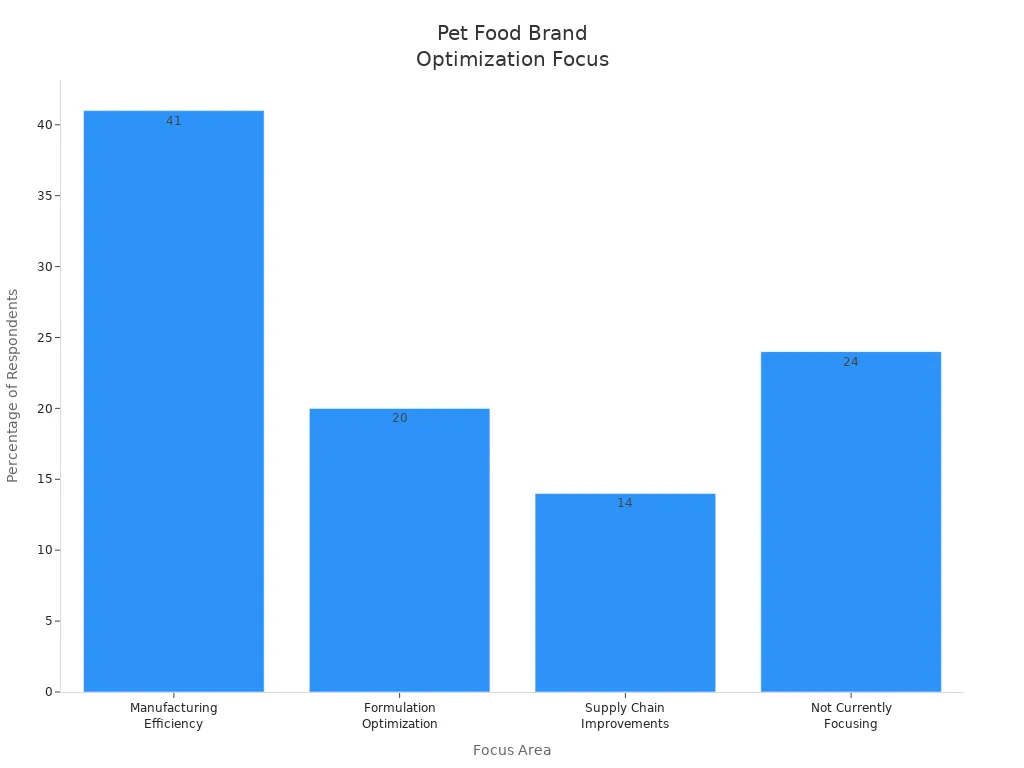
You should pick the model that matches your brand’s needs and what you have. The chart below shows what areas pet food brands work on most:
Use this checklist to help you choose:
Make sure the protein level is right.
Check if the food is grain-free.
Look for important certifications.
Try out samples.
Check if deliveries have been on time.
Nuzoko is ready to help you as a strong partner. These last tips about oem and odm can help you pick the best way for your brand. With good support, you can do well in the pet food business. Remember these tips as you decide what to do next.
FAQ
What is the main difference between OEM and ODM pet food?
OEM lets you design your own pet food formula and packaging. ODM gives you ready-made products to brand as your own. You get more control with OEM. You get faster results with ODM.
Can I switch from ODM to OEM as my brand grows?
Yes, you can start with ODM for speed and low cost. Later, you can move to OEM for more control and unique products. Many brands use this strategy to test the market first.
How does Nuzoko support both OEM and ODM models?
Nuzoko offers expert help for both models. You can create custom recipes with OEM or choose from proven formulas with ODM. Nuzoko guides you through every step, from product design to delivery.
Is there a minimum order quantity for OEM or ODM pet food?
Most suppliers set minimum order quantities. OEM usually requires higher minimums because of custom work. ODM often allows smaller orders. Always check with your supplier for details.
Which model is better for launching a new pet food brand quickly?
ODM works best for a fast launch. You pick from existing products and add your brand. This saves time and helps you enter the market quickly.