

Functional dog food gives your pup more than just basic nutrition. You find carefully chosen ingredients that support health needs like digestion, joints, and skin. Each part of the recipe works to keep your dog active and happy. About 13% of dog owners now choose these diets. Many do this because they want wellness, digestive support, and better health. When you pick the right petfood, you help your dog live a fuller life.
Key Takeaways
Functional dog food does more than just feed your dog. It helps with things like digestion, joints, and skin.
Pick pet food with good proteins like chicken, fish, or eggs. These help your dog grow strong muscles and have energy.
Find foods with omega-3 fatty acids. These help your dog have healthy skin and a shiny coat. They also lower swelling.
Choose dog food with natural fiber like beet pulp or oats. This helps your dog digest food and feel full longer.
Talk to your veterinarian before you change your dog’s food. This makes sure your dog’s health needs are met.
Core Petfood Ingredients

Proteins and Sources
Dogs need protein to build strong muscles. Protein helps them grow and stay healthy. Puppies need more protein to build new tissue. Adult dogs use protein to keep their muscles strong. Older dogs might need extra protein to stop muscle loss.
Pet food uses many types of protein. Animal proteins like chicken, beef, fish, eggs, and lamb are complete. They have all the amino acids your dog needs. Plant proteins like soy or wheat gluten are not complete. They need to be mixed with other proteins. Some brands use new proteins like cricket or silkworm pupae. These are full of amino acids and easy to digest.
Here is a table that shows different protein sources in petfood:
Protein Source | Digestibility | Amino Acid Completeness | Typical Use in Dog Food |
|---|---|---|---|
Chicken | Very high | Complete | Named main ingredient, premium food |
Beef | High | Complete | Premium brands, some dry foods |
Fish | High | Complete | Sensitive diets, specialty foods |
Eggs | Highest | Complete | Limited ingredient foods |
Lamb | High | Complete | Allergies, specialty brands |
Soy | Moderate | Incomplete | Used in plant-based or economy |
Wheat Gluten | Moderate | Incomplete | Fillers, plant-based diets |
Corn Gluten | Low | Incomplete | Fillers, budget foods |
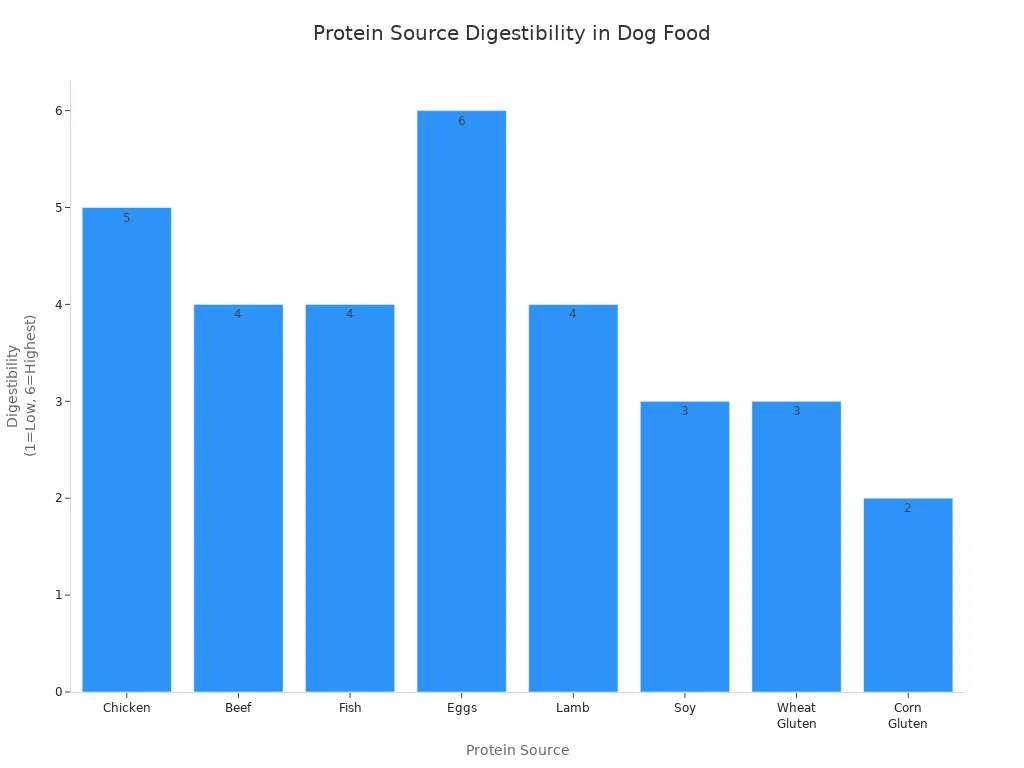
Animal proteins give dogs what they need with fewer calories. This helps dogs who need to watch their weight. Some petfood mixes plant proteins like potato or pea protein. This makes a complete amino acid profile.
Tip: Pick foods with chicken, fish, or eggs first. These help your dog’s muscles and energy.
Fats and Fatty Acids
Fats give dogs energy and help them use vitamins. Fats also make their skin and coat shiny. Dogs need both saturated and unsaturated fats. Polyunsaturated fats, like omega-3 fatty acids, are very important. Dogs cannot make these, so they must eat them.
Pet food uses fish oils, flaxseed oil, and animal fats. Marine oils like salmon or sardine oil have EPA and DHA. These help the brain and lower swelling. Plant oils like flaxseed give ALA. ALA helps keep the skin’s water barrier strong.
Type of Fat/Fatty Acid | Description | Primary Sources |
|---|---|---|
Omega-3 Fatty Acids | Essential for anti-inflammatory properties and various health benefits. | Marine sources (fish oils from salmon, sardines, anchovies), Plant sources (flaxseed oil, chia seeds, walnuts) |
Eicosapentaenoic Acid (EPA) | Known for reducing inflammation, especially in arthritis and skin allergies. | Fish oils, particularly from marine sources. |
Docosahexaenoic Acid (DHA) | Critical for cognitive function and brain health. | Fish oils, especially from salmon and sardines. |
Alpha-linolenic Acid (ALA) | Plant-based omega-3, less effective than EPA and DHA. | Flaxseed oil, chia seeds, walnuts. |
Omega-3 and omega-6 fatty acids work together for healthy skin and coat. EPA and DHA from fish oils help with allergies and skin issues. You may see these as special ingredients in functional petfood.
Carbs and Fiber
Carbohydrates give dogs energy and help with digestion. Functional dog food uses carbs like rice, oats, and sweet potatoes. Fiber is a type of carb that helps the gut. Dogs cannot digest fiber in the small intestine. Fiber feeds good bacteria in the large intestine.
Common fiber sources are beet pulp, apple pomace, carrot pomace, and whole grains. Beet pulp has a good mix of fiber. Apples and carrots give fermentable fiber. This helps good gut bacteria grow. Oats add soluble fiber that helps the immune system.
Studies show high-fiber diets help dogs feel full. Dogs eat less and feel satisfied longer. High protein and high fiber together help dogs feel even fuller.
Note: Fiber is key for digestion and weight control. Choose petfood with natural fiber like beet pulp or oats.
Vitamins and Minerals
Vitamins and minerals help your dog’s body work right. They help with vision, bones, the immune system, and more. Functional dog food has many vitamins and minerals to stop problems.
Vitamin/Mineral | Key Function | Signs of Deficiency |
|---|---|---|
Vitamin A | Vision, immune health, skin | Night blindness, poor coat |
Vitamin D | Calcium absorption, bone health | Rickets, weak bones |
Vitamin E | Antioxidant, cell protection | Muscle weakness, reproductive failure |
Vitamin K | Blood clotting | Excessive bleeding |
B-Complex | Energy metabolism, nervous system | Poor growth, anemia |
Calcium | Bone and teeth structure, muscle contraction | Weak bones, fractures |
Phosphorus | Bone structure, energy metabolism | Weakness, poor growth |
Zinc | Skin health, immune function | Hair loss, skin lesions |
Copper | Enzyme function, coat color | Poor coat, anemia |
Selenium | Antioxidant, immune function | Weakness, reproductive failure |
Manganese | Bone and cartilage development | Joint deformities |
Potassium | Muscle and nerve function, fluid balance | Weakness, paralysis |
Magnesium | Enzyme function, muscle relaxation | Muscle tremors, poor growth |
Sodium | Fluid balance, nerve transmission | Dehydration, muscle cramps |
Iron | Hemoglobin formation, oxygen transport | Anemia, weakness |
Iodine | Thyroid hormone production, metabolism | Goiter, poor growth |
Premium foods use chelated minerals and bioavailable vitamins. These are easier for your dog to use. Organic minerals from whole foods can help the immune system more than inorganic ones.
Pick petfood with many vitamins and chelated minerals. This keeps your dog healthy and active.
Functional Ingredients for Dogs

Probiotics and Digestive Health
Probiotics are live, helpful bacteria that keep your dog’s gut healthy. Many functional dog foods have these good bacteria. They help your dog digest food and stop stomach problems. Giving your dog probiotics keeps the right balance of bacteria in the gut. This balance can lower diarrhea, help with allergies, and even calm anxiety.
Many studies show that probiotics make dogs’ digestion better. Here is a table with some important results:
Study Description | Findings |
|---|---|
Dogs with IBD had less swelling and better gut lining. | |
Slab51® probiotic mixture | Helped dogs with colonic problems feel better. |
Lactic acid bacteria product | Dogs on NSAIDs had less diarrhea. |
Probiotics with Lactobacillus and Bifidobacterium | Dogs with diarrhea had more good bacteria in their poop. |
L. rhamnosus MP01 or L. plantarum MP02 | Puppies had fewer stomach infections. |
Probiotic mixture for acute hemorrhagic diarrhea | Dogs got better faster and had healthier guts. |
Probiotic compound therapy | Dogs with IBD had stronger gut walls. |
Probiotics for acute idiopathic diarrhea | Dogs got better sooner and needed fewer antibiotics. |
Probiotics during antibiotic therapy | Dogs had less diarrhea and their gut bacteria stayed healthy. |
Probiotics for inflammatory bowel disease | Dogs had healthier gut bacteria and felt better. |
Functional dog food uses many probiotic strains. Each strain helps in a different way. Here are some common strains and what they do:
Probiotic Strain | Documented Benefits |
|---|---|
Bifidobacterium lactis | Helps overweight dogs manage weight. |
Bifidobacterium longum | Helps dogs feel less anxious. |
Enterococcus faecium | Helps overweight dogs with weight control. |
Lactobacillus acidophilus | Makes dog poop more normal. |
Lactobacillus casei | Helps with allergies and digestion. |
Lactobacillus plantarum | Good for your dog’s mouth health. |
Lactobacillus rhamnosus (LGG) | Helps treat diarrhea in dogs. |
Bifidobacterium animalis | Helps dogs with sudden diarrhea. |
Pediococcus acidilactici | May help with skin and gut problems. |
Lactobacillus reuteri | Stops bad bacteria, helps gut health, and lowers swelling. |
Saccharomyces boulardii | Treats diarrhea and protects good gut bacteria during antibiotics. |
Bacillus coagulans | Helps with digestion and boosts the immune system. |
Probiotics can help with allergies, diarrhea, skin problems, and bad breath. Choosing dog food with probiotics helps your dog’s gut and overall health.
Tip: Pick dog food with more than one probiotic strain for the best gut health.
Omega-3s for Skin and Coat
Omega-3 fatty acids are special fats that keep your dog’s skin and coat healthy. You find them in fish oils like salmon oil and in some plant oils. Omega-3s lower swelling and help itchy skin. They also make your dog’s coat shiny and soft.
Studies show omega-3s lower pain and swelling in dogs. Here is a table with some main results:
Study | Findings |
|---|---|
The Effects of Omega-3 Supplementation on the Omega-3 Index and Quality of Life and Pain Scores in Dogs | EPA and DHA lowered pain by 19% and helped with swelling. |
Omega-3 for Dogs’ Skin and Coat: A Senior-Dog Guide | Long omega-3s calm swelling and help skin stay healthy. |
Logas and Kunkle’s 1994 study | Dogs with itchy skin got better with EPA-rich fish oil. |
Mueller et al. 2004 study | EPA and DHA helped dogs with skin problems feel better. |
Most dog foods have too much omega-6 and not enough omega-3. This can cause skin problems and swelling. Functional dog food uses better sources and amounts of omega-3s. Your dog gets a better balance and you see it in their skin and coat.
Note: Omega-3s do more than make your dog look good. They help your dog feel better and move easier.
Joint Support Nutrients
Joint health matters for all dogs, especially older ones. More than 20% of adult dogs have joint pain or arthritis. Functional dog food has nutrients that help joints and lower pain.
Some helpful joint nutrients are:
Glucosamine: Helps cartilage and lowers swelling.
Chondroitin: Slows cartilage loss and helps build new cartilage.
Avocado and soybean unsaponifiables (ASUs): Help dogs heal from joint injuries and lower damage.
Omega-3 fatty acids are also in joint support foods. These fats lower swelling in joints and help dogs move with less pain. Some studies say glucosamine and chondroitin do not work for every dog, but many owners see good results.
If your dog is stiff or has trouble moving, joint support nutrients in dog food can help them stay active.
Antioxidants for Immunity
Antioxidants protect your dog’s cells from harm. They help the immune system and fight sickness. You find antioxidants in foods like blueberries, spinach, and green tea. Omega-3s also work as antioxidants.
Functional dog food often has polyphenols, which are plant parts that fight bad molecules. These help your dog’s brain too. Diets with lots of antioxidants can help older dogs remember and learn better.
Common antioxidants in dog food are:
Vitamin E
Vitamin C
Polyphenols from fruits and veggies
Omega-3 fatty acids (EPA/DHA)
Feeding your dog food with antioxidants helps them stay strong and healthy. Their immune system works better and they get well faster after being sick.
Antioxidants are important in functional dog food. They help your dog live longer and stay healthy.
Pet Food Production at Nuzoko
Recipe Development
Making good dog food starts with recipe planning. At Nuzoko, experts and vets work as a team. They use new science to make healthy recipes. Each recipe helps with things like digestion or joints. They pick proteins, fats, and other helpful ingredients with care. This makes sure your dog gets all the nutrition they need.
Ingredient Sourcing and Quality
You want your dog to have the best food. Nuzoko picks ingredients using strict rules. They choose suppliers who care about the planet. Every batch of ingredients gets checked for quality. Only safe and top-quality ingredients go into the food.
Processing and Packaging
Nuzoko uses special ways to keep food fresh. Freeze-drying helps lock in taste and nutrients. The team cooks food at the right heat to save vitamins. After cooking, the food is packed right away. Nuzoko uses sealed, safe bags to keep food fresh. This keeps out water and germs until it gets to you.
Safety and Testing
Safety is always important at Nuzoko. They follow strong safety rules and test every batch. Labs check for germs and other dangers. Nuzoko meets high standards for pet food safety. They have regular checks and get certified often. Safety steps keep going until the food leaves the factory.
Tip: Pick brands that care about safety and quality. Your dog’s health needs safe food.
Functional vs. Commercial Pet Food
Ingredient Choices
Functional pet food uses better proteins and healthy fats. It adds nutrients that help your dog feel good. Commercial pet food often has fillers and by-products to save money. Some brands use grains, corn, or soy as main ingredients. These may not have all the amino acids your dog needs. They might not help your dog stay healthy.
Studies show ingredient safety can be a problem in commercial pet food.
Researchers found lots of mycotoxins in raw pet food ingredients from Brazil.
Tests on 26 commercial dog foods showed mycotoxin levels that could cause health problems over time.
European pet food had many mycotoxins even with rules in place.
Some studies link chemicals in commercial pet food to cancer in animals.
Functional pet food tries to avoid these risks. It uses safe ingredients and checks quality carefully.
Processing Differences
How pet food is made changes its nutrition. Commercial pet food uses high heat, extrusion, and canning. These ways can lower nutrient quality and make bad compounds. The industry uses these methods to keep food fresh longer and make it cheaper.
Functional pet food uses gentle cooking, freeze-drying, or air-drying. These ways keep vitamins, minerals, and flavors safe. You get more nutrients and fewer fake additives. Brands that care about functional nutrition use new technology to protect ingredients.
Health Benefits
You want your dog to feel great. Functional pet food helps with digestion, joints, and immunity. Commercial pet food gives basic nutrition but may not help with wellness.
Studies compare health results:
Study Description | Findings |
|---|---|
Study on AGEs in dog foods | Dogs eating dry food had more urinary AGEs than dogs eating raw diets. |
Bridglalsingh et al. | Dogs eating canned food had higher plasma AGEs than those eating dry food. |
Oba et al. | Different pet foods had different AGE levels, and high AGE intake may hurt health. |
Functional pet food lowers bad compounds and helps your dog stay healthy longer. Choosing food with proven benefits helps your dog live better.
Choosing Commercial Pet Food
Assessing Dog Needs
Every dog is unique. You need to look at your dog’s age, size, and activity level before picking a food. Puppies, adults, and seniors all need different nutrients. For example, puppies need more protein and calories to grow. Adult dogs need balanced nutrition to stay healthy. Senior dogs may need fewer calories but more joint support. Dogs with health problems, like allergies or sensitive stomachs, need special diets. You should not rely only on general advice. Talk to your veterinarian to get a plan that fits your dog. Your vet can help you choose food that matches your dog’s life stage and health needs. Groups like AAFCO and FEDIAF set standards for dog food. These standards make sure your dog gets the right nutrients at every stage.
Tip: Always check with your vet before making big changes to your dog’s diet.
Reading Labels
Ingredients: The list shows what is in the food. Ingredients appear in order by weight. High-quality foods list real meats or fish first.
Nutritional Adequacy Statement: This tells you if the food is “complete and balanced” for your dog’s life stage.
Guaranteed Analysis: This section shows the minimum protein and fat, and the maximum fiber and moisture.
Product Name and Intended Species: Make sure the food is for dogs.
Feeding Directions: Follow these to feed the right amount.
You can use Nuzoko’s products as an example. Nuzoko lists clear ingredients, follows international standards, and provides feeding guides. This helps you make smart choices for your dog.
Vet Consultation
You should always talk to your veterinarian before switching your dog’s food. This is very important if your dog has health problems like diabetes, kidney disease, or allergies. If your dog is on a prescription diet, ask your vet before making changes. Young puppies, senior dogs, or dogs showing signs of illness need extra care. Your vet can help you avoid problems and make sure your dog gets the best nutrition.
Note: Your vet is your best partner in keeping your dog healthy and happy.
Functional dog food does more than feed your dog. It has ingredients that help joints, skin, and digestion. Many owners see less itching and more energy after changing foods.
Omega-3s and antioxidants keep your dog’s body and brain safe.
Probiotics and prebiotics make digestion work well.
Choosing the right food helps your dog feel better and live a happier life.
FAQ
What makes functional dog food different from regular dog food?
Functional dog food has special ingredients. These help with things like digestion, joints, and skin. Regular dog food gives only basic nutrition. Functional food helps your dog feel good and stay active.
Can puppies eat functional dog food?
How do you know if your dog needs functional food?
You might see itchy skin, stiff joints, or stomach problems. Your vet can help you choose the right food. Dogs with allergies or joint pain often do better on functional diets.
Are probiotics safe for dogs?
Most dogs can have probiotics safely. Many functional foods have probiotics. They help with digestion and keep the immune system strong. Ask your vet before giving new supplements.



