

What are the biggest mistakes new cat food brands make? You want the best for your cat, so choosing the right petfood matters more than you think. Studies show that high-quality, nutrient-dense foods help cats stay healthy. Poor choices often lead to preventable health issues. Cats with high-protein diets keep better body condition and face fewer health problems. Brands like nuzoko use science to create nutrition that supports your cat’s well-being. Look for practical advice and insights to help you make smart choices.
Key Takeaways
Pick good cat food instead of cheap food. Cheap food can have bad ingredients that may hurt your cat.
Always check the ingredient list. Find foods with real animal proteins. Stay away from foods with fillers or fake additives.
Pick the right formula for your cat’s age. Kittens, adults, and seniors need different nutrition to stay healthy.
Watch out for too many carbohydrates. Cats do best with lots of protein. Do not buy food with too many grains or fillers.
Store cat food the right way to keep it fresh. Use containers that close tightly. Put opened wet food in the fridge so it does not spoil.
Quality vs. Price in Petfood
Why Quality Matters
You might want to pick cat food because it costs less. Many new brands make this mistake too. They try to save money, but this can hurt your cat. Here are some mistakes you should watch out for:
Picking food just because it is cheap. Cheaper petfood often has lower-quality ingredients. Your cat might need to eat more to get enough nutrition. This can end up costing you more money later.
Not looking at the ingredient list first. Some brands use ads to make you forget about the real ingredients.
Believing words like “premium” or “natural” always mean better food. These words do not always mean the food is healthier.
If you choose cat food just because it is cheap, your cat might not get enough nutrition. Lower-quality ingredients mean your cat may have to eat more food. This can cause health problems and more vet visits. Brands that care about quality give your cat more nutrition in smaller amounts.
You want your cat to be healthy. Good food helps your cat stay strong and happy. Fake flavors and colors can hide bad nutrition. Strong preservatives can cause health problems, like vitamin loss. Fillers in bad food add empty calories and can make your cat sick.
Spotting High-Quality Brands Like nuzoko
You can find good petfood brands by checking for science-based nutrition and clear ingredient lists. Brands like nuzoko use research and care about quality. They use good meats and do not add useless fillers. Nuzoko works hard to make sure their food is safe and healthy. When you pick a brand that cares about nutrition, you help your cat live longer and feel better.
Ingredient Transparency
Reading Petfood Labels
You want to know what is in your cat’s food. Reading the label helps you choose better food. Cat food labels must follow strict rules. These rules keep your cat safe and help you find good brands. Here is a table that lists some important rules for ingredient transparency:
Regulation/Requirement | Description |
|---|---|
cGMP Regulations | Factories must follow Current Good Manufacturing Practice under 21 CFR 111 or 21 CFR 117. |
Certificates of Analysis | Suppliers must give COAs to prove ingredients are pure and strong. |
Ingredient List | The list must show ingredients by weight, using AAFCO-approved names. |
Language Requirements | All label information must be in the country’s official language. |
GRAS Notifications | The FDA will soon require formal GRAS notifications for all food ingredients by 2026. |
When you check a petfood label, look for these things:
Named animal ingredients, like chicken or fish, mean good protein.
Make sure at least two animal proteins are in the first seven ingredients.
Organ meats, like chicken liver, give your cat extra nutrients.
Chelated minerals help your cat use nutrients better.
If you see these on the label, the food is good for your cat.
Avoiding Hidden Additives
Some ingredients are hard to spot. You need to look for them to keep your cat safe. Propylene glycol is a chemical that keeps food moist but can hurt your cat’s red blood cells. Artificial flavors come from chemicals and do not add nutrition. They only make the food taste better.
Common hidden additives are:
By-products: These are animal parts that are not always good quality.
Propylene glycol: This chemical can cause serious health problems, like Heinz body anemia.
Always read the label for simple, clear ingredients. Brands that care about transparency, like nuzoko, do not use these risky additives. They focus on safe and healthy recipes.
Protein and Meat Quality
Adequate Protein Levels
Cats need lots of protein to stay healthy. Always check the protein amount on the label before you buy cat food. Experts say cats need different protein levels at each age. Here is a table that shows what your cat needs:
Life Stage/Condition | Recommended Protein Level |
|---|---|
Adult Maintenance | Minimum 26% |
Growth and Reproduction | Minimum 30% |
Optimal Health (General) | Likely 40% or higher |
Older Cats (12+ years) | Nearly 50% |
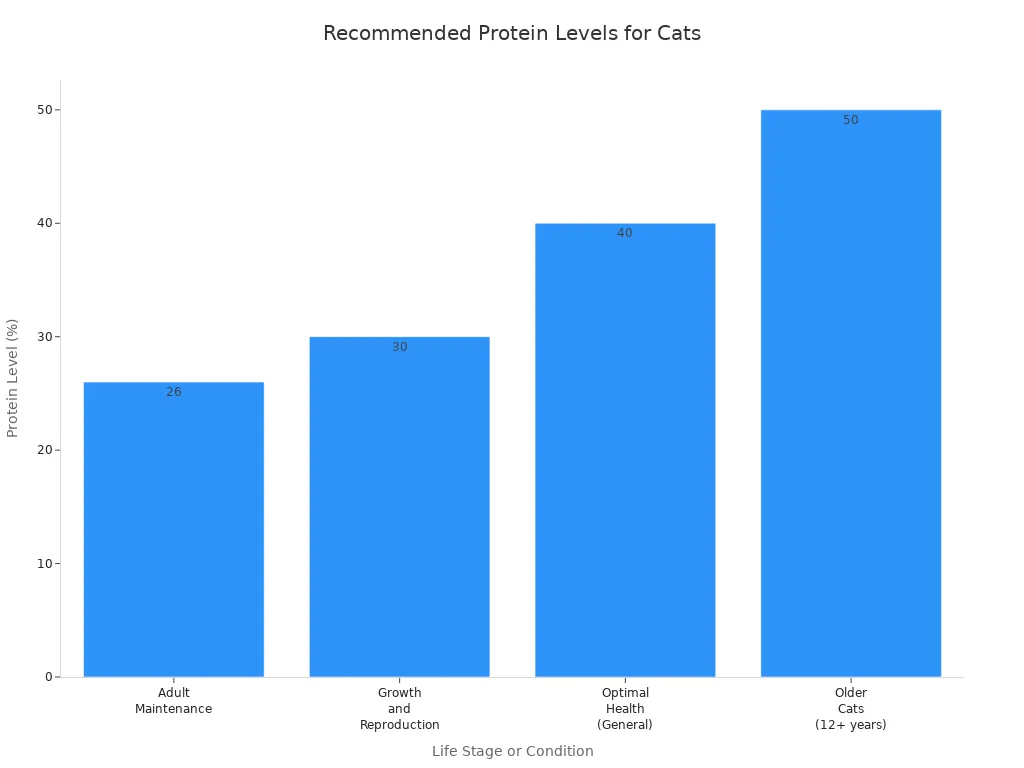
Most cat foods have between 28% and 55% protein. Kittens and older cats need even more protein than adult cats. Enough good protein helps your cat build muscle, have a shiny coat, and stay healthy. Cats are obligate carnivores, so they cannot live well on plant proteins.
Tip: Pick cat foods with animal proteins listed first.
Choosing Premium Meat Sources
The kind of meat in your cat’s food is important. Good meats give your cat amino acids for energy and health. By-products can have some nutrients, but too much processing makes them less useful. Pick foods with clear, named meats.
Some of the best meats for cats are:
Chicken
Duck
Turkey
Rabbit
Fish (Salmon, Mackerel, Tuna, Sardine)
Crustaceans (Shrimp, Prawns)
Cats need a diet high in protein and low in carbs. When you choose foods with these meats, your cat gets the nutrients they need to grow and play. Brands like nuzoko use good animal proteins to help your cat stay healthy at every age.
Life Stage Nutrition
Age-Appropriate Formulas
You want your cat to get the right nutrition at every age. Cats have different needs as they grow. Kittens need food that helps them grow strong and healthy. Adult cats need food that keeps their muscles lean and supports their energy. Senior cats need food that is easy to digest and helps their joints. If you match your cat’s food to their life stage, you help them live a longer and happier life.
Here is a table that shows what cats need at each stage:
Life Stage | |
|---|---|
Kittens | High protein for growth and development |
Adults | Nutrition to maintain lean muscle and activity |
Seniors | Support for joint health and easy digestion |
Cats are obligate carnivores. They need animal protein to stay healthy. They cannot make vitamin A from plants, so they must get it from animal sources. Cats also need more protein for energy. If you choose the right formula for your cat’s age, you give them the best chance to thrive.
Note: Cats have evolved to depend on nutrients found only in animal tissue. Age-appropriate formulas help meet these needs at every stage.
Science-Driven Solutions from nuzoko
You can trust brands that use science to create their recipes. Nuzoko uses research to design formulas for kittens, adults, and seniors. Their team studies what cats need at each age. They use high-quality animal proteins and add nutrients that support growth, muscle, and joint health. Nuzoko’s petfood meets strict standards for safety and nutrition. You get peace of mind knowing your cat’s food supports their health from kitten to senior.
Carbohydrates in Petfood
Risks of Excessive Carbs
You may notice that many cat foods contain grains, potatoes, or peas. These ingredients add carbohydrates to your cat’s diet. Cats do not need a lot of carbs. Their bodies work best with protein and fat from animal sources. Too many carbohydrates can cause problems for your cat’s health.
Here are some risks you should know:
Your cat may get diarrhea if they eat too many carbs.
High carbohydrate diets can raise your cat’s blood sugar levels.
Cats have a short digestive tract. They do not break down starches well. If you feed your cat a diet with lots of carbs, you may see changes in their stool or energy. Some cats gain weight quickly. Others may feel tired or act restless. You want to avoid these problems by choosing food with fewer carbs.
Tip: Always check the label for grains, corn, wheat, or potato. These are signs of high-carb food.
Low-Starch Options
You can help your cat stay healthy by picking low-starch foods. Look for recipes that use animal proteins as the main ingredient. Foods with chicken, fish, or rabbit give your cat the nutrition they need. Brands that focus on science-driven nutrition, like nuzoko, offer low-starch options. These foods support your cat’s energy and help keep their weight in a healthy range.
When you shop for petfood, choose products that list meat first. Avoid foods with lots of fillers or plant-based ingredients. Low-starch diets help your cat digest food better and feel more active. You will see a shinier coat and better muscle tone. Your cat will thank you with more play and purrs.
Note: Cats thrive on diets that match their natural needs. Low-starch foods give them the best chance for a long, healthy life.
Synthetic Nutrients and Additives
Avoiding Harmful Ingredients
You want your cat to be healthy. Some new brands put synthetic nutrients and additives in their food. These can sometimes hurt your cat’s health. You need to know which ingredients are not good. Here are some common synthetic additives that can cause problems for cats: Corn, wheat, and soy are fillers. They do not give your cat much nutrition. These can make your cat gain weight or get sick. Some cats get allergies or even diabetes from these fillers. Propylene glycol is a chemical that keeps food moist. It can cause Heinz body anemia, which is very bad for cats. Always check the ingredient list before you buy petfood. If you see these things, pick a different food. Your cat needs you to make safe choices.
Tip: Pick foods with short, clear ingredient lists. Stay away from foods with lots of chemicals or fillers.
Choosing Natural Formulations
Natural foods give your cat what they need without risky additives. When you choose foods with real meats and clean ingredients, your cat feels better. Here are some good things about natural foods: Your cat will be healthier overall. They get nutrition that fits their needs. There are fewer harmful chemicals and preservatives. Natural recipes focus on what cats really need. Brands that use science, like nuzoko, make foods that help your cat stay well. You will see a shinier coat, more energy, and fewer vet visits. Always pick brands that care about quality and safety.
Food Allergies and Sensitivities

Common Cat Allergens
Sometimes your cat might scratch a lot or have an upset stomach after eating. These signs can mean your cat has a food allergy. Many cats react to certain things in their food. Some ingredients cause more allergies than others, according to vets.
Here are the most common allergens in cat food:
Fish or seafood
Beef
Lamb
Corn
Wheat
Soy
Corn, wheat, and soy often cause food sensitivities. Your cat might get itchy skin or throw up. Some cats may have diarrhea too. Watch for these problems if you switch your cat’s food. If you see these signs, ask your vet about allergies.
Tip: Always read the ingredient list before buying new cat food. This helps you avoid the most common allergens.
Managing Allergies with Trusted Brands
You can help your cat by picking the right food. Trusted brands use clear labels and safe ingredients. This makes it easier to avoid allergens.
Here are some ways to manage food allergies:
Look for named sources in the ingredient list, like “chicken by-products” or “turkey by-product meal.” This tells you what your cat is eating.
Check which ingredients come first. Pick foods with good meats at the top, not just by-products.
Choose brands that tell you where their ingredients come from.
Brands like nuzoko care about clear labels and science-based nutrition. They do not use risky fillers. This helps you find safe food for cats with allergies or sensitivities. When you pick trusted brands, you help your cat feel better and stay healthy.
Formula Changes and Food Switching
Safe Transition Practices
Switching your cat’s food can feel stressful, but you can make it smooth with the right steps. Cats have sensitive stomachs. Sudden changes may upset their digestion. You should always introduce new petfood slowly. Here is a simple timeline to help you:
Rough timeline | Strategy |
|---|---|
Day 1–4 | Add a small amount of new food to the usual food. Watch how your cat reacts. |
Day 5–10 | Increase the new food to 25% and reduce the old food to 75%. Keep an eye on your cat’s eating habits. |
Day 11–15 | Give only the new food after your cat eats it well for five days. |
You can also try these tips to help your cat adjust:
Warm the new wet food a little to make it smell better.
Offer smaller meals more often during the switch.
Use puzzle feeders to make mealtime fun.
Place your cat’s food bowl away from the litter box.
During the first few days, you might see mild changes like softer stools or a small drop in appetite. These usually go away as your cat gets used to the new food.
Preventing Digestive Issues
Some cats may have tummy troubles when you change their food. You should know what to watch for and how to help. Here is a table of common symptoms and what you can do:
Symptom | What It Means | What You Should Do |
|---|---|---|
Loose stool or diarrhea | Gut bacteria are out of balance | Go back to the old food for a while. Try switching more slowly next time. |
Vomiting | Food is too rich or unfamiliar | Skip one meal to let the stomach rest. Start again with small amounts. |
Excessive gas or bloating | Trouble digesting new ingredients | Check for irritants like peas, soy, or certain proteins. |
Loss of appetite | Cat dislikes new food or feels sick | Mix old and new food to encourage eating. |
Lethargy or discomfort | Digestive upset or dehydration | Make sure your cat drinks water. Call your vet if it lasts. |
You can help your cat by watching for these signs. Always make changes slowly and give your cat time to adjust. If problems last more than a few days, talk to your vet for advice.
Petfood Storage and Handling
Keeping Food Fresh
You want your cat’s food to stay fresh and safe. Fresh food keeps your cat healthy and happy. If you leave wet cat food out for more than a few hours, it can spoil. Always put opened wet food in the refrigerator. This keeps it fresh and stops bacteria from growing. Dry food also needs care. Use airtight containers to protect dry food from moisture and pests.
To keep cat food at its best, store it in the original packaging. Place the bag inside a sturdy, airtight container. This method helps keep the food’s flavor and nutrients. You can also see the expiration date and feeding instructions on the package. Always keep cat food in a cool, dry place. Heat and humidity can make food spoil faster and cause mold or bacteria to grow.
Tip: Check the food’s smell and look before feeding your cat. If it smells bad or looks strange, throw it away.
Best Storage Practices
Good storage practices prevent spoilage and keep your cat safe. Here are some simple steps you can follow:
Store dry cat food in its original bag or an airtight container.
Keep food away from heat, humidity, and light.
Cover and refrigerate opened canned food for up to 72 hours.
Use containers that are airtight, moisture-proof, and pest-proof.
Avoid using plastic bags or cardboard boxes, as they can tear and let in pests.
Keep the storage area below 80°F to stop bacteria from growing.
Monitor the storage space to avoid air and light exposure.
Improper storage can lead to mold, bacteria, and other contaminants. Spoiled food can cause stomach problems or food poisoning in cats. Safe storage keeps your petfood fresh and your cat healthy.
You can stop new cat food brands’ mistakes by thinking about your cat’s needs. Some mistakes are giving too much food, using bad ingredients, and not paying attention to allergies. Good brands show what is in their food and help you trust them. Science-based nutrition helps your cat grow strong and have energy. Pick petfood with easy-to-read labels and enough protein. These ideas help you choose better food and keep your cat healthy and happy.
FAQ
What should you look for on a cat food label?
You should check for named animal proteins, clear ingredient lists, and no risky additives. Look for brands that show transparency and use science-based nutrition.
How do you know if a brand is trustworthy?
Choose brands with clear sourcing, research-driven formulas, and positive reviews. Brands like nuzoko share their quality standards and ingredient origins.
Can you switch your cat’s food quickly?
No, you should switch slowly. Mix the new food with the old food over 10–15 days. This helps prevent stomach upset and lets your cat adjust.
Why do cats need different food at different ages?
Cats grow and change. Kittens need more protein for growth. Adults need balanced nutrition for energy. Seniors need easy-to-digest food. Age-appropriate formulas support each stage.



