When you check pet food oem, you find three main costs. These are ingredients, processing, and packaging. If you have a petfood brand or want to start one, you should know about these costs. This helps you control spending, keep your supply chain strong, and make special products. Many brands team up with an expert oem partner like nuzoko to save money and get good quality.
Key Takeaways
Learn about the three main costs in pet food OEM. These are ingredients, processing, and packaging. Knowing this helps you handle your budget well.
Pick good ingredients to make your product healthy and safe. Quality affects how much you spend and how happy customers are.
Work with a skilled OEM partner like Nuzoko. This makes your production easier. It can help you save money and make better products.
Think about packaging choices with care. Good packaging lowers shipping costs. It also keeps your product fresh and brings in more buyers.
Plan your product launch with smart steps. Use market research and social media to share your brand. This helps you reach the right people.
Pet Food OEM Cost Structure
Typical OEM Cost Distribution
Pet food oem costs are split into three main parts. These are ingredients, processing, and packaging. Ingredients usually take up about 40-50% of the total cost. Processing uses about 30-40%. Packaging makes up 10-15%. This can change if you pick different options or if the market changes.
Industry margins are important to know. Gross margins for petfood brands are often between 30% and 40%. Net margins are lower, around 5% to 10%. These numbers show why you need to manage costs well.
Working with a facility like nuzoko can help you save money. Here are some ways you benefit:
You can cut logistics costs by up to JPY 200,000 per 40-foot container with good planning.
You get help with product planning, recipe development, and packaging, which makes things easier.
Key Factors Affecting Costs
Many things can change your oem costs. You should pay attention to these main factors:
Factor | Explanation |
|---|---|
This changes costs because of trade rules, shipping fees, and currency changes. | |
Escalating Costs of Raw Materials | Shortages and higher labor costs make ingredients cost more. |
Technological Advancements | New machines work faster but cost a lot at first. |
Think about these points too:
High-quality ingredients, like organic or rare items, cost more.
Natural ingredients are more expensive than synthetic ones because they are harder to get and process.
Custom recipes need more research and testing, which adds to the cost.
Small batch orders make each unit cost more because setup and testing costs stay the same.
The type of ingredient and how you use it can change the cost. Tablets and capsules are often cheaper.
Fancy packaging can make your total cost higher.
If you are new, keep your formulas simple and use standard packaging to save money.
Knowing these factors helps you make better choices for your pet food oem project. You can balance quality, price, and what the market wants. Nuzoko helps with sourcing, production, and packaging so you can handle these challenges and reach your goals.
Ingredient Costs in Petfood Manufacturing
Types and Sourcing of Ingredients
You need to know the main ingredient groups in petfood. Most recipes use meat, grains, and supplements. Meat can be chicken, fish, beef, or lamb. Grains are usually rice, corn, or wheat. Supplements add vitamins, minerals, and amino acids. These help pets get balanced nutrition. Where you get ingredients affects your total cost. You can buy local ingredients or import them. Local choices may cost less. Imported items can be better quality or special.
If you work with a pet food oem partner like nuzoko, you get many ingredient options. Nuzoko uses high-protein meats and human-grade materials. This helps you make premium products that stand out. Ingredient analysis is important for safety and nutrition. You should check the source and test for quality.
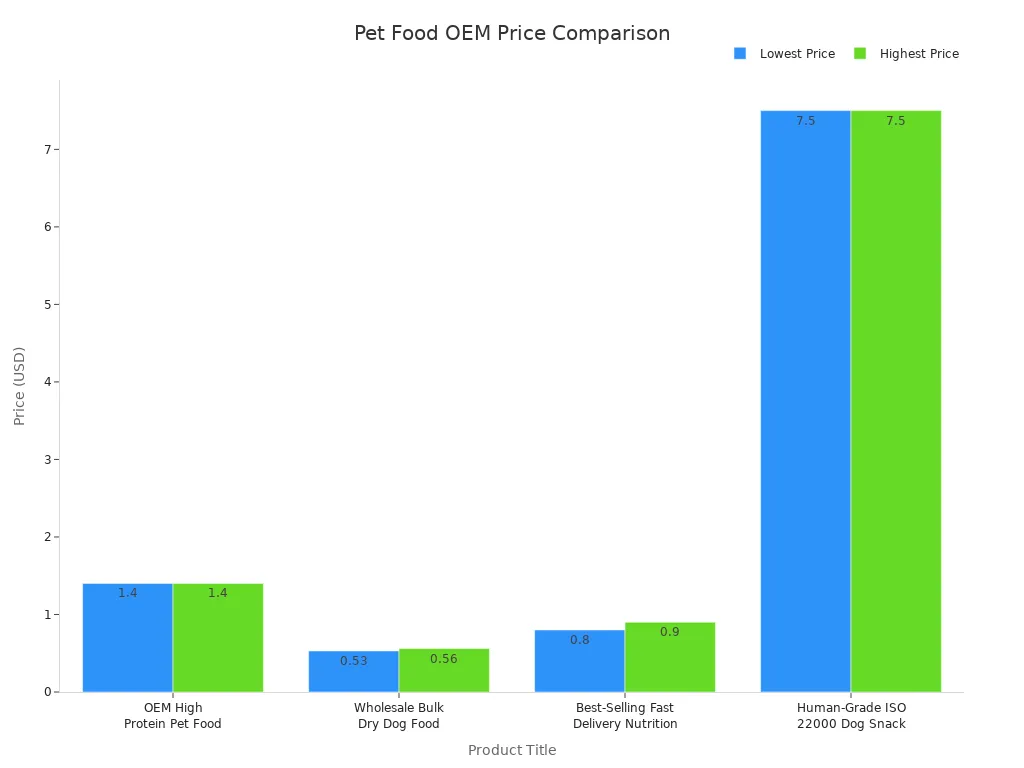
Here is a table showing the price range for different oem ingredients:
Product Title | Price Range (USD) |
|---|---|
OEM High Protein Pet Food Private Label Manufacturer Staple Dry Dog Food | $1.40~$1.40 |
Wholesale Bulk Dry Dog Food with OEM Nutrition Free Samples | $0.53~$0.56 |
Best-Selling Fast Delivery Complete Nutrition 18%-45% Crude Protein Dry Dog Food | $0.80~$0.90 |
Human-Grade ISO 22000 Certified Dog Snack Food Customizable | $7.50~$7.50 |
Quality Impact on Cost
Quality changes how much you pay for ingredients. High-quality or human-grade ingredients cost more than standard ones. You pay extra for better safety, taste, and nutrition. For example, human-grade snacks can cost over $7 per kilogram. Standard dry food may cost less than $1. Nuzoko uses high-protein, human-grade ingredients. This helps you give top nutrition and meet strict rules.
You should always check ingredients before picking a supplier. This step helps you control costs and keep your product safe. Good ingredient sourcing and checking also help your brand’s reputation. If you want to manage costs, set clear goals for quality and nutrition. Work with an oem partner who knows processing and can help you at each step.
Processing Costs for Pet Food OEM
Main Processing Steps
You should know the main steps in pet food oem making. Each step adds to the cost and changes the final product. Here is how the process usually goes:
First, you weigh dry ingredients using your formula. Start with the heaviest ones.
Next, you mix these ingredients in a double-ribbon mixer. You mix for a few minutes to get an even blend.
Then, you move the mix to a hopper for grinding or send it to the preconditioner.
You add heat and moisture to the blend in the preconditioner. This starts cooking the starches.
Meat slurries and fats are added during conditioning. This keeps the mix from clumping and helps it blend well.
The preconditioner must reach about 80°C for at least 30 seconds. This kills germs and follows food safety rules.
These steps help make the food healthy and safe. Good ingredient choices and careful checks at each stage help control costs and keep petfood safe.
Technology, Labor, and Compliance
Technology is important in oem manufacturing. Using machines can lower costs and make work faster. For example, liquid coating systems stop clogging and save time. Micro ingredient automation cuts waste and makes things more accurate. Reprogrammable controls let you change things quickly. Super sack unloaders help move big batches safely and cheaply.
Automation Upgrade | Benefits |
|---|---|
Liquid Coating Systems | Less clogging, better coating, lower maintenance, less downtime |
Micro Ingredient Automation | Less waste, better accuracy, faster process |
Reprogrammable Controls | Easier upgrades, quick changes |
Super Sack Unloader | Fewer packaging materials, lower cost, safer lifting |
Labor and following rules also change your oem costs. You must follow FSMA rules and keep records for tracking. You need to check your machines and train your workers to meet safety standards. These steps cost more but protect your brand.
Batch size and custom orders matter too. Custom orders often need at least 100–500 units. In-stock products may have lower minimums or dropshipping. Automated batching systems help save money by cutting labor and ingredient waste. When you work with nuzoko, you get advanced manufacturing, strict quality checks, and help for big and small orders.
Packaging Costs in Petfood OEM
Packaging Materials and Design
It is important to know how packaging materials and design change your oem costs. Packaging keeps petfood safe and fresh. You can pick from different materials. Each one has its own cost and good points. Here is a table that lists common packaging materials and what they do:
Packaging Material | Description | Common Structures |
|---|---|---|
Biodegradable Pouches | Break down naturally, good for the environment | N/A |
Kraft Paper Pouches | Look premium and eco-friendly | N/A |
High Barrier Films | Keep food fresh and control odors | N/A |
Recyclable Options | Use Polyethylene or Kraft-Polyethylene | N/A |
Compostable Materials | Made from PLA, cellulose, and Kraft Paper | N/A |
Common Structures | Durable, protect against moisture and oxygen | NY/White PE, PET/White PE |
The size and type of packaging can change your oem costs. Small packages cost more because they need special materials and extra work. New designs can help you waste less and keep food fresh longer. Easy-open seals and other features can make costs go up but help you sell more. Eco-friendly packaging, like recyclable or biodegradable types, can cost more at first. Many people want green choices, so you might get better prices in stores.
Aspect of Packaging Design | Influence on Cost |
|---|---|
Smaller food packages | Higher production costs |
Innovative one-piece design | Lower waste, better shelf life |
Convenience features | Higher costs, better sales |
Sustainability | Higher initial costs, better market pricing |
Most of the time, packaging is more than 10% of the retail price. You should check your packaging choices to balance cost and quality. Nuzoko helps you with design and finding good packaging. You get support for strong packaging and good quality checks.
Logistics and Distribution
Packaging also changes how much it costs to ship and deliver petfood. Light packaging lets you send more at once and keeps products safe. Flexible packs use less material and cost less than hard boxes. You need to follow rules like the EU Green Deal. This means using reusable materials and closed-loop packaging. These steps make shipping better and help your brand meet world standards.
Light packaging lets you ship more and pay less for delivery.
Flexible packs save money but may need special planning for shipping.
Following rules makes shipping better and helps the planet.
Nuzoko helps you with shipping and packaging rules around the world. You can save up to JPY 200,000 per 40-foot container with smart planning. Nuzoko gives you help in two languages and clear project updates. You can focus on making choices while Nuzoko handles making, buying, and checking quality. This helps you keep costs low and give your customers great petfood.
You can manage your pet food OEM costs by understanding how ingredients, processing, and packaging affect your budget. Smart choices help you boost quality and save money. Here are steps you can follow:
Research your market and find what sells.
Choose a supplier with strong quality checks, like nuzoko.
Customize your product and packaging to fit your brand.
Plan your launch and use social media for promotion.
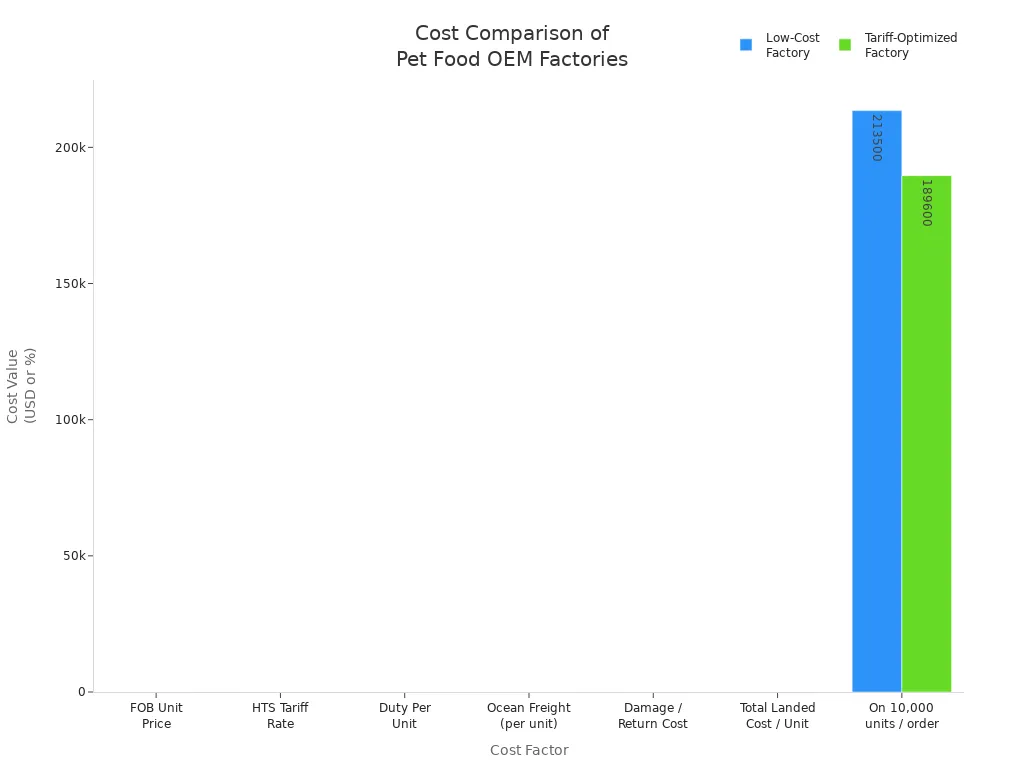
A clear view of each cost helps you make better decisions and grow your brand.
FAQ
What are the main oem development costs in pet food oem?
You pay for making recipes and finding ingredients. You also pay for setting up manufacturing and designing packaging. Compliance checks cost money too. Every oem step adds to your total cost. You should track each cost to see where your money goes. This helps you control your product costs.
How does oem manufacturing affect nutritional quality?
Oem manufacturing lets you pick good ingredients. You can control how recipes are made. Working with experts helps you check nutrition. This lets you make recipes that fit your brand’s standards.
Why is cost transparency important in oem projects?
Cost transparency shows you every cost in the oem chain. You can compare suppliers and plan your budget. It helps you avoid hidden costs. This makes oem development easier and builds trust with customers.
How does packaging impact oem costs and logistics?
Packaging keeps your product safe and affects shipping costs. You need packaging that fits your recipe and keeps food fresh. Good packaging choices can lower oem costs. They also make your supply chain work better.
What steps are involved in oem recipe development and manufacturing?
You start by making recipes and picking ingredients. Then you move to manufacturing. This includes processing, packaging, and checking quality. Each oem step needs careful planning. This helps you control costs and keep your supply chain clear.