

Private label pet food lets you sell pet food with your own brand in your store. This helps you stand out in the petfood market. Private label pet food is about 17% of all pet food sales in the world. Partners like nuzoko can make supply chains easier and help keep quality high. Many store owners worry about food quality, price, and choices. You may have problems making fresh pet food or making a lot of food at once. Customers want safe and healthy pet food with many choices.
Key Takeaways
Private label pet food lets stores sell special products with their own name. This helps stores be different from others in a busy market. Picking a good partner like nuzoko makes making pet food easier. It also makes sure the pet food is safe and good quality. Stores can spend less money by using private label products. This lets them give better prices and grow their business. Changing recipes and packaging helps stores match what customers want. It also helps them keep up with new trends. Being open about ingredients and quality checks builds trust with customers. This can make customers come back and buy again.
Private Label Pet Food Explained
What Is Private Label Pet Food
You might wonder what private label pet food is. This kind of pet food lets you sell it with your store’s name. Another company makes the food for you. You do not need to own a factory or make the food yourself. Many stores pick this way because they can choose their own brand and set prices.
Private label pet foods are made by one company but sold under another company’s brand. For example, Walmart’s Pure Balance is private label pet food. Walmart does not make the food. A co-packer makes it for them.
This way of selling pet food is very popular now.
Private label pet products made $6.2 billion in sales in the last year ending June 2021.
National brands made $33.5 billion in the same time.
Private label sales went up by 11% last year, but national brands did not grow.
If you pick private label pet food, you can give your customers special choices. You can also change your products fast if new trends come up.
Differences from National Brands
You might ask how private label pet food is different from national brands. The biggest differences are in the recipe, quality, and brand. Here is a simple table to help you see:
Aspect | Private Label | National Brands |
|---|---|---|
Formulation | Special recipes made for each brand | Same products for all stores |
Quality Emphasis | Focus on being clear and high quality | Quality can be different |
Private label brands often try to be honest and clear. You can work with partners to make food that fits what you and your customers want. National brands may not let you have this much control. You get to pick what goes into your pet food and how you show it to shoppers.
When you choose private label pet food, you can earn trust from your customers and be different from other stores.
How Private Label Petfood Works
Manufacturing Process
You start with a plan for your pet food. The process has many steps. Each step helps make safe and healthy food. Here is what happens:
Initial Consultation and Strategy
You meet your partner to talk about your goals. You share what food you want and what makes your brand special.Formulation and Product Development
Experts help you make recipes. You pick the best ingredients for your customers. The team checks taste, nutrition, and safety.Pilot Production and Validation
The factory makes a small batch of food. You check if the food is good and meets your standards.Commercial-Scale Manufacturing
When you like the recipe, the factory makes more food. The team checks each batch to keep it safe.Packaging and Labeling
Your food gets packed in the packaging you choose. Labels show what is inside and nutrition facts.
Quality control is important at every step. You want every bag or can to be safe for pets. Here is a table with common quality control steps:
Quality Control Measure | Description |
|---|---|
Ingredient Analysis | Tests for nutrients, safety, heavy metals, and mycotoxins. |
Manufacturing Quality Control | Checks the process using HACCP to find and fix hazards. |
Packaging Integrity Checks | Makes sure packaging has no defects or contamination. |
Storage and Shelf Life Monitoring | Keeps storage safe and tracks expiration dates. |
Regulatory Compliance | Follows AAFCO and FDA rules for safety and labels. |
Other tests include checking nutrients, taste, and digestibility. These tests show pets will like the food and get what they need.
Partner Selection with nuzoko
Picking the right partner is very important. Nuzoko is a strong sourcing and manufacturing partner. You get a facility that handles research, development, and shipping. This means you can trust the whole process.
When you choose a partner, look for these things:
Criteria | Description |
|---|---|
Industry Experience | Find partners with lots of pet food experience. |
Quality Control | Make sure they have strong quality checks. |
Flexibility | They should change production to fit your needs. |
Compliance | Check they follow safety rules and certifications like USDA, GMP, and HACCP. |
Nuzoko has over 20 years in pet food. You get their quality checks, flexible production, and strong compliance. Their team can make dry, wet, and treat foods. You can start small and grow bigger as your brand grows.
Nuzoko uses the OEM/ODM process to help you. You share your ideas, and their R&D team helps from start to finish. You get help with recipes, ingredients, and packaging. Their facility keeps quality high and delivery reliable. You can trust their export-ready process, which lowers risks and makes shipping easier.
Branding and Packaging
Branding and packaging help your pet food stand out. You want your brand to be unique and easy to remember. Show what makes your food special, like premium ingredients or clear labels.
Here are some tips for branding and packaging:
Say what makes your product different.
Use packaging that keeps food fresh and looks nice.
Pick eco-friendly packaging to attract green shoppers.
Share your brand story. Tell why you care about pets and how you pick ingredients.
Teach customers about your food’s benefits. Show how your food helps pet health.
You build trust by being honest and clear. Good branding and packaging help you connect with pet owners. This makes them want to buy your food again.
Tip: Work with nuzoko’s design and R&D teams to make packaging that fits your brand and meets market needs.
Benefits for Retailers in the Pet Food Market
Cost Savings
You can save a lot of money by choosing private label pet food for your store. Many retailers see big savings when they switch from national brands. Here are some ways you can cut costs:
You spend less on marketing because private label products do not need big ad campaigns.
Consumers save over $40 billion each year by picking store brands instead of national brands.
Your savings can be more than one-third of the cost compared to national brands.
These savings help you offer better prices to your customers. You can also use the extra money to grow your business or improve your store.
Brand Differentiation
You want your store to stand out in the pet food market. Private label pet food lets you create special products that no one else has. You can work with your supplier to design food that fits your brand and your customers’ needs. This makes your store different from others.
Custom pet food products help you attract new shoppers. You can show that your store cares about pets and their health. Unique food lines make your brand stronger and help you build trust with pet owners. In a busy pet food market, having your own line gives you an edge.
Market Agility
You need to move fast in the pet food market. Private label pet food gives you the power to launch new products quickly. You can respond to new trends or customer requests without waiting for big companies to change their plans.
You can bring high-quality food to your shelves faster.
You react quickly to what pet owners want.
You focus on your brand and customers while your partner handles the food production.
This speed helps you stay ahead in the pet food market. You can test new ideas and see what works best for your store.
Addressing Quality and Trust Concerns
Product Safety and Standards
You want to make sure your petfood is safe and meets high standards. The FDA checks pet food like it checks human food. This means your food must be safe, made in clean places, and labeled correctly. Canned pet foods must follow special rules to keep out harmful microorganisms. You need to follow the Federal Food, Drug, and Cosmetic Act, which says all animal foods must be safe and made under sanitary conditions.
Here is a table showing important standards:
Standard/Regulation | Description |
|---|---|
SQF Food Safety Code | Handles food safety complaints, risk analysis for allergens, and keeps food safety plans. |
FDA Regulations | Makes sure pet food is safe, made in clean places, and labeled honestly. Special rules for canned foods. |
You protect pet health by following these rules. You also show your customers that you care about quality.
Customization and Innovation with nuzoko
You can create unique food products with nuzoko. Their team helps you design recipes that fit your brand and your customers’ needs. You choose ingredients that support pet health and nutrition. Nuzoko uses advanced research to make sure your food is both tasty and healthy. You can pick high-protein formulas, low-starch options, or special treats. Their facility checks quality at every step. You get food that meets global standards and supports pet nutrition.
Tip: Work with nuzoko’s R&D team to test new recipes and formats. You can offer food that matches the latest trends and keeps pets happy.
Building Consumer Trust
You build trust by being clear and honest about your food. Show your customers how you keep quality high. Share your story about why you care about pet health. Use packaging that lists ingredients and nutrition facts. Ask for feedback from pet owners. Listen to their needs and improve your products. When you show your commitment to quality, you earn loyalty from pet owners.
Share your quality checks.
Explain your food’s benefits for pet health.
Respond to customer questions.
You help pet owners feel confident about your brand. They know you care about their pets’ nutrition and well-being.
Launching Your Private Label Pet Food Line
Market Research
First, you learn about your customers and the petfood market. Find out what pet owners want in food and treats. Look at trends in private label sales and growth. Check which ways work best to reach pet owners. Use surveys, store data, and online reviews to see what pets need. This research helps you choose between private label dog food or cat food. Nuzoko’s team can help you study market data and find new chances.
Choosing a Manufacturing Partner
You need a partner you can trust to make your food. Nuzoko has experience exporting to many countries. They work with inspection groups and follow import rules. When picking a partner, look for these things:
Experience with global pet markets
Works with inspection agencies
Follows import rules
Nuzoko’s facility and network make things easy. You get help finding ingredients and checking quality.
Product Development
You start your brand by picking your audience and products. Decide how your food will look and what message you want to share. Work with nuzoko’s R&D team to make recipes for private label dog food and cat food. You can test new recipes and packaging. Nuzoko helps you make food that meets pet nutrition needs and stands out in stores.
Tip: Use nuzoko’s R&D and design teams to make special food and packaging that match your brand.
Financial Planning
You plan your budget before you launch your food line. Use your own savings and outside funding. Many stores apply for Small Business Administration loans. Get ready for at least six months of costs. Balance popular, low-profit items with special, high-profit ones. Focus on higher-profit products to help your business grow.
Financial Metric | Value |
|---|---|
Forecast period | 3 to 5 years |
Target growth rate | 5-10% year-over-year |
Initial operating costs buffer | $30,000 – $60,000 |
Average SBA loan amount | $215,000 |
Typical interest rate for SBA loan | 5.5% – 8% |
Recommended debt-to-equity ratio | Below 2.0 |
Margin for essential dog food | 35% |
Margin for accessories | 60-70% |
Margin for high-end pet beds | Over 100% |
Logistics and Support
You need good logistics to get food to stores and customers. Nuzoko’s global network makes shipping simple. Their team handles storage, export papers, and after-sales help. You get support with buying and working with suppliers. This help lets you focus on growing your brand and serving pet owners.
Note: Nuzoko’s logistics and buying network help you manage stock and keep your food line running well.
Regulatory Compliance and Quality Control in Petfood
Pet Food Regulations
You have to follow many rules when selling pet food. These rules help keep pets healthy and safe. Every country has its own laws, but the US and EU have similar rules. You must make sure your labels are honest and easy to read. The table below lists the main things private label pet food needs:
Requirement | Description |
|---|---|
Product name and brand name | Each food must have its own name so it stands out. |
Species identification | The label must say if the food is for a dog or a cat. |
Quantity statement | Show how much food is inside using English and metric units. |
Guaranteed analysis | List the main nutrients in the food. |
Ingredient statement | List all ingredients by weight, from most to least. |
Nutritional adequacy statement | Say which pet and life stage the food is made for. |
Feeding directions | Give clear feeding instructions if the food is complete and balanced. |
Name and address of guarantor | Add the maker or seller’s contact information. |
Safety and sanitary conditions | Make sure the food is safe and made in clean places. |
Compliance with AAFCO | Follow AAFCO and federal rules for labels. |
Note: Following these rules helps you avoid recalls and keeps your brand strong.
Quality Assurance with nuzoko
You want your pet food to be safe and high quality. Nuzoko checks quality at every step. Their team uses Good Manufacturing Practices and does hazard checks. They test ingredients and finished food in special labs. You get food that meets world standards and helps pets stay healthy. Nuzoko tracks each batch from start to finish. This helps you find and fix problems fast.
Nuzoko checks for nutrients, taste, and safety.
Their team keeps records for every batch.
You can trust that your food is safe for pets.
Tip: Ask your partner about their quality checks and lab testing before you start.
Documentation and Traceability
You need good records to follow pet food rules. The FDA says you must track every step in the supply chain. You have to keep documents for each stage, from raw materials to finished food. The table below shows what you need:
Requirement Type | Description |
|---|---|
FDA Regulations | Follow FSMA rules for strong traceability. |
Current Good Manufacturing Practices | Use Good Manufacturing Practices and hazard checks to keep food safe. |
Documentation at Touchpoints | Keep records at every stage to protect your business. |
Regular Testing | Test food in special labs to check nutrition and safety. |
Tracking System | Use a system to track all ingredients and finished food for recalls and audits. |
Callout: Good traceability helps you solve problems fast and keeps your customers’ trust.
You protect your brand and your customers when you follow these steps.
Marketing Private Label Pet Food
Promotion Strategies
You need good ways to promote your private label food. Use online and offline methods to reach more pet owners. Online, you can sell on sites like Amazon and Chewy. Show your food on your website and write blog posts to answer pet questions. Social media is great for sharing how your food is made and packed. Offline, you can work with local stores and supermarkets. Set up stations so people can try your food before buying. Trade shows help you meet other retailers and learn about new trends. You can bundle products, like pairing cat wet food with treats, to get new pet owners interested.
Channel Type | Strategy Description |
|---|---|
Online Channels | E-commerce, website highlights, SEO, social media engagement |
Offline Channels | Retail partnerships, trade shows, in-store sampling |
Brand Ecosystem | Cross-selling, product bundles, starter kits |
Customer Feedback
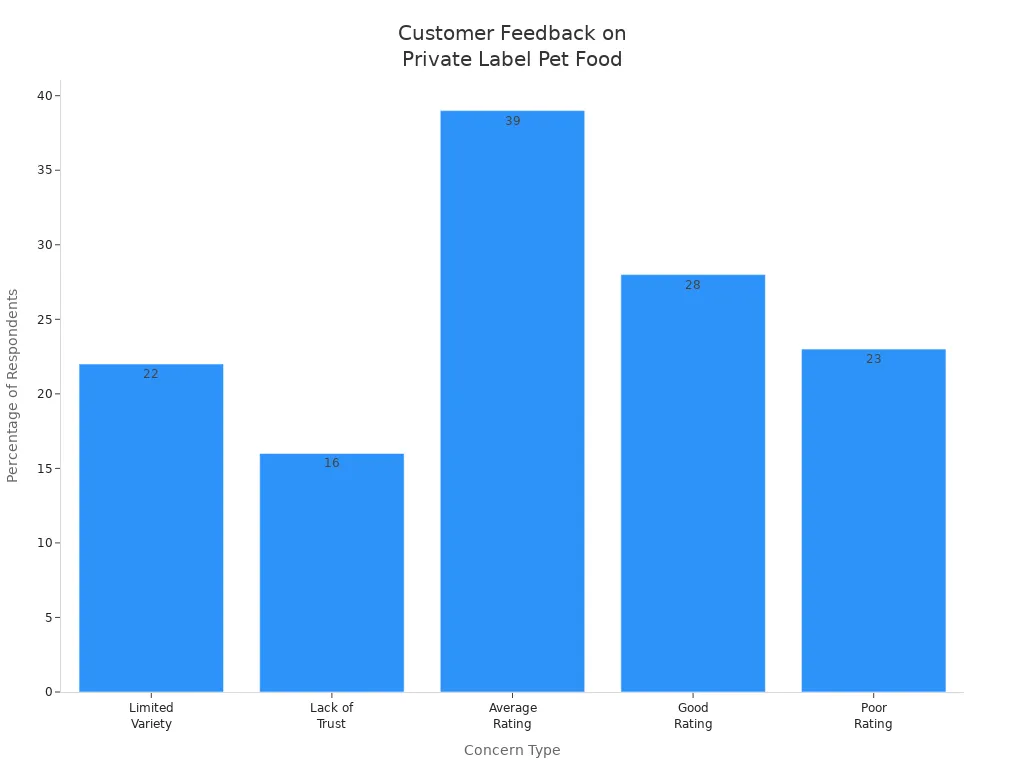
Listening to what customers say helps you make your food and packaging better. Many pet owners want more choices and trust in private label food. Ratings show that 39% of customers give an average score, and 28% rate the food as good. You can use surveys and reviews to learn what pet owners like or dislike. This feedback lets you change your recipes, packaging, and marketing messages.
Tip: Reply to reviews and show how you use feedback to improve your food and packaging. This helps pet owners trust your brand.
Building Brand Value
You build brand value by working with partners and knowing your place in the market. Focus on what makes your food and packaging special. Offer budget-friendly choices without lowering quality. Show your love for pets in your brand story and packaging. Many shoppers stay loyal to brands that care about pets and share their values. Store brands grow when they offer value, quality, and eco-friendly packaging. Keep your packaging clear and honest so pet owners can make good choices.
Work with partners to match your food and packaging to your brand goals.
Change with the market by offering new food types and packaging.
Show you care about pets and the planet through your packaging and food choices.
You get lots of good things when you start private label petfood for your store. The table below shows how you can be different, save money, and give pet owners good quality.
Advantage | Description |
|---|---|
You sell special products that make your store stand out. | |
Cost Savings | You spend less money and help your business grow. |
You help pet owners while experts make the food for you. | |
Economies of Scale | You pay less for each bag when you sell more food. |
Quality Assurance | You keep pet food safe and healthy with trusted partners like nuzoko. |
To keep going, you can:
Make your own pet food recipes and add more products.
Work with bigger stores to reach more pet owners.
Decide how your products look in the store.
Teach your workers about pet nutrition so they can help shoppers.
You make your brand strong when you pick good partners and follow these steps. If you want to know more, read industry reports or talk to experts like nuzoko.
FAQ
What is private label pet food?
You sell pet food with your own brand name. A trusted manufacturer like nuzoko makes the food for you. You get to pick how the packaging looks. You do not need your own factory.
How do you ensure pet food quality?
You pick partners who check quality very well. Nuzoko uses lab tests and ingredient checks. They follow world standards. You look at batch records and ask for safety papers.
Can you customize recipes for your store?
You work with nuzoko’s R&D team to make special recipes. You choose the ingredients and formats. You test samples before selling them. You offer food that matches what your customers want.
What are the main benefits for retailers?
You save money and make your brand stronger. You can react fast to market changes. You offer special products. Nuzoko helps with shipping and finding supplies.
How do you handle pet food regulations?
You follow rules for labels, safety, and ingredients. Nuzoko helps you meet FDA and AAFCO rules. You keep records for every batch. You use tracking systems for recalls.



