

You see OEM Cat Food manufacturing in 2026 as a careful and modern process. The main steps are ingredient sourcing, preparation and mixing, extrusion and drying, cooling and coating, and packaging. Ingredient quality and safety matter at every step. Technology is important with tools like artificial intelligence, blockchain for tracking, and new ways to keep nutrients strong. The market keeps growing:
The OEM cat food market size in 2026 will be USD 66.48 billion.
This is more than USD 62.76 billion in 2025.
The market will grow at a CAGR of 5.93% from 2026 to 2031, reaching about USD 88.65 billion by 2031.
You get benefits from new ideas that make things faster, safer, and better for the planet. Here are some of the newest changes you see:
Advancement Type | Description |
|---|---|
Artificial Intelligence | Predictive analytics help guess demand and manage inventory. |
Blockchain Technology | Transparency and ingredient tracking become normal. |
Novel Processing Techniques | Nutrient strength stays high and taste gets better. |
Functional Ingredients | Probiotics, prebiotics, and adaptogens help health. |
Subscription Box Services | Convenience grows with regular private label choices. |
Sustainable Ingredient Sourcing | Ethical choices include cage-free, grass-fed, and organic ingredients. |
Regulatory Scrutiny | Stricter quality checks protect your pet’s health. |
Key Takeaways
OEM cat food manufacturing in 2026 cares about good ingredients and safety at every step. This makes sure your cat gets the best food.
Technology like AI and blockchain helps make things faster and clearer. It is now easier to follow where ingredients come from and keep track of supplies.
More companies are using green packaging and picking good ingredients to help the Earth. They want to protect the planet by making better choices.
There are strict rules and checks to make sure each batch of cat food is safe. This helps you feel calm about what your cat eats.
New ways of making cat food keep the nutrients strong and the taste good. This makes sure your cat likes every meal.
OEM Cat Food Ingredient Sourcing
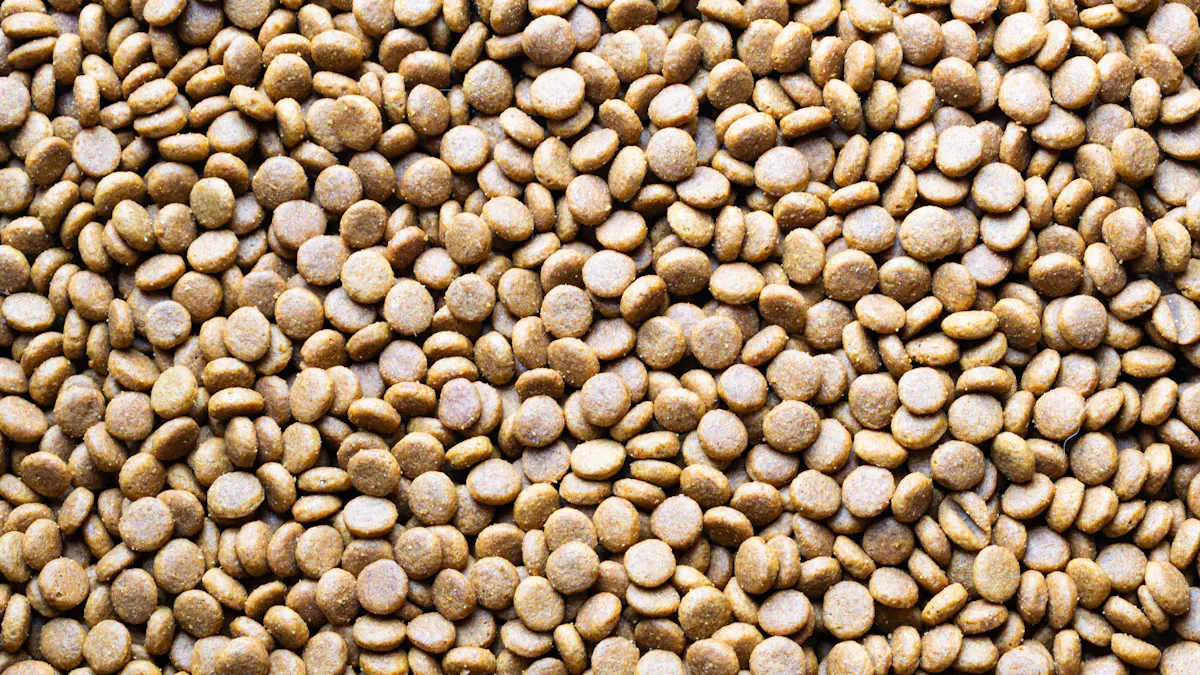
Supplier Selection and Vetting
You want your cat to eat safe food. That means companies must pick good suppliers for OEM Cat Food. In 2026, there are very strict rules for choosing suppliers. Companies check everything before they work with someone. They want human-grade ingredients, clear information, and strong safety rules. You can see the main things they look for in the table below:
Criteria | Description |
|---|---|
Human-Grade Ingredient Verification | Only 100% human-grade ingredients with no preservatives, meeting human food quality and safety standards. |
Complete Ingredient Transparency | Full disclosure of ingredient origin, sourcing practices, and supplier information; no artificial additives. |
Manufacturing Safety Standards | Facilities meet human food manufacturing standards, with open kitchens for transparency. |
Third-Party Testing and Quality Control | Rigorous testing for safety and nutritional adequacy, exceeding industry standards. |
Proven Health Benefits | Developed with veterinary nutritionists and supported by independent research on digestibility and health. |
Companies work with veterinary nutritionists and use outside research. This makes sure every batch is good for your cat’s health. Suppliers must pass third-party checks and give certificates of analysis. These steps keep your pet safe and help you feel calm.
Ingredient Quality and Traceability
You want to know where each ingredient comes from. OEM Cat Food makers use new technology to track everything. They use electronic ERP systems and barcode scanning. Every ingredient and finished product gets its own code. The code stays with the product the whole time. You get updates right away about stock and production.
Suppliers must give certificates of analysis.
Companies need compliance letters and feed safety agreements.
Digital scorecards show how well suppliers do.
Third-party checks make sure things are safe and good.
Digital lot coding lets you see each batch. Every batch gets a special code that does not change. This helps you know where ingredients came from and how they were used. If there is a recall, you can find the problem fast. Now, transparency and traceability are normal in OEM Cat Food sourcing.
Preparation and Mixing
Ingredient Cleaning and Weighing
You want your cat’s food to be safe and clean. In OEM Cat Food manufacturing, every ingredient gets cleaned first. Workers use special washing machines to take away dirt and dust. These machines use clean water and gentle shaking. This step helps keep bad germs away from your cat.
After cleaning, workers weigh each ingredient with digital scales. You can see them check the numbers on screens. They make sure every batch matches the recipe. Weighing is very important. It keeps the food healthy and balanced. If the weight is wrong, the food might not be good for your cat.
Tip: Weighing the ingredients right means your cat gets enough protein, vitamins, and minerals in every bite.
Recipe Blending for Extrusion
After cleaning and weighing, it is time to mix the ingredients. Large mixers blend meats, grains, vitamins, and minerals together. The goal is to make a smooth and even mixture. This makes sure every piece of kibble tastes the same and is healthy.
Here is how the recipe blending process works in OEM Cat Food manufacturing:
Process Step | Description |
|---|---|
Ingredient Selection | Pick the best meats, grains, and nutrients for your cat. |
Weighing | Measure each ingredient carefully for a balanced recipe. |
Mixing | Mix everything until it looks smooth and even. |
Extrusion | Get the mixture ready to be shaped into kibble. |
Coating | Prepare to add flavors and keep the food fresh after cooking. |
Each step is important and builds on the one before it. Careful mixing makes sure your cat’s food is tasty and good for them. Now the mixture goes to the extrusion stage, where it will be shaped and cooked.
Extrusion, Drying, and Sterilization
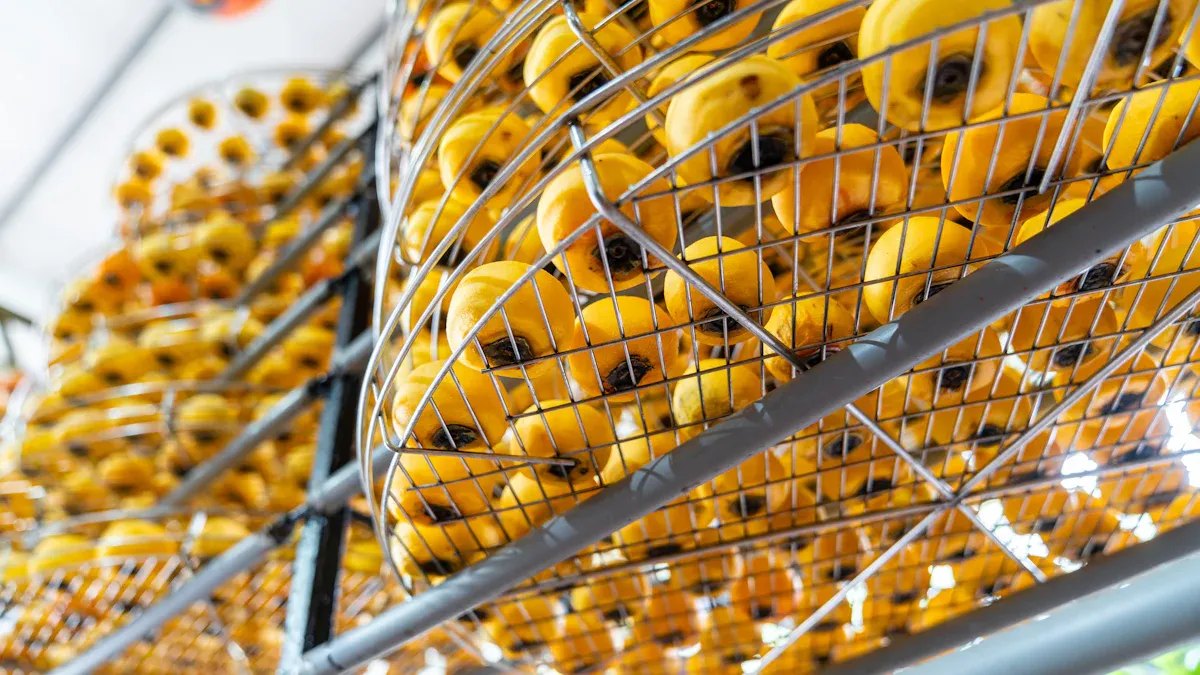
Extrusion Process and Shaping
The extrusion process is a very important step. It changes the mixed ingredients into shapes your cat likes. Machines push the mixture through a die. The die uses heat and pressure to make kibbles or other shapes. This step helps keep nutrients strong. It also makes the food easy for cats to digest.
Here is a table that shows the main steps in extrusion:
Key Step | Description |
|---|---|
Material Preparation | Powders are prepared for extrusion, ensuring the right mix of ingredients. |
Extrusion | The mixture is subjected to high temperature and pressure, passing through a die to form kibbles. |
Cooling and Drying | The extruded kibbles are cooled and dried to achieve the desired moisture content. |
Quality Control | Final products undergo quality checks to ensure they meet nutritional and safety standards. |
Packaging | The finished product is packaged for distribution, maintaining freshness and quality. |
Many machines help shape the cat food. Extruders do the shaping job. There are single-screw and double-screw extruders. These give different textures and quality. Metal detectors look for metal pieces in the food. Dryers take out water so the food stays fresh longer.
Equipment Type | Description | Advantages |
|---|---|---|
Extruders | Machines that shape cat food during the extrusion process. | Variations like single-screw and double-screw offer quality levels. |
Dryers | Equipment used to remove moisture from the extruded cat food. | Ensures the final product has the right texture and shelf life. |
Metal Detectors | Devices that detect metal contaminants in the food. | Enhances safety and quality control in the production process. |
Tip: Every kibble is shaped and checked for safety before your cat eats it.
Drying for Shelf Stability
Drying helps keep your cat’s food fresh and safe. After extrusion, dryers blow warm air on the kibbles. This takes out extra water. Drying stops the food from going bad. The right amount of moisture helps the food last longer on shelves.
Drying also makes the food crunchy. Dryers work fast and evenly. Sensors check the moisture in every batch. This means the food is always crisp and tasty for your cat.
Drying keeps mold and bacteria away.
Sensors make sure moisture is just right.
Dryers help the food stay safe and last longer.
Note: Shelf stability means you can keep the food for weeks or months without worry.
Sterilization Standards in 2026
You want your cat’s food to be very safe. Sterilization is an important step. In 2026, companies use new ways to kill germs and bacteria. Machines use steam, heat, or ultraviolet light. These methods protect your cat from getting sick.
Sterilization happens after drying. This step keeps nutrients strong and makes the food safe. Workers check and test every batch. You get food that follows strict rules and passes safety tests.
Sterilization uses steam, heat, or UV light.
Every batch is tested for safety.
You see certificates and reports for each product.
Callout: You can trust that OEM Cat Food meets the highest sterilization standards in 2026.
Cooling, Coating, and Packaging
Cooling and Quality Checks
After extrusion, your cat food needs to cool down before the next steps. Cooling keeps the food safe and stops bacteria from growing. You see cooling tunnels and air-cooling systems used in modern factories. These systems move the warm kibbles along conveyor belts and cool them with fresh air. This process helps prevent contamination and keeps the food fresh.
Quality checks happen during cooling. Workers and machines watch the cooling rate and control the temperature. They check the surface temperature of the kibbles to make sure everything cools evenly. Uneven cooling can cause problems with fat in the food. You want the fat to stay stable and not spoil. Here is a table that shows what workers check during cooling:
Aspect | Description |
|---|---|
Cooling Rate | Even cooling stops fat from forming crystals in the wrong way. |
Temperature Control | Keeping the right temperature keeps the food safe and tasty. |
Monitoring | Workers and sensors track the process to keep quality high. |
Tip: Careful cooling and checks mean your cat gets safe and tasty food every time.
Flavoring and Coating
Once the food cools, it is time to add flavor and coating. This step makes the food smell and taste better for your cat. You see different ingredients used to boost flavor and keep the coating even. Here is a table that explains what goes into this stage:
Component | Function/Description |
|---|---|
Hydrolyzed animal proteins | Make the food smell and taste better |
Meat or liver powders | Add strong flavors cats love |
Yeast extracts | Give an umami taste |
Umami-rich compounds | Make the flavor profile richer |
Natural flavor carriers | Help spread flavors evenly |
Functional coating bases | Make sure coating sticks to each kibble |
Process-support ingredients | Keep flavors strong after processing |
You want your cat to enjoy every bite. These coatings help with taste and also keep the food fresh longer.
Packaging and Labeling
The last step is packaging and labeling. You see many types of packaging in 2026. Companies use pouches, folding cartons, metal cans, and bags. Each type uses different materials like plastic, paperboard, or metal. Here is a quick look:
Packaging Type | Material Types |
|---|---|
Pouches | Plastic |
Folding Cartons | Paper and Paperboard |
Metal Cans | Metal |
Bags | Paper and Plastic |
Labels on OEM Cat Food must follow strict rules. The FDA requires clear product names, net weight, and a full ingredient list by weight. State rules often match AAFCO standards, so you get the same information everywhere. If a label makes a claim, the company must have proof. This helps you trust what you read and know what your cat eats.
Note: Good packaging keeps food fresh, and clear labels help you make smart choices for your pet.
OEM Cat Food Quality, Safety, and Trends
Regulatory Compliance and Audits
You want to be sure your cat’s food is safe. In 2026, factories get checked often. Auditors visit to see if rules are followed. They look at food safety and labels. Sometimes, audits happen with no warning. This helps keep companies honest. Here is a table that shows how often audits happen:
Audit Type | Frequency |
|---|---|
Unannounced Audit | Once every three years |
Annual Unannounced Recertification | Optional, can occur annually within the recertification cycle |
There are also important certifications. Every new factory must pass an audit first. If a company gets a new owner, they must tell the certifiers in 30 days. If there is a recall, they must report it in 24 hours.
Requirement | Description |
|---|---|
Initial Certification Audit | A successful certification of the new site location is required. |
Notification of Ownership Change | New owners must notify the Certification Body within 30 days. |
Recall Notification | Sites must notify the Certification Body within 24 hours of a food safety event requiring public notification. |
Facility Hygiene and Food Safety
You want your cat’s food made in a clean place. Workers must wash their hands for 20 seconds with soap and water. Factories have sinks so everyone can wash up. Employees get trained to follow hygiene rules before work.
Hand washing is very important for safety.
Factories must have easy-to-use sinks.
Workers need training and must be watched.
Everyone must follow hygiene rules.
You also see these steps in every factory:
Factories are built to stop germs from spreading.
Suppliers must have good safety programs.
All ingredients and products need written rules.
Cleaning steps are written down and followed.
Tip: Clean factories and trained workers help keep your cat’s food safe.
Sustainability and Future Innovations
You care about the Earth. In 2026, factories use more green ideas.
Companies use more recycled and reused materials.
Printing uses less energy and clear eco claims build trust.
There are some problems too. Ingredient prices change a lot. New FDA rules make labels harder. Supply chain issues can slow things down. Some people worry about new protein sources. Companies work hard to fix these problems and keep your trust.
Note: You will see more green packaging and honest labels soon.
You see OEM cat food manufacturing in 2026 as a process with clear steps. Each step gives you and your cat many good things. Factories pick ingredients carefully, use new machines, and make better packages. This means your cat’s food is safer and better.
Description | |
|---|---|
Ingredient Sourcing | Using proteins from plants and animals helps your cat and the Earth. |
Processing Techniques | New ways to cook keep the food healthy and tasty. |
Packaging Solutions | Stronger packages keep the food fresh and safe for your cat. |
You want to know what happens in OEM partnerships.
Tip: Good rules and open talks make you trust OEM cat food in 2026.
FAQ
What does OEM mean in cat food manufacturing?
OEM means Original Equipment Manufacturer. You pick a company to make cat food with your brand and recipe. The factory does all the work, like making, checking, and packing the food. You get good food for your cat without building a factory.
How do you know the ingredients are safe?
Can you customize recipes for your cat food brand?
Yes! You choose the proteins, grains, and flavors you want. You work with nutritionists to make the recipe. The factory uses your choices and makes food that matches your brand.
How does technology help in 2026?
You get help from AI for planning and blockchain for tracking. Machines check the food for quality and safety. These tools make everything faster, safer, and easier to understand.
Is OEM cat food packaging eco-friendly?
You see more packages that can be recycled or used again. Companies use simple materials and less energy. Labels show clear green claims. This helps you pick products that are better for the Earth.



