

You want your dog food business to get bigger, so picking a private label supplier you trust is important. When you pick a private supplier, you need clear product recipes and a good understanding of rules like AAFCO. If you do not do market research, you might have problems with nutrition, safety, ingredient tracking, and even food that pets will not eat. Staying careful helps you avoid these problems. Catfood shows that pet food quality depends on being open and honest. Take each step with confidence, knowing you can make good choices.
Key Takeaways
Pick a supplier that has good certifications. This helps make sure your dog food is safe and high quality. Read reviews about the supplier. Ask for references to learn more about them. This can help you avoid problems. Make sure your supplier is open and talks with you. This builds trust and helps you know where ingredients come from. Learn about AAFCO nutrient profiles. This helps you make dog food with the right nutrition. Do not forget to check all documents. Do not just look at the price. This keeps your brand’s reputation safe.
Trusted Supplier Qualities
Picking a trusted supplier for your dog food business can be hard. You want your products to be safe and high-quality. They also need to follow all the rules. Let’s look at the most important things to check in a private supplier.
Certifications and Compliance
When you start your dog food business, check if your supplier has the right certifications. These show the supplier cares about safety and quality. Here are some well-known certifications in the industry:
Certification Name | Significance |
|---|---|
Known for strong testing for contaminants and good ingredient quality and safety. | |
Purity Award | Given to top suppliers, showing high standards in safety and quality. |
These certifications mean the supplier checks for over 100 contaminants. They look for heavy metals like lead and mercury. They also check for chemicals like BPA and pesticides. If your supplier has these awards, they care about safety.
You must also make sure your supplier follows the rules for your area. In the United States, suppliers need to meet AAFCO standards. These rules help keep pet food safe and healthy. In Europe, suppliers follow EU feed law. In Canada, AAFCO standards are helpful. Always ask your supplier about their compliance with these rules.
Reputation and Experience
A good reputation is important in the dog food business. You want a supplier with lots of experience and happy customers. Look for suppliers who have worked with other brands and delivered safe, tasty food.
Here are some tips to check a supplier’s reputation:
Read reviews from other dog food business owners.
Ask for references and talk to their clients.
Check if they have had a recall or big complaint.
If a supplier has a strong reputation, you can trust them with your brand. Doing some market research helps you find the best suppliers and avoid risky ones.
Transparency and Communication
Transparency matters when picking a private label supplier. You want to know where your ingredients come from and how your dog food is made. The best suppliers let you trace every ingredient back to its source. They use simple processing methods, so you know what’s in your product.
Tip: Ask your supplier for regular papers about ingredient sourcing. This keeps you informed and builds trust with your customers.
Good communication is just as important. Top suppliers tell you quickly if there are changes to your product or if a recall happens. They work with the FDA and share updates fast, so you can keep your customers safe. Regular checks and open talks help you stay on top of quality and safety.
When you pick a supplier who values transparency and clear communication, you protect your dog food business and build a brand people trust.
Product Formulation and Standards
When you make your own dog food, you need to know what makes a healthy recipe. Your products should meet the right standards. This helps dogs get the nutrition they need. Let’s look at what matters most.
AAFCO Nutrient Profiles
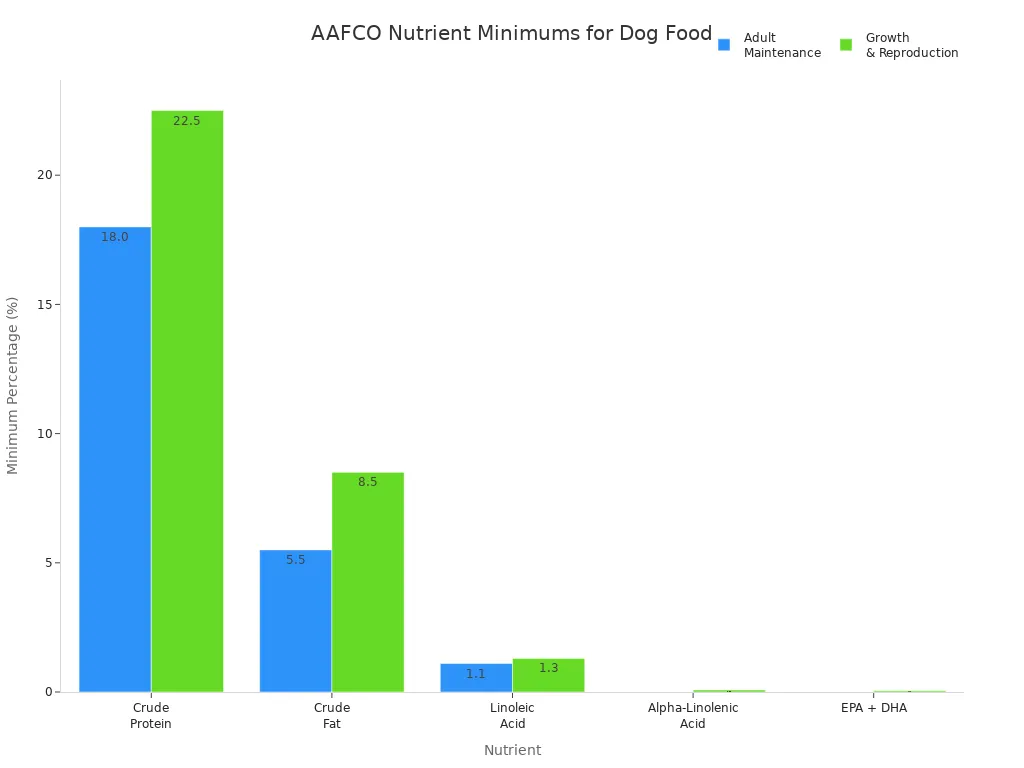
AAFCO makes the rules for pet food in the United States. Your dog food should match these nutrient profiles. Recipes must have the right amount of protein, fat, vitamins, and minerals. Here are some important nutrients:
Nutrient | Adult Maintenance Minimum | Growth & Reproduction Minimum |
|---|---|---|
Crude Protein | 18.0% | 22.5% |
Crude Fat | 5.5% | 8.5% |
Linoleic Acid (Omega-6) | 1.1% | 1.3% |
Alpha-Linolenic Acid (Omega-3) | Not Determined | 0.08% |
EPA + DHA | Not Determined | 0.05% |
AAFCO also lists important minerals and vitamins. Calcium and phosphorus help bones stay strong. Vitamins like A and E help the immune system. You should see a nutritional adequacy statement on your packaging. This tells you if the food meets AAFCO nutrient profiles or has passed feeding tests.
Ingredient Quality and Sourcing
You should use high-quality ingredients in your dog food. Good catfood brands check where their ingredients come from. You should do this for your dog food too. Look for these things:
Nutritional requirements: Dogs need about 40 nutrients to grow and stay healthy.
Ingredient quality: Better ingredients give better nutrition.
Processing methods: Gentle processing keeps nutrients in the food.
Palatability: Dogs should like the taste, but nutrition is most important.
Ask your supplier about where they get their ingredients. Catfood companies often share details about their supply chain. You can use this idea for your dog food business.
Catfood vs Dog Food Standards
Catfood and dog food have different rules. Cats need more protein and special nutrients like taurine. Dogs do not need taurine added to their food. They do need the right calcium to phosphorus ratio for strong bones.
Nutrient | Dog Food Standards | Cat Food Standards |
|---|---|---|
Calcium to Phosphorus Ratio | Specific ranges for skeletal development | Not specified for skeletal development |
Minimum Taurine Levels | Not required | Required to prevent health issues |
Catfood must meet strict rules for some nutrients. You can learn from these high standards and use them for your dog food recipes. When you focus on quality and clear standards, you build trust with your customers and keep pets healthy.
Evaluating Manufacturers
Picking a manufacturer for your private label dog food can be tough. You need someone who cares about quality and follows rules. They should help your brand stand out. Let’s see what you should check when choosing a private label partner.
Production and Quality Systems
Your dog food must be safe and always the same. The best manufacturers use strong quality systems. These systems check every step, from ingredients to finished food. Here are some common systems:
Quality Management System | Description |
|---|---|
ISO 22000 | Checks safety from start to finish. |
HACCP | Finds and stops safety risks early. |
GMP | Makes sure every batch is high-quality. |
Manufacturers with these certifications care about safety and quality. They have experts who watch things like temperature and moisture. This keeps nutrients in the food and stops contamination. You want a partner who checks each batch and keeps records. This helps your dog food business promise safe meals every time.
Tip: Ask your supplier to show proof of these certifications. This builds trust and shows they care about your brand.
Regulatory Support
Pet food rules can be confusing. You need a partner who knows local and international laws. The best manufacturers help you follow all rules. This keeps your dog food business safe and legal. Here’s what a good partner should offer:
Type of Support | Description |
|---|---|
Manufacturing Standards Development | Helps set up quality and safety programs. |
Research & Innovation Support | Invests in new recipes and better nutrition. |
Consumer Protection Programs | Checks labels and helps with recalls. |
Small Business Support | Gives grants and advice to new businesses. |
Your supplier should help you follow USDA and FDA rules. If you import products, they should know about the FDA Foreign Supplier Verification Program. If there’s a recall, your partner must act fast and give you info. Some suppliers use online tools to manage recalls and keep you updated.
Note: Good regulatory support means less stress for your business. You can focus on growing your brand, not paperwork.
Minimum Order and Packaging
When you start your dog food business, think about order size and packaging. Every manufacturer has a minimum order quantity (MOQ). This is the smallest amount you can buy. Here’s what you should know:
MOQs change based on product and customization.
Special recipes or packaging may need bigger orders.
Some manufacturers offer low MOQs for new businesses. This helps you test the market without spending too much.
Packaging is important too. You want your dog food to look good and stay fresh. Here are some popular packaging options:
Packaging Type | Description |
|---|---|
Complete Meal Pouches | Ready-to-serve meals for dogs. |
Complementary Wet Food Pouches | Good for mixing with dry food. |
Functional Wet Food Pouches | Made for special health needs. |
Premium Meat-Forward Pouches | Packed with high-quality meat. |
Convenience and Efficiency | Pouches are light and easy to store. |
Customization Options | Add your logo, pick colors, and use different languages. |
Callout: Always ask your supplier about packaging and minimum orders before you sign a contract. This helps you plan your budget and meet your customers’ needs.
If you do market research and pick a manufacturer with strong systems, good support, and flexible options, your dog food business can grow with confidence.
Questions to Ask Suppliers
When you talk to a private dog food supplier, you should ask smart questions. This helps you check if your products are safe and good quality. It also makes sure the food matches your brand.
Ingredient Traceability
You must know where each ingredient comes from. Top private suppliers use special tracking to keep things safe. You should ask these questions:
Do they use computers to track where ingredients come from?
Can they show barcodes or digital codes for every batch?
How often do they check their own suppliers?
Will they give you paperwork if you want it?
These steps help you follow every part of your dog food. You can trust what goes into your products.
Quality Control and Recalls
Quality control keeps your dog food safe to eat. You want a private supplier who checks safety all the time. Ask about their safety checks and recall plans. Here is what you should look for:
Description | |
|---|---|
Manufacturing Process Controls | Uses HACCP and other safety steps during production. |
Ingredient Purity Monitoring | Checks ingredients often to keep them clean and safe. |
Regular Testing for Contaminants | Tests for germs, mold, and toxins. |
Employee Training | Workers learn about safety and hygiene. |
Proper Packaging and Labeling | Labels are correct to keep pets safe. |
Traceability Systems | Tracks products fast to handle recalls quickly. |
Regulatory Compliance | Follows FDA rules for pet food. |
If there is a recall, your private supplier should act quickly. They need to tell you and the right groups, share product details, and use websites or social media to spread the word.
Customization Options
You want your private label dog food to be special. Ask your supplier about ways to make your food unique. Here are some choices you might get:
Customization Aspect | Options Available |
|---|---|
Protein Sources | Chicken, beef, duck, lamb, turkey, tuna, mixed meats |
Texture Styles | Chunks in gravy, pâté, shredded, minced, broth-rich |
Functional Ingredients | Vitamins, omega fatty acids, prebiotics, fiber, glucosamine, botanicals |
Pack Size | Small packs for stores, multipacks for bigger orders |
Branding and Packaging Design | Print your logo, custom labels, special box designs |
Ask if your private supplier can make special recipes or packaging for you. This helps your brand stand out in the market.
Avoiding Common Mistakes
Picking a dog food supplier can be stressful. You do not want to make mistakes that hurt your business or pets. Here are three common problems and how to avoid them.
Overlooking Documentation
Paperwork may seem boring, but it is very important. If you do not check documents, you could sell food that breaks the rules. Sometimes, suppliers make mistakes that can get your product denied. Here is a table with common paperwork mistakes:
Common Documentation Errors | Description |
|---|---|
Use of Ingredients That Are Not Approved or Allowed | Ingredients like onions, raisins, and chocolate are not safe for pets and can lead to application denial. |
Drug Claims | Claims that a product can diagnose or treat diseases are not permitted and will result in application denial. |
Human Grade Claims | Products cannot be marketed as human grade without proper documentation and compliance with regulations. |
Invalidated Claims | Missing documentation for claims like organic or non-GMO will lead to application denial. |
USDA Reference | Any suggestion that a product is USDA inspected is prohibited and will result in denial. |
Product Name or Description Mismatch | The product name must accurately reflect the ingredients used, or it will be denied. |
Tip: Always check your supplier’s paperwork. Make sure every claim matches the ingredients and follows the rules.
Ignoring Red Flags
You want to trust your supplier, but sometimes there are warning signs. Do not ignore these signs. Watch out for these problems:
Companies with bad safety records or who use cheap fillers.
Poor quality control, like having many recalls.
Marketing that uses words that are not regulated.
If you see any of these, ask questions or find a new supplier. Your brand’s reputation is important.
Focusing Only on Price
Saving money sounds good, but cheap dog food can cause problems later. Pet owners care about quality. Here is a story to show why:
A couple in their seventies, shopping for themselves on a tight budget, buy the discounter’s own brand across almost every aisle. They make every economizing decision available to them. Then they reach the pet food aisle. And they put the private brand back on the shelf and pay full price for the national brand. For their dog. That is not irrational behavior. That is the clearest possible signal about what pet food architecture has to do.
Pet owners want the best for their dogs. If you only care about price, you could lose loyal customers. Pick quality and trust instead of just saving money.
You want your dog food brand to be special. First, decide what you want your products to do. Check each supplier’s background and make sure they follow the rules. Look for suppliers who talk openly and honestly. Work with stores and partners to learn what people want.
Make products that fit your budget, but always keep them safe and good quality.
Pick suppliers who are honest about their work.
Always keep your standards high.
Remember, choosing the right supplier helps your business stay strong and keeps pets safe. Take your time and make smart choices!
FAQ
How do I know if a supplier is trustworthy?
You can look for certifications. Read what other people say in reviews. Ask the supplier for references from past customers. Make sure they give clear answers about where ingredients come from and how they check safety. You can trust a supplier more if they share information and do not hide things.
What questions should I ask before signing a contract?
Ask these things:
Where do ingredients come from?
How do you check quality?
Have you ever had a recall?
Can I change recipes or packaging?
Tip: Make a list of your questions before you meet.
Can I visit the supplier’s facility?
Yes, most suppliers let you visit. You should ask if you can see their building. A tour helps you learn how they make food and if they care about quality.
What is the difference between AAFCO and FEDIAF standards?
Standard | Region | Focus |
|---|---|---|
AAFCO | United States | Nutrient profiles |
FEDIAF | Europe | Nutrient guidelines |
You should use the standard that matches your market.



