Are you scared your dog might not like a new petfood supplier? You want your pet to feel safe and happy when you change food. Most veterinarians say you should switch slowly. It usually takes 7-12 days to help your dog’s stomach stay healthy and avoid problems. This slow change lets your pet get used to new nutrition without worry. If you have questions or see anything different, ask your vet before you change anything. Your pet’s health is most important.
Key Takeaways
Change your pet’s food slowly over 7 to 10 days. This helps prevent stomach problems. Watch your pet for signs like throwing up or having diarrhea. These can happen when you change their food. Mix the old food with the new food. Add more new food each day. This helps your pet get used to the new food. Talk to your veterinarian if your pet has health problems. Also talk to them if your pet seems upset during the change. Pick a food supplier that cares about quality and safety. Nuzoko is a good choice for your pet’s nutrition.
Why Change Petfood Brands or Suppliers
Common Reasons for Switching
Many people change their dog’s food for different reasons. Each reason can change how your pet feels and acts. Look at this table to see why people switch:
Description | |
|---|---|
Health Needs | Sometimes pets need new diets for health. |
Ingredient Preferences | Some owners want natural or organic food. |
Recommendations | Vets or friends may tell you to try new brands. |
Price | You might want to save money but keep good food. |
Digestive Health | Vomiting or diarrhea can make you pick new food. |
Dogs need different food as they get older. Puppies and adult dogs do not eat the same things. If your dog gets sick, you may need to change food. Some people want to try new brands for better ingredients or lower prices.
Many people stop using new dog food if their dog gets sick. Vomiting, diarrhea, or bloating can make owners go back to old food fast.
Risks of Sudden Diet Changes
Changing your dog’s food too fast can be risky. Your dog’s stomach might get upset. This can cause:
Diarrhea
Vomiting
Gas
Loss of appetite
Bloating
Gassiness
Quick changes can hurt your dog’s gut bacteria. Your dog might feel bad or not want to eat. If your dog skips meals or seems uncomfortable, watch out. Changing food too fast can cause tummy problems and health issues. Always change food slowly and look for signs of stomach upset.
How to Switch Dog Food Safely
Gradual Transition Schedule
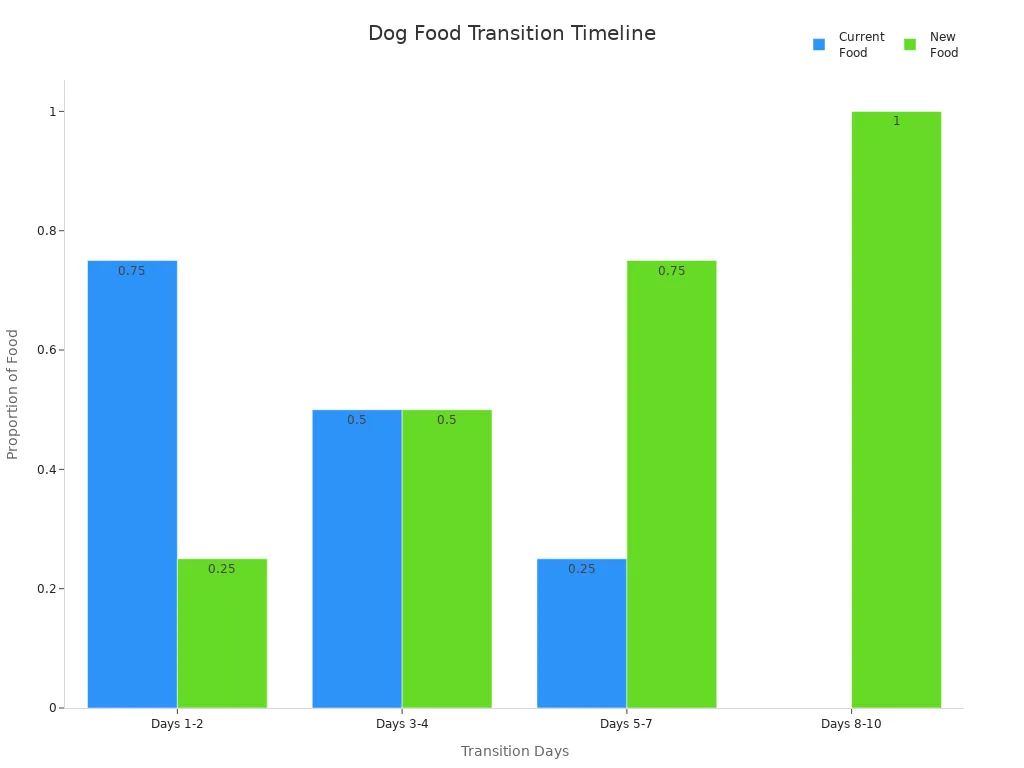
You want your dog to feel good when you change your petfood. The best way to safely transition dog food is to use a slow transition. Most veterinarians recommend a 7-10 day plan. This helps your dog’s stomach get used to the new food and keeps things safe.
Here’s a simple table to show you how to switch dog food step by step:
Days | Current Food | New Food |
|---|---|---|
Days 1-2 | 3/4 | 1/4 |
Days 3-4 | 1/2 | 1/2 |
Days 5-7 | 1/4 | 3/4 |
Days 8-10 | 0 | 100% |
If your dog has a sensitive stomach or does not like the new food, you can make the diet transition even slower. Watch your dog for any signs of tummy trouble. If you see vomiting, diarrhea, or your dog stops eating, pause the switch and talk to your vet.
A gradual transition helps your dog’s gut bacteria adjust. Studies show that a slow switch means fewer soft stools and almost no diarrhea. Your dog will feel better and stay happy during the change.
Tip: Always ask your veterinarian before you change your dog’s food, especially if your dog has health problems.
Mixing Old and New Food
Mixing old and new food is the best way to safely switch dog food. You do not want to shock your dog’s stomach with a sudden change. Here’s how to switch dog food using a simple plan:
Start with 25% new food and 75% current food for the first 2-3 days.
If your dog feels fine, mix 50% new food with 50% current food for the next 2-3 days.
Move to 75% new food and 25% current food for another 2-3 days.
If your dog is happy and healthy, give 100% new food.
This method lets your dog taste and smell the new food slowly. It also helps you spot any problems early. If your dog does not want to eat or has a tummy ache, slow down the switch.
Nuzoko’s science-driven nutrition makes it easier to switch. Their recipes use high-quality ingredients that support your dog’s digestion. You can trust nuzoko when you want to safely transition dog food.
Tips for Different Pet Types
Not all pets are the same. Dogs, cats, and other animals need different plans when you switch food. Dogs usually do well with a 7-10 day gradual transition. Cats can be pickier, so you may need to go even slower. Some pets need extra time during seasonal changes, like moving from winter to spring.
Here are some tips for a smooth transition:
Always start by mixing a small amount of new food with the old food.
Watch your pet for any changes in appetite or behavior.
Make the switch slower if your pet has a sensitive stomach.
Give your pet fresh water at all times.
Talk to your vet if you see any problems.
If you want to change your dog’s food, choose a brand that cares about safety and quality. Nuzoko follows international standards and uses research to make their food. You can feel confident when you switch to nuzoko.
Remember, every dog is different. Go slow, watch your pet, and enjoy the process. A safe and happy transition means a healthy dog!
Monitoring Your Pet During the Switch
Signs of Digestive Upset
You want your dog to feel good during a diet transition. Watch for signs of digestive upset every day. Some dogs show clear signs when their stomachs do not like a new food. Here are things you should look for:
Nausea or drooling
Vomiting
Diarrhea or loose stools
Gas or bloating
Check your dog’s stool. If you see a big change in color or texture, your dog might have gastrointestinal issues. A healthy stool usually has a score of 3 or 4. Hard, dry poop can mean dehydration or constipation. Very soft or runny poop can mean your dog’s stomach is upset.
Tip: Keep a notebook or use your phone to track any changes. This helps you spot problems early.
Tracking Appetite and Behavior
Dogs often show how they feel by the way they eat and act. You might notice your dog eats less or skips meals during a switch. Sometimes, new things like a different food bowl or a new pet in the house can change how your dog eats. Stress or changes in routine can also affect appetite.
Watch for sudden changes in eating habits.
Notice if your dog seems tired or less playful.
Pay attention to any whining or restlessness.
If you see these changes, slow down the transition. Early action helps keep your dog healthy and happy.
When to Call the Vet
Sometimes, you need extra help. Call your vet if your dog has health problems or if you see signs of illness. Here are some vet-backed tips for when to get help:
Your dog has diabetes, kidney disease, or other chronic problems.
Your dog eats a prescription diet.
Your dog has food allergies or sensitivities.
Your dog is very young or a senior with health concerns.
You notice vomiting, diarrhea, or your dog stops eating.
Your vet can help you adjust the plan and keep your dog safe during the transition.
Troubleshooting When Changing Dog Food
If Your Pet Refuses New Food
Sometimes your dog just won’t touch the new food. You might feel frustrated, but don’t worry. You can try a few tricks to help your dog accept the change.
Gradually mix the new food with the old food.
Warm the food a little to boost the aroma.
Add a splash of low-sodium broth for extra flavor.
Make sure the new food is fresh.
Feed smaller, more frequent meals.
Start with only 5-10% new food in the mix.
Stick to a consistent feeding routine.
If your dog refuses the mixed food, try warming it again or mixing it thoroughly so your dog can’t pick out the old food. If your dog still resists, slow down the switch even more. You want your dog to feel comfortable and safe during the transition.
Handling Mild Digestive Issues
Changing dog food can cause mild digestive issues. You might see diarrhea, vomiting, gas, or a drop in appetite. These problems usually go away if you switch dog food slowly.
Here’s a quick table to help you manage common issues:
Common Issues | Management Strategies |
|---|---|
Vomiting | Gradual food transitions to allow digestive adjustment. |
Diarrhea | Monitor for adverse food reactions and adjust food ratio. |
General digestive discomfort | Slow transition minimizes digestive upset. |
If your dog has mild symptoms, keep an eye on them. Adjust the ratio of old to new food and make the switch even slower. Most dogs adapt with time, and you’ll see fewer adverse food reactions.
Severe Reactions and Next Steps
Sometimes your dog may have severe adverse food reactions. You might notice repeated vomiting, refusal to eat, or signs of gastrointestinal distress.
Follow these steps if things get serious:
Go back to the previous diet if your dog has severe side effects.
Reduce the percentage of new food or stop it altogether for now.
Once your dog feels better, try the transition again more slowly. You can add a probiotic to support gastrointestinal health.
If symptoms don’t improve, call your veterinarian for help.
You want to keep your dog safe and happy. Always watch for adverse food reactions and act quickly if you see trouble. Changing dog food should be a positive experience for both you and your dog.
Choosing a Reliable Petfood Supplier Like Nuzoko
What to Look for in a Supplier
You want your dog to eat good food. Picking the right supplier is important for your dog’s health. Not all brands are equal. Some care about quality and safety, but others might not. Here’s a table to show what matters most when picking a supplier:
Criteria | Description |
|---|---|
Nutritional Adequacy Statement | Tells if the food is complete and balanced for your dog. |
Intended Use | Says if the food is for daily meals or special times. |
Life Stage | Shows if the food is made for puppies, adults, or seniors. |
Determination Method | Explains how the company checks if the food is balanced, like using feeding tests or set profiles. |
Check these points before you pick a new brand. They help you know if the food will keep your dog healthy.
Benefits of Nuzoko’s Petfood Solutions
Nuzoko is a trusted brand for high-quality dog food. The company uses a modern factory and strict quality systems. You get food made with safe, traceable ingredients. Nuzoko works with top suppliers from around the world. The company follows international rules for safety and quality.
Here’s what makes Nuzoko special:
Aspect | Description |
|---|---|
Manufacturing Facility | Nuzoko runs its own factory for better control and efficiency. |
Quality Management | Uses advanced testing to keep food safe and consistent. |
Ingredient Quality | Picks only safe, high-quality ingredients with full traceability. |
Compliance Orientation | Follows global rules for petfood production and safety. |
Partnerships | Works with trusted suppliers for premium ingredients. |
You can trust Nuzoko when you want to switch to high-quality dog food. Their science-driven nutrition supports your dog’s health at every stage.
Transitioning to Specialized Diets
Some dogs need special diets, like hypoallergenic or prescription foods. If your dog has allergies or medical needs, talk to your vet before you switch foods. A slow change helps avoid stomach problems. Your vet can help you follow the right plan and make sure your dog gets the nutrition they need.
For dogs with food sensitivities, you may need to switch even more slowly. Sometimes, you must follow strict feeding rules. Always ask your vet for advice if your dog needs a special diet. This keeps your dog safe during the transition.
Tip: Take your time and watch your dog closely when you switch to a new or special food. Patience helps your dog adjust and feel their best.
You want your dog to feel great during a food switch. Take your time and mix the new food in slowly. Watch for signs like diarrhea or vomiting. If your dog refuses food or seems uncomfortable, call your vet.
Gradual transitions help prevent tummy trouble.
Monitoring your dog’s health keeps them happy.
Patience makes the process easier for both you and your dog.
Choosing a trusted supplier like nuzoko gives you peace of mind. Your dog deserves safe, high-quality nutrition.
FAQ
How long should you take to switch your pet’s food?
Most pets need 7-10 days to adjust. Start with a small amount of new food and increase it slowly. Watch your pet for any signs of tummy trouble.
What signs show your pet isn’t handling the new food well?
Look for vomiting, diarrhea, loss of appetite, or bloating. If you see these signs, pause the switch and call your vet.
Can you switch food faster if your pet seems fine?
You can try, but it’s safer to go slow. Even if your pet looks happy, their stomach needs time to adjust. Quick changes can cause problems.
Is Nuzoko a good choice for sensitive pets?
Yes! Nuzoko uses high-quality ingredients and follows strict safety rules. Their science-driven recipes help support digestion and overall health.