

Sample testing is very important for OEM petfood safety in 2026. You keep pets safe when you check each batch for bad things and good nutrition. Block quote:
Sample testing helps make sure pet food follows safety and nutrition rules. This is important for keeping people’s trust and pets healthy.
You make sure your product follows tough safety laws. Block quote:
Making sure your pet food follows FDA rules is needed to sell your product.
You earn trust and show your brand cares about safety. Block quote:
Careful testing can help a brand stand out by showing it cares about quality and safety.
Nuzoko uses science to give good nutrition and checks for quality. Block quote:
Pet food that is dirty or not balanced can hurt pets. It can cause poor nutrition, sickness, or even death.
You see that safety, quality, and strong testing help protect pets and your good name.
Key Takeaways
Sample testing is very important for petfood safety and nutrition. Regular checks stop bad ingredients from getting to pets.
Quality inspection helps people trust the brand. Brands that focus on safety and testing show they care about pets.
Following strict rules is very important. Obeying safety laws keeps pets safe and makes the brand look good.
Using strong sampling methods is important. Pick samples randomly and use adaptive sampling to check product quality well.
Always try to get better at testing. Regular training and updates help keep safety standards high.
OEM Petfood Safety Risks
Contaminants and Hazards in Petfood
There are many risks when making pet food. Testing and checking help you find bad things in the food. This keeps pets safe from harmful ingredients. You need to look for common problems that can hurt nutrition. Here are some things and dangers you should know:
PFAS, called “forever chemicals,” are found in fish and grain pet food. These chemicals can stay in pets’ bodies and cause health problems later.
Microbial contamination can happen while making pet food. Testing helps you find these problems early.
Lead, mercury, arsenic, and cadmium can sometimes be in pet food. These things can hurt pets if you do not take them out.
Plastic can get in pet food if ingredients or packaging break. If plastic is found, there may be a recall. Pets can get stomach pain, throw up, or not want to eat.
Some things like fish byproducts or grains can have more PFAS. Taking out bad chemicals helps keep the food healthy.
Testing and checking help you find these dangers. You keep pets safe and your food good when you follow rules.
Tip: Always check your ingredients for bad things. Use lab testing to make sure your food is healthy and safe.
Regulatory and Market Pressures
You have to follow strict rules when making pet food. Government groups make you meet safety and nutrition rules. Here is a table that shows important certifications for makers:
Product Type | |
|---|---|
Pet Food & Supplements | FDA, GMP, HACCP |
There are also market pressures that can change your business:
Following safety and labeling rules costs more money. This can make it hard to compete with others.
Sometimes there are not enough ingredients. This happens in about 20% of production times. You need good sources to keep your food healthy.
Over 60% of brands sell the same kind of pet food. You need strong testing and checking to be different and keep quality high.
You must use testing and checking to meet rules, stop bad things, and keep food healthy. These steps help you keep pets safe and make people trust your brand.
Importance of Quality Inspection in Petfood
Why Quality Inspection Matters for Brands Like nuzoko
When you check pet products for quality, you help keep pets safe. Brands like nuzoko know that quality inspection stops problems before they reach people. You earn trust by showing your petfood is good. Checking the quality of pet products keeps your business strong and protects your name.
Quality inspection helps you find mistakes early. You can stop recalls and keep customers happy.
Here is how quality inspection works:
You teach your team about safety rules often.
You test and watch your workplace to find problems early.
You write down what happens so you can fix things fast.
You also look at packaging to stop bad things from getting in. You check labels to make sure they are right. You watch how food is stored so it does not go bad. You follow every step to show you are responsible.
A study of pet food recalls from 2003 to 2022 shows that a strong safety culture helps stop recalls. Most recalls happen because of contamination or breaking rules. You lower these risks when you check the quality of pet products.
Step | Benefit |
|---|---|
Employee Training | Fewer mistakes |
Routine Testing | Early detection of problems |
Documentation | Fast problem solving |
Packaging Checks | Less contamination |
Label Review | More trust and compliance |
Protecting Pet and Human Health
Quality inspection helps keep pets and people safe. Pets need healthy food to stay well. If pets eat food without enough nutrition, they can get sick more. A study found that pets eating poor diets are 30% more likely to get long-term health problems.
Bad things in pet food can cause serious sickness. Melamine can hurt kidneys. Salmonella can make pets have stomach pain and can also make people sick. You lower these risks when you check your products carefully.
You also check pet toys to make sure they are safe. Toys made with bad materials can hurt pets’ liver or kidneys. You stop these dangers when you check every item.
You keep pets safe and families healthy when you make quality inspection important.
You see why quality inspection matters at every step. You protect your brand, your customers, and their pets.
Petfood Sampling and Inspection Process
Sampling Methods and Best Practices
You need good ways to take samples to keep petfood safe. Sampling is the first thing you do when you check food. You pick a small part from each batch to look for problems. You use random selection so you do not choose the same way every time. This means every package can be picked. You follow rules to make sure you have enough samples and mix them well. This helps you find things like contamination or if the food is not balanced.
Representative sampling shows what the whole batch is like.
Random selection stops unfair picking and gives a true result.
Adaptive sampling uses risk models to decide where and when to sample.
Randomizing where you sample in the factory helps you check everywhere.
You use the best ways to make sure your samples are like the batch. You check packages from different lots and storage places. You follow Esbensen’s Theory of Sampling, which says you need enough samples and good mixing. This helps you not miss bad things in the food. Sampling is very important for checking quality and helps people trust your brand.
Tip: Always use the right way to take samples so your checks are good.
Laboratory Analysis and Third-Party Testing
You send samples to a lab for testing. Lab testing for pet food uses special tools to look for bad things and check nutrition. You use lab methods like HPLC, GC, NIR, plate counting, PCR, ELISA, AAS, and ICP-MS. These ways help you find heavy metals, mycotoxins, and chemical additives.
Technique | Purpose |
|---|---|
HPLC | Looks at nutrients |
GC | Finds harmful substances |
NIR | Checks nutrition |
Plate Counting | Finds germs |
PCR | Finds bacteria and pathogens |
ELISA | Measures germs |
AAS | Tests for heavy metals |
ICP-MS | Measures harmful substances |
You use lab testing to check for safety and quality. You also use other labs for independent testing. This makes your checks more trusted. Third-party testing checks nutrition, ingredient quality, and makes sure there are no bad things. You build trust by always checking quality.
Nuzoko uses lab testing and third-party checks to make sure every product is good. You follow world rules and use new tools like Real-Time PCR and machines that find problems fast. These steps help you keep pets safe and your brand strong.
Impact of Quality Inspection on Brand Trust
Building Consumer Confidence with nuzoko
You show customers you care about safety when you check products. People want to know you test every batch for safety. Careful testing helps pet owners feel safe about their pets’ food. When you follow good steps, people trust your brand more.
Pet owners want to see clear inspection steps.
They pick brands that test for safety and nutrition.
You meet their needs when you show your products pass checks.
Nuzoko uses these steps to earn trust. You pick good materials, check designs, and make sure products work right. You also choose suppliers you can trust. The table shows how you can check each part:
Selection Factor | Best Practices | Suggested Verification Methods |
|---|---|---|
Material Quality | Use non-toxic, strong materials | Ask for samples, check certifications |
Design Accuracy | Match official rules | Compare with specs |
Functionality | Make sure features work as needed | Review specs, ask for demo videos |
Size | Match the right size | Use guides, ask for 3D models |
Supplier Reliability | Pick trusted vendors | Read reviews, talk to past buyers |
Strong inspection and testing help your brand stand out. Brands that do this get more trust and keep customers.
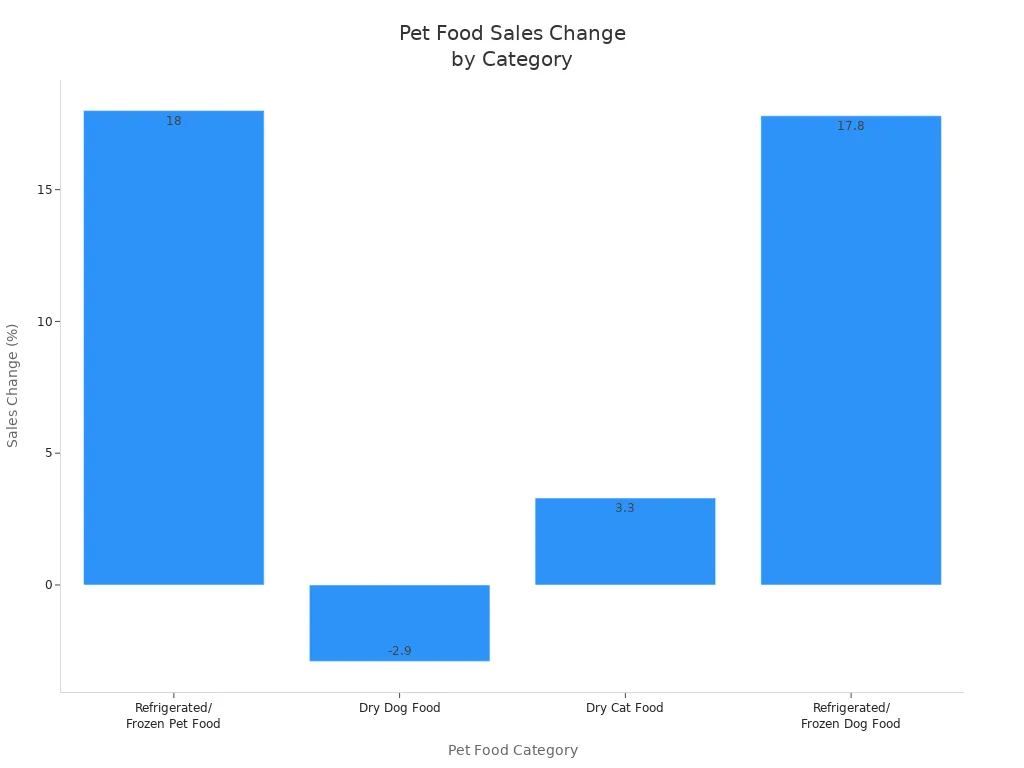
The chart shows brands with good inspection and testing sell more refrigerated and frozen petfood. You can sell more if you focus on quality inspection.
Enhancing Product Integrity and Market Access
Inspection and testing protect your products. They also help you sell in new places. Many countries need special certifications for petfood. You must meet these rules to sell everywhere. The table shows important certifications:
Certification | Importance |
|---|---|
FDA | Follows food safety rules |
CFIA | Quality rules for pet food in Canada |
ISO | World rules for quality management |
HACCP | Food safety by checking hazards |
Inspection and testing keep your products safe and ready to ship. They also make the market fair. Only brands that meet these rules can sell. Pet owners get more choices and can find safe products.
Tip: You build a strong name when you check every batch.
Quality inspection helps you earn trust, protect products, and reach new markets.
Practical Steps for Pet Product Quality Inspection
Implementing Robust Sampling Protocols
You can make pet product quality inspection strong by using clear steps. First, set goals for sampling. Make sure your goals match your product standards. Use ways that lower bias in your sampling. This helps you get real results from testing. Decide how often to test each batch. Early testing finds problems before they get bigger.
Use methods that lower bias.
Pick the right testing level for each batch.
Industry best practices say you should match your sampling plan to risks and how your factory works. Look at the table below to see how you can make your pet product quality inspection better.
Evidence Type | Description |
|---|---|
Risk Assessment | |
Sampling Schedule | Keep a steady sampling schedule that fits your factory and risk profile. |
Staff Training | Train your staff well so they follow the sampling plan right. |
Tip: You can use random sampling and adaptive sampling to check different parts of your factory. This helps you find hidden problems.
Continuous Improvement in Quality Inspection
You need to keep making your pet product quality inspection better. Good manufacturing practices help you manage risks and keep food safe. Thermal processing kills germs in dry petfood, but cross-contamination can still happen. You must watch key production steps, not just the finished product.
Follow good manufacturing practices.
Watch important steps for microbiological safety.
Test for contaminants like heavy metals often.
The quality of your factory and your steps affects product safety. Change your formulas if thermal treatment changes nutrients. Regular testing keeps your petfood safe and healthy.
Ongoing training helps your team understand standard operating procedures. Work with accredited labs and clinicians to make sure your testing is correct and meets real needs. Leadership and feedback help your team reach quality goals and improve inspection.
Note: Continuous improvement and working with experts make your pet product quality inspection stronger.
You must use sample testing and inspection to keep petfood safe. Testing keeps pets from getting sick and helps people trust your brand. Inspection proves you care about making safe and good food. You can do what nuzoko does and use strong steps. Try these ways to make your quality checks better: 1. Check if suppliers have good skills and know a lot. 2. Make sure suppliers follow all the rules. 3. Use safety rules like REACH testing to check products. 4. Test how products work to find problems. – Certifications like BRC and FSSC 22000 help you follow world rules. – Inspection and testing help pet owners trust your brand for a long time.
FAQ
What is sample testing in petfood manufacturing?
Sample testing means you check a small part of each batch for safety and nutrition. You use this process to find problems early. You protect pets and keep your products safe.
How does inspection help my petfood business?
Inspection lets you find mistakes before they reach customers. You use inspection to show your brand cares about safety. You build trust and keep your business strong.
Why should I use third-party testing?
Third-party testing gives you unbiased results. You use outside labs to check for contaminants and nutrition. You show customers your products meet high standards.
How often should I do testing on petfood batches?
You should do testing on every batch. You use regular testing to catch issues quickly. You keep your products safe and meet rules for petfood.
What makes quality important in petfood?
Quality means your petfood is safe and healthy. You use testing and inspection to keep high standards. You help pets stay well and earn trust from buyers.



