
You face several risks when choosing private label pet food. Safety risks can include pesticide residues, which recent studies found in many products. Quality risks often arise from poor ingredient sourcing and lack of strict testing. Transparency risks make it hard for you to know how the food is made. These risks can affect the health of your pets. You must stay alert when picking dog petfood catfood. Brands like nuzoko focus on science-driven nutrition and strong quality assurance.
Key Takeaways
Be aware of safety risks in private label pet food, such as pesticide residues and contamination. Choose brands that prioritize safety.
Check for strong quality assurance practices. Look for brands like Nuzoko that use strict testing and quality controls.
Demand transparency from pet food brands. Know where ingredients come from and how the food is made to ensure your pet’s health.
Monitor your pet for signs of health issues, such as dull coats or digestive problems. Early detection can prevent serious health risks.
Always read labels carefully. Look for AAFCO statements and consult your veterinarian for trusted recommendations.
Quality Risks in Private Label Pet Food
Ingredient Sourcing Issues
When you choose raw pet food from private label brands, you may not know where the ingredients come from. Many companies face challenges in sourcing safe and reliable ingredients for raw pet food. The table below shows some common problems that can affect the quality of raw pet food:
Challenge | Description | Impact |
|---|---|---|
Complex Shipping | Long transit routes expose ingredients to temperature and handling changes. | Risk of spoilage, contamination, and nutrient loss. |
Customs Delays | Different inspection systems slow down ingredient clearance. | Higher costs and planning problems. |
Traceability Gaps | Hard to track ingredients from source to finished raw pet food. | Slow recalls and poor documentation. |
Economic Volatility | Ingredient prices change with currency rates. | Unstable budgets and product changes. |
Sustainability Compliance | Confusion over certification for sustainable ingredients. | Delays and re-labeling issues. |
You need to pay attention to these risks because they can affect the safety of raw pet food. Brands like Nuzoko use strict controls to make sure every batch of raw pet food meets high standards for quality and safety.
Testing and Quality Assurance
Many private label raw pet food products do not follow strong quality assurance protocols. Some common problems include:
Outdated manuals and weak enforcement of safety rules.
Poor building standards that let outside animals contaminate raw pet food.
No checks on who enters the facility or how vehicles move inside.
No system to check the quality of raw pet food ingredients.
No regular tests to make sure raw pet food has the right nutrition.
No routine safety checks or internal audits.
No clear way to handle waste from raw pet food production.
You should always look for brands that have strong quality control. Nuzoko stands out because it uses advanced testing and strict quality checks for every raw pet food product. This helps protect your pets and gives you peace of mind.
Transparency and Traceability
Manufacturing Information
You need to know where your pet’s food comes from and how it is made. Many private label pet food brands do not provide enough details about their ingredient origins or manufacturing processes. This lack of information can make it hard for you to trust what you feed your pet. Here are some common transparency concerns:
You often do not see clear details about where ingredients come from.
Brands may not share how they handle or process the food.
Ingredient sourcing can remain unclear, even if the company claims high quality.
You deserve to know what goes into your pet’s bowl. Nuzoko stands out by sharing information about its manufacturing and ingredient sourcing. The brand works closely with partners and keeps you informed about every step, from research and development to production. This level of openness helps you make better choices for your pet’s health.
Recall Tracking Challenges
Tracking a recall in private label pet food can be difficult. Many private label products come from different manufacturers. Each one may use different quality control methods. This variety makes it hard to trace which batches are affected if a problem happens. Without a strong recall plan, you might not learn about issues quickly. Delays in identifying and removing unsafe products can put your pet at risk.
You should look for brands that have clear recall procedures and communicate openly during any safety event. Nuzoko’s transparent approach and strong collaboration with partners help ensure that you get timely updates and support if a recall ever occurs. This commitment to traceability and safety gives you peace of mind when choosing dog petfood catfood.
Health Risks for Pets
Contamination and Food Safety Risks
You need to know about the dangers that can come from contamination in private label pet food. Contamination can happen at many points, from ingredient sourcing to packaging. Microbial contamination is one of the most common food safety risks. Bacteria and fungi can enter pet food if companies do not follow strict hygiene rules. When you feed your pet contaminated food, you increase the risk of food poisoning and other health problems.
Here is a table that shows the most common types of contamination found in private label pet food:
Type of Contamination | Description |
|---|---|
Bacterial Contamination | Includes bacteria such as Bacillus cereus, Salmonella, Staphylococcus aureus, and Escherichia coli, which can cause digestive tract diseases in pets. |
Fungal Contamination | Aflatoxins from fungi are a significant concern, particularly from ingredients like peanut meal, cottonseed meal, and fish meal. Proper storage and sanitation are crucial to prevent this. |
Microbial contamination can lead to serious food safety risks for your pet. Bacteria like Salmonella and E. coli can cause vomiting, diarrhea, and even life-threatening infections. Fungal contamination, especially from aflatoxins, can damage your pet’s liver and immune system. You should always check for signs of packaging damage, as this can let in moisture and microbes.
Recent cases show that microbial contamination is a real threat. The chart below compares the prevalence of different pathogens found in private label pet food:
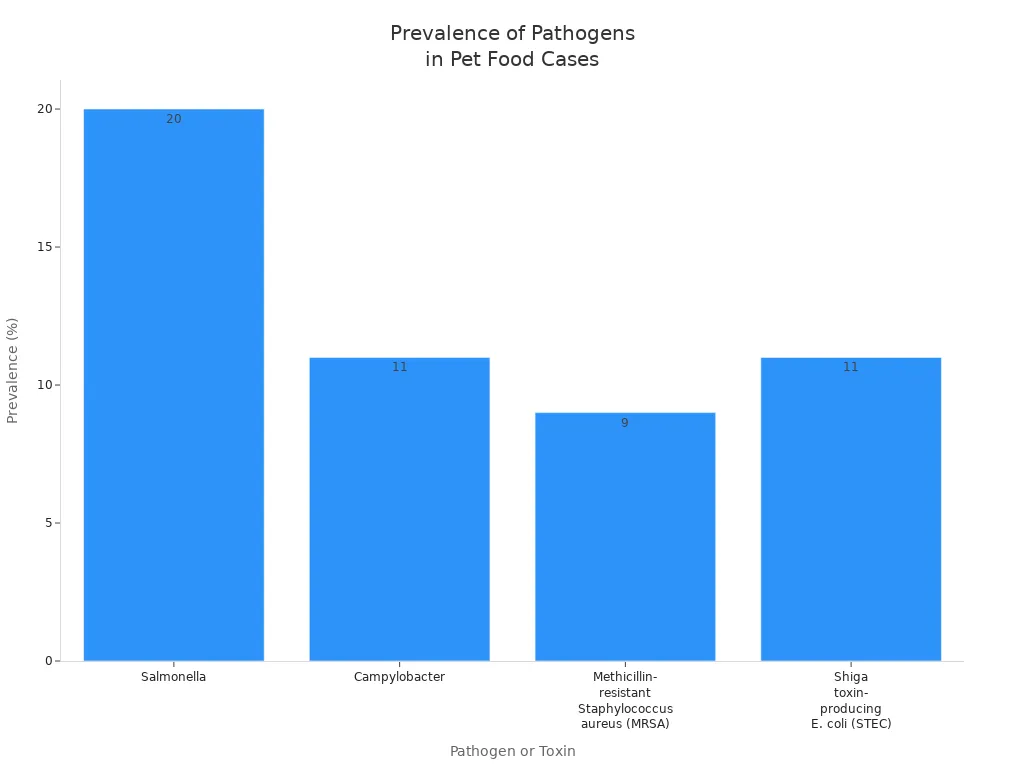
Pathogen/Toxin | Prevalence (%) |
|---|---|
Salmonella | |
Campylobacter | 11 |
Methicillin-resistant Staphylococcus aureus (MRSA) | 9 |
Shiga toxin-producing E. coli (STEC) | 11 |
You can see that Salmonella and E. coli are among the most common threats. These microbes can survive in pet food if the manufacturer does not use proper heat treatment or storage. Microbial contamination can also happen if the food is exposed to pests or unclean surfaces during production.
Food safety risks do not end at the factory. You must handle pet food safely at home. Always wash your hands after touching pet food. Store food in a cool, dry place and seal the bag tightly. If you notice any odd smell, mold, or damaged packaging, do not feed it to your pet. These steps help you avoid food poisoning and protect your pet from food safety hazards.
Nutritional Deficiencies
Nutritional deficiencies are another major health risk in private label pet food. Some products do not meet the basic nutritional needs of dogs and cats. When you feed your pet food that lacks key nutrients, you put their health at risk.
Thiamine deficiencies have been found in many canned cat foods, especially in pates. Cats need thiamine for nerve and heart health.
Smaller companies often have lower thiamine levels in their products compared to larger brands.
Too much vitamin D can cause health problems like hypercalcaemia in kittens.
Many private label foods do not meet official guidelines for minerals. Studies show that:
13% of dog and cat foods do not meet AAFCO guidelines for certain minerals.
Many diets have too much calcium.
Only 6% of wet foods and 39% of dry foods meet FEDIAF guidelines for mineral content.
Long-term feeding of unbalanced diets can harm your pet. Some products have mineral imbalances, with calcium to phosphorus ratios ranging from 0.3:1 to 3:1. High levels of harmful minerals like selenium and arsenic have also been found in some foods.
Private label pet food has become very popular. In many countries, these products make up over 40% of pet food sales. Even though they are common, you should always check the nutritional profile before buying. Look for brands that test their products and follow strict food safety risks controls. This helps you avoid health risks and keeps your pet healthy.
Tip: Always read the label and ask your veterinarian if you have questions about your pet’s nutrition. Safe handling and careful selection can help you avoid food poisoning and other problems caused by microbial contamination.
Pet Food Safety and Regulatory Oversight
Branded vs Private Label Differences
You might wonder how private label pet food compares to branded products when it comes to pet food safety. Both types must follow certain rules, but the level of oversight and quality control can differ. In the United States, all commercial pet food must meet specific labeling and safety standards. The table below shows what these rules cover:
Component | Description |
|---|---|
Brand and Product Name | Must match the main ingredient and follow naming rules. |
Species Identification | Must say if the food is for dogs, cats, or other pets. |
Net Quantity Statement | Shows the amount in standard and metric units. |
Guaranteed Analysis | Lists minimum protein and fat, maximum fiber and moisture. |
Ingredient List | Lists all ingredients by weight, using common names. |
Nutritional Adequacy Statement | States if the food is complete and balanced for a life stage. |
Feeding Directions | Gives clear instructions for use and feeding. |
Manufacturer Information | Includes contact details for the responsible party. |
When you look at quality control, branded and private label manufacturers may use different approaches. The table below highlights these differences:
Aspect | Private Label Manufacturers | Branded Manufacturers |
|---|---|---|
Testing Procedures | Extensive testing and quality control integrated into production | Varies, may not be as rigorous |
Regulatory Compliance | Adheres to international standards (ISO 9001, WHO-GMP, etc.) | Compliance may vary by brand |
Product Safety Assurance | Rigorous ingredient verification and batch testing | Depends on brand practices |
Nuzoko stands out by following strict international standards and using haccp systems to ensure every batch meets safety and quality requirements. This commitment helps you trust the food you give your pet.
Enforcement Gaps
You should know that even with rules in place, gaps in enforcement can affect pet food safety. Regulatory agencies like the FDA usually inspect pet food factories only when there is a known problem. This means inspections do not happen often and may miss issues before they reach your home.
Some challenges in the system include:
Challenge | Impact | Solution |
|---|---|---|
Voluntary standards like IS 11968:2019 | Not all companies follow them, which can lower safety. | Companies should adopt these standards to build trust. |
Unclear pet food definitions in laws | Causes confusion and makes rules hard to follow. | Stay updated and talk with regulators. |
Different licensing rules in each state | Makes oversight uneven and can slow down product launches. | Check all state rules before selling products. |
Limited resources for inspections | Delays in finding and fixing problems. | Manufacturers should use both internal and third-party testing. |
Fast innovation in pet food | New products may not fit old rules, creating safety gaps. | Stay informed about new trends and changing rules. |
You play a key role in pet food safety by choosing brands that go beyond the minimum requirements. Nuzoko uses advanced quality systems and keeps up with the latest regulations. This helps protect your pet and gives you confidence in your choice of commercial pet food.
Tip: Always check for clear labeling and contact information on pet food packages. This helps you trace the source if you have any concerns.
Protecting Your Pet with Nuzoko Dog Petfood Catfood
Evaluating Private Label Brands
You want to make sure your pet gets safe and nutritious food. When you look at private label brands, check for clear signs of quality and safety. The table below shows important criteria you should use to evaluate dog petfood catfood brands:
Criteria | Description |
|---|---|
Good Manufacturing Practices (GMP) | Ensures clean and effective production processes. |
HACCP | Finds hazards and uses controls to keep food safe. |
Recall Procedures | Shows the company can quickly remove unsafe products. |
Prohibited Ingredients | Avoids toxic or unfit ingredients. |
Acceptable Ingredients | Uses suppliers that follow FDA standards. |
Nutritional Adequacy Statement | Proves the food meets AAFCO nutrition standards. |
Feeding Guidelines | Gives clear instructions for serving sizes. |
Contact Information | Lets you reach the manufacturer for questions. |
Nuzoko uses science-driven nutrition and strict quality checks for dog petfood catfood. You can contact Nuzoko for information about lot numbers and sell-by dates. If you notice any problems, report them to the FDA and work with your veterinarian for clinical investigations. Veterinary services can help test dog petfood catfood for toxins.
Tip: Always read the label and check for clear contact details. This helps you trace the source if you have concerns about dog petfood catfood.
Signs of Health Issues
You need to watch your pet for early signs of health problems. Poor-quality dog petfood catfood can cause many issues. Look for these warning signs:
A dull coat that has lost its shine
Itchy, flaky, or irritated skin
Persistent low energy or reluctance to exercise
Recurring digestive upsets like soft stools or gas
Slow recovery from minor injuries
Stiff movement, especially after rest
Unexplained weight changes
Nutritional deficiencies often show up first in your pet’s coat and skin. A dull coat or excessive shedding may mean your pet lacks essential fatty acids. Dry, flaky skin can signal low-quality proteins or missing vitamins. You should also watch for symptoms of foodborne illness:
Vomiting and diarrhea
Lethargy and weakness
Loss of appetite
Abdominal pain and drooling
Fever
Tremors or seizures
If you see any of these signs, contact your veterinarian right away. Proactive care helps keep your pet healthy and safe. Choosing brands like Nuzoko for dog petfood catfood gives you confidence in your pet’s nutrition.
You face real risks when choosing private label pet food. Unsafe ingredients, weak quality control, and poor transparency can harm your pet’s health. Brands like Nuzoko offer science-driven nutrition and clear quality standards.
Stay alert and always check for safety certifications and recall history.
Key steps to protect your pet:
Choose brands that own their manufacturing plants and use strict quality control.
Look for AAFCO statements and exact nutritional values on labels.
Consult your veterinarian for trusted brand recommendations.
Feed whole foods and avoid chemical preservatives.
Clean your home often and use air filters to reduce microplastics.
Recall Statistics | Consumer Concerns | Recent Incidents |
|---|---|---|
0.5% yearly recalls, often metal contamination | 87% of owners value safety certifications | Recalls for Salmonella, Listeria, and metal fragments |
Keep watching for signs of illness and talk to your vet if you notice changes. Your vigilance keeps your pet safe and healthy.
FAQ
What makes private label pet food risky?
You may face risks like poor ingredient quality, weak safety checks, and unclear sourcing. Some brands do not test products well. This can lead to health problems for your pet.
How can you check if a pet food brand is safe?
Look for brands that share clear ingredient lists, have safety certifications, and provide contact information. Brands like Nuzoko use strict quality controls and follow international standards.
What should you do if your pet gets sick after eating new food?
Stop feeding the food right away. Save the packaging and contact your veterinarian. Report the problem to the brand and local authorities. Quick action helps protect your pet.
Why is transparency important in pet food?
Transparency lets you know what your pet eats and where it comes from. You can make better choices and avoid hidden risks. Brands that share details build trust with you.



