

You see private label petfood catfood profit margins change. This happens because inflation makes things cost more. Supply chains also move and change. People want better and greener products now. Brands like Nuzoko change fast with science-based nutrition. They also find smart ways to get ingredients. You see these changes affect your business choices. They also change how you plan your products.
Key Takeaways
Pet food inflation changes prices and profit margins. Watch ingredient costs to keep making money.
Focus on quality and sustainability. People want better and eco-friendly products for their pets.
Make your supply chain simple. Getting ingredients and making food efficiently can lower costs and help profits.
Tell customers about price changes in a clear way. Being honest builds trust and keeps customers coming back.
Create new products. Special recipes and features can make your brand stand out in a busy market.
Petfood Catfood Profit Margins in 2026
Impact of Pet Food Inflation
Petfood catfood prices change a lot. This is because pet food inflation changes what you pay for ingredients and products. Inflation is not the same in every country. Look at this table to see how pet food inflation rates are different in some places:
Region/Country | Pet Food Inflation Rate | Other Relevant Inflation Rates |
|---|---|---|
Spain | 1.4% | Veterinary services: 3.7% |
Finland | -3.37% | Veterinary services: 4.03% |
UK | 0% | Veterinary services: 7.1% |
USA | 1.2% | Pet services: 5% |
Canada | -1.2% | General CPI: 2.4% |
Brazil | -4.55% | Hygiene services: 7.68% |
Some countries have higher prices, but others have lower prices. Even with these changes, the petfood catfood market keeps getting bigger. The market should reach $83.51 billion in 2026. It was $78.48 billion in 2025. This happens because more people have pets and spend more on their health.
Private label pet food brands need to watch profit margins closely. These brands often have higher profit margins than national brands. Sometimes, they reach 25-35%. This helps you change prices or find new suppliers if costs go up. You can also buy ingredients from countries with lower tariffs or from local suppliers. This helps keep your profit margins steady.
Ingredient and Production Costs
Ingredient and production costs are going up. From 2020 to 2026, making petfood catfood costs 13% to 58% more. Here are some reasons why costs are rising:
Raw materials like chicken and grains cost more.
Global events, like the Ukraine conflict, make supply chains harder.
More people want high-quality, healthy petfood catfood.
These things make it hard to keep profit margins high. You need to manage costs and still make good products. Here are some ways brands like Nuzoko handle these problems:
Make your supply chain and production better to cut waste and get good deals.
Create new product formulas for both budget and premium buyers.
Tell your customers why prices change and show them your product’s value.
Plan production runs to use less waste and work equipment well.
Keep your current customers happy because it costs less than finding new ones.
Spend on quality control to lower returns and make products better.
Nuzoko is a private label pet food brand that handles rising costs with new ideas and strong quality control. They use advanced manufacturing and science-based nutrition. This keeps their petfood catfood high-quality and affordable. By planning production and working with trusted suppliers, Nuzoko helps protect profit margins when costs rise.
You can learn from Nuzoko. If you focus on being efficient, trying new things, and keeping customers loyal, your private label pet food business can stay strong. This works even when pet food inflation and ingredient costs change.
Private Label Pet Food Supply Chain Trends
Global Sourcing and Logistics
It is hard to get catfood ingredients from other countries. In 2026, supply chain problems hit almost every private label pet food brand. You pay more money, wait longer, and follow new rules for being green. These things make it tough to keep products in stores and costs low.
Here is a table that lists the main supply chain problems you should know:
Factor | Description |
|---|---|
Geopolitical Tensions | Ongoing global conflicts make trade and shipping less reliable. |
Logistics Challenges | Port congestion and limited shipping space raise freight costs. |
Sustainability Compliance | New rules require you to trace ingredients and prove they are deforestation-free. |
Market Reaction | Anticipation of new rules pushes up prices for key ingredients like soybean meal. |
You also see these things happen in real life:
In 2022, 45% of pet product buying had supply chain problems.
Raw material prices went up by 15% in 2022.
Vitamin premix shortages affected 18% of pet food buying in early 2023.
Shipping routes can be tricky and cause problems. Ingredients might get too hot or cold or handled roughly. This can spoil them or take away nutrients. Customs delays in other countries add more waiting and cost. Trade rules or health scares can block important routes. This can cause shortages and higher prices. Even money changes or not enough containers can make your costs go up fast.
Nuzoko’s Strategic Sourcing Approach
You can handle these problems with a good plan. Nuzoko uses one big facility and a strong supplier network to keep things running well. Their 26,000-square-meter building puts research, making, and shipping together. This helps you avoid delays and check quality at every step.
Nuzoko’s team works with trusted suppliers from many places. They help you get the best ingredients and fair prices. Their network lowers the chance of customs delays and missing supplies. You get your products on time, even if the market changes quickly.
Tip: If you work with a brand like Nuzoko, you get a global supplier network and smart shipping help. This keeps your pet food business steady and strong, even when things change.
Consumer Preferences and Private Label
Shift Toward Premium Catfood
You see more cat owners choose premium catfood every year. They want better nutrition and special diets for their pets. The global cat food market now stands at over $42 billion. Wet food makes up 40–45% of this market. Experts expect the wet cat food segment to grow by about 6–7% each year through 2026. Over 65% of new wet cat food products focus on premium or specialized diets.
Market Trend | Details |
|---|---|
Global Cat Food Value | $42+ billion |
Wet Food Market Share | 40–45% |
Wet Food Growth (CAGR) | 6–7% through 2026 |
Premium/Specialized Launches | 65%+ of new wet food products |
You want to meet these new demands. You look for catfood with high protein, low starch, and real meat. Nuzoko offers these features in their catfood. Their recipes use animal-based protein and support healthy weight. You also find freeze-dried treats made from human-grade meats. These treats keep the natural flavor and nutrients that cats love.
Demand for Sustainable and Functional Products
You care about the planet and your pet’s health. Many cat owners now choose products that are both sustainable and functional. Private label brands respond by making foods for kittens, adults, and senior cats. They use better ingredients and focus on nutrition.
Segment | Market Share | Growth Factors |
|---|---|---|
Kitten | More cat owners, better nutrition | |
Adult | 20% | Quality private label options |
Senior Cat Food | 6% | Private label appeal over national brands |
You also look for certain product features. You prefer pellets, chunks in gravy, and raw foods. Fish and poultry are the top ingredients. You want food that helps with weight and uses vegetables, fruits, and herbs. Price, ingredients, and flavor matter most when you buy.
Nuzoko meets these needs with science-driven nutrition and a wide range of options. Their catfood supports every life stage and uses trusted ingredients. You get complete nutrition and the chance to customize for your pet’s age or size. This helps you keep your profit margins strong while giving customers what they want.
Competitive Landscape and Product Differentiation
Market Growth of Private Label
The private label pet food market is changing fast from 2020 to 2026. More people want premium and special products for their pets. Shopping online makes it simple to find good pet food. Private label brands are getting a bigger part of the market, especially with dry pet food. These brands are growing faster than branded products.
The private label pet food market should grow by 17% each year from 2025 to 2035.
This is much faster than branded products, which grow slower because people trust old brands more.
The private label market will go from $2,547.2 million to $5,584.5 million. That is a $3,037.3 million increase, or 31.3% of all growth for the next ten years.
Private label brands now compete with national brands by giving better value and more choices. This strong growth means you can make more money if you focus on what pet owners want.
Nuzoko’s Innovation in Petfood Catfood
You need to be different to do well in a busy market. Making your products special helps you keep higher profits. Look at this table to see how private label brands and national brands compare:
Brand Type | Gross Margin |
|---|---|
National Brands | 25% |
Private Label Brands | 35% |
Private label brands often have higher gross margins. This happens when you make unique products and keep costs low. Nuzoko helps you with OEM and ODM solutions. You can make custom recipes, special shapes, and new treats. Nuzoko uses science to make sure every product is high quality. Their advanced building lets you test new ideas and sell them quickly.
Tip: If you work with Nuzoko, you get help with research, making products, and finding ingredients. This helps you launch new products that follow trends and keep your profits strong.
You can use these ideas to win in the market. Focus on new ideas and good quality to make your private label brand a top pick for pet owners.
Regulatory Changes and Compliance
Food Safety and Labeling Standards
In 2026, there are new rules for food safety and labeling. These rules keep pets and their owners safe. You have to follow strict standards when making private label cat food. Your product labels must be clear and honest. The table below lists the main changes you should know:
Aspect | Description |
|---|---|
Manufacturing Standards | You must meet strong quality standards and join certification programs for private label pet food. |
Consumer Protection Programs | You need to use clear labels and test your products to prove your nutrition claims are true. |
You need to check your ingredients and test your products often. You also have to keep records for every batch you make. These steps help you avoid recalls and build trust with customers. Nuzoko follows these rules very closely. The brand meets global standards and passes tough import checks. You can trust Nuzoko to give you safe and high-quality pet food.
Environmental Regulations
In 2026, new environmental rules change how you make and package cat food. You must use more eco-friendly ingredients and packaging. You also need to show where your ingredients come from and how you help the planet.
You might pay more for premium, eco-friendly ingredients.
You need to buy better packaging that is safe for the environment.
You must follow rules about ingredient transparency and safety.
You may have to change recipes to use more natural ingredients.
These changes can make your costs go up and affect your profit margins. You need to plan for spending more money to follow the rules. Nuzoko helps you with these challenges. The brand uses trusted suppliers and strong quality controls. Nuzoko’s products meet both food safety and environmental rules. You can count on Nuzoko to help your business follow new rules and keep your profits steady.
Note: If you follow the rules early, you avoid fines and keep your brand strong.
Strategies to Protect Profit Margins
Cost Control and Efficiency
You need a good plan to keep profits safe in 2026. First, check your costs. Many brands try to spend less money and work better. Here are some things you can do: 1. Make your supply chain better to waste less and save money. 2. Talk with suppliers to get lower prices. 3. Change your recipes to get buyers who want to save money. 4. Make your recipes easy to change if ingredient prices go up or down. 5. Work with your factory partners to keep quality high and costs low.
Nuzoko uses new machines to help you keep profits strong. Their building has smart equipment and better ways to make products. This helps you spend less and set good prices. You can see how technology helps profits in the table below:
Evidence Description | Impact on Profit Margin Protection |
|---|---|
Scaling rendering operations reduces per-unit costs, enabling competitive pricing. | Higher profit margins for producers due to reduced costs. |
Innovations such as high-efficiency rendering equipment lower production costs. | Enables higher margins and capacity expansion. |
Technological efficiencies and process optimization support higher profitability. | Maintains competitive pricing and supports profitability. |
You should also check your products often. Make sure every batch is good and safe. Nuzoko’s team uses science to check quality and keep products the same every time.
Pricing and Value-Based Approaches
A smart price plan helps you stay strong and keep profits. You can pick your own prices if you own your brand. This means you can change prices fast when the market changes. The table below shows how different price plans work:
Pricing Strategy | Description |
|---|---|
Wholesalers become brand owners, allowing them to set their own prices without third-party constraints. | |
Better Margin Protection | By owning the brand, wholesalers can protect their profit margins from external pressures. |
Flexible Promotion Strategies | Brands can adapt their promotional tactics based on market demand and competition. |
Brand Differentiation | Unique formulations and packaging help avoid direct price comparisons with generic products. |
You should tell your customers about price changes. This helps them trust you and makes them want to buy. Many people buy private label catfood because it costs less and is a good deal. The chart below shows what makes people buy private label catfood:
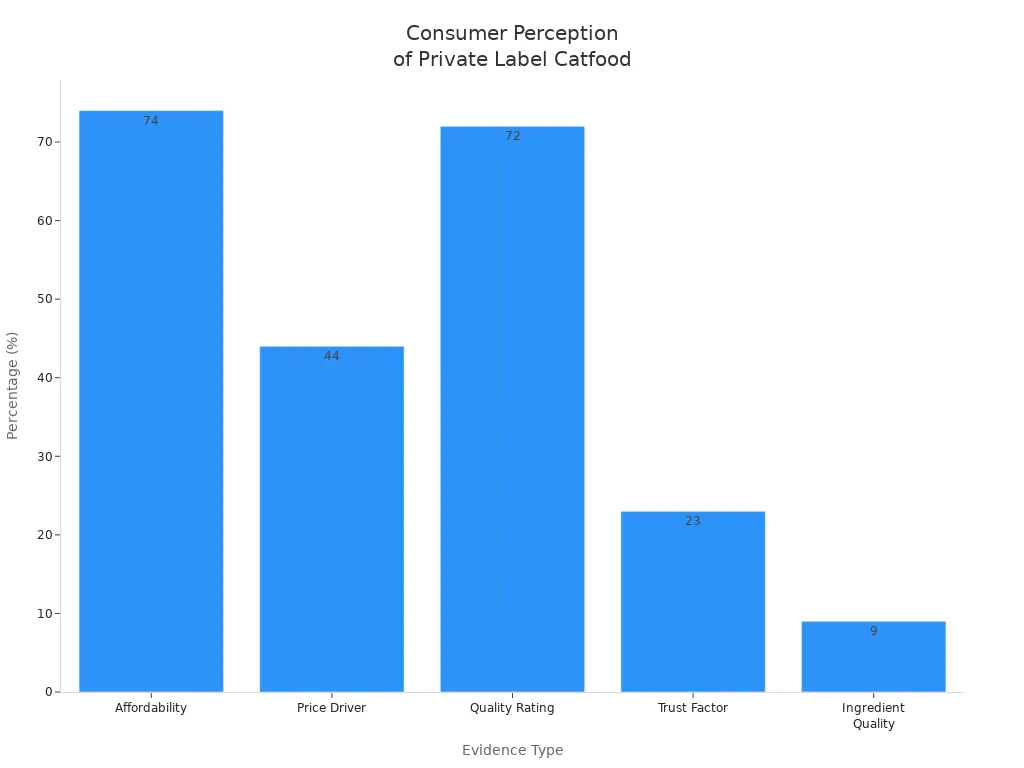
You can also use value-based pricing. This means you set prices by how much your product helps the customer. Most people think private label pet food is a good price and good quality. They trust brands that check quality and talk clearly. Nuzoko uses this plan to help sales grow and help you make smart choices.
Making new products is also important. You can make new recipes, use simple ingredients, and offer many choices. This helps you give buyers what they want and keep your price plan strong. Nuzoko’s team helps you make products that are special and help you sell more.
Tip: Use cost control, quality checks, and a smart price plan to keep profits safe and grow your brand.
You will have many problems in 2026. People do not want to pay more, even for better things. New safety rules cost more money to follow. Ingredient prices can change fast because of world events.
Factor | Description |
|---|---|
High Price Sensitivity | Many buyers do not want to pay higher prices. |
Compliance Costs | New safety rules make your costs go up. |
Supply Chain Disruptions | Prices for ingredients change quickly from global events. |
You can handle these problems by showing value, buying smart, and making new products. Nuzoko proves that good quality and smart planning help you win.
FAQ
What makes pet food profit margins change in 2026?
You see pet food profit margins change because ingredient costs rise. Shipping costs also increase. Pet owners want better quality nutrition. The pet food market grows fast. Private label growth helps you find new ways to keep your price point strong.
How do shipping costs affect the pet food market?
Shipping costs impact the pet food market by raising expenses for retailers and manufacturers. You pay more to move products. Shipping delays can make costs go up. You must plan for these changes to protect your profit margins.
Why do pet owners choose private label pet food?
Pet owners pick private label pet food for value and quality nutrition. You find more choices at a good price point. Private label sales grow as consumer demand rises. You trust brands that offer science-driven nutrition and safe ingredients.
What strategies help you manage costs in pet food?
You manage costs by using high-growth pricing strategies. You check ingredient prices often. You work with trusted suppliers. You use efficient shipping. You focus on quality nutrition. You watch the pet food market for new trends.
How does consumer demand shape the pet food market?
Consumer demand shapes the pet food market by pushing brands to offer better products. You see more pet owners ask for healthy options. The pet care dollar sales rise. You find new private label growth as brands meet these needs.



