

You usually find OEM manufacturing more cost-effective than in-house production for pet food brands. You save on facility investment and labor costs. Brands like nuzoko help you simplify supply chains and lower coordination expenses. When you look at dog cat petfood, you see that OEM partners offer quality assurance and global logistics. You should consider your business size, goals, and product needs before making a choice.
Key Takeaways
OEM manufacturing often saves money by avoiding large investments in facilities and equipment. This allows brands to launch faster and reduce financial risk.
In-house manufacturing offers more control but comes with higher fixed costs and hidden expenses. Consider total costs, not just ingredient prices.
Choosing an OEM partner like Nuzoko provides access to quality assurance and global logistics, helping brands maintain product safety and efficiency.
Evaluate minimum order quantities and lead times when selecting a manufacturing method. This ensures financial planning aligns with business needs.
Strong quality control is essential for brand reputation. Work with manufacturers that follow strict standards to ensure product safety and customer satisfaction.
Cost Savings Overview

OEM vs In-House Cost Factors
When you compare OEM and in-house manufacturing, you see that each method has unique cost factors. You need to look at the main areas where these costs appear. The table below shows the key differences between OEM and in-house manufacturing for pet food brands:
Cost Factor | Description | Impact on OEM vs In-house Manufacturing |
|---|---|---|
Raw Materials | Costs for ingredients including proteins, fats, and specialty additives. | Higher in OEM due to quality and compliance requirements. |
Production Complexity | Involves the intricacies of manufacturing processes and equipment. | More complex in OEM settings, leading to increased costs. |
Tooling Costs | Expenses related to the machinery and tools used in production. | OEM often requires specialized tooling, raising costs. |
Quality Control Measures | Standards and processes to ensure product quality. | Stricter in OEM, leading to higher operational costs. |
You notice that OEM manufacturing often brings higher costs in some areas. For example, you pay more for raw materials because OEM partners like Nuzoko follow strict quality and compliance rules. You also see that OEM manufacturing uses advanced equipment and specialized tools, which can increase the cost. Quality control is another area where OEM manufacturing stands out. You get stricter checks and higher standards, which can add to the cost but also protect your brand.
In-house manufacturing gives you more control over your processes. You can choose your own suppliers and set your own quality standards. However, you must invest in equipment, hire skilled workers, and manage every step of production. These responsibilities can lead to hidden costs that you might not expect at first.
Tip: When you choose between OEM and in-house manufacturing, always consider the full range of costs, not just the price of ingredients or equipment.
Short-Term and Long-Term Savings
You want to know where you can find real cost savings. In the short term, OEM manufacturing helps you avoid large investments. You do not need to build a factory or buy expensive machines. You also save on hiring and training workers. This means you can launch your pet food brand faster and with less risk.
In-house manufacturing may seem cheaper if you already own a facility or have experience in production. However, you must pay for maintenance, upgrades, and ongoing labor. These costs add up over time. You also face the risk of equipment breakdowns or changes in regulations, which can increase your expenses.
Over the long term, OEM manufacturing can give you more predictable costs. You pay for what you produce, and you can scale up or down as your business grows. Brands like Nuzoko offer flexible solutions, so you do not get locked into high fixed costs. You also benefit from their expertise in logistics and quality control, which can save you money and protect your reputation.
In-house manufacturing gives you more control, but you take on more risk. If demand drops, you still pay for your facility and staff. If you want to expand, you must invest more money and time. For many brands, OEM manufacturing offers greater cost savings and less financial risk, especially when you work with a trusted partner.
OEM Food Contract Manufacturing with Nuzoko
Production Fees and Minimum Orders
When you choose food contract manufacturing with Nuzoko, you gain access to flexible pricing and order sizes. Many suppliers in the industry set minimum orders between 1,000 and 12,000 kilograms, with prices ranging from $0.58 to $2.70 per kilogram. Nuzoko stands out by offering custom solutions for your brand, whether you need a small batch or a large shipment. You can select the level of customization you want, such as flavor, protein content, or packaging design. This flexibility helps you manage your budget and scale your business at your own pace. You do not need to invest in expensive equipment or large facilities. Instead, you focus on growing your brand while Nuzoko handles the food production.
Logistics and Quality Control
You want your pet food to reach customers quickly and safely. Nuzoko’s food contract manufacturing services include global logistics support. The brand manages shipping, warehousing, and delivery, so you do not have to worry about complex transportation steps. Nuzoko also follows strict quality control standards. Every batch goes through careful checks to meet international guidelines. This protects your reputation and ensures pets get safe, nutritious food. You save time and avoid mistakes that can happen with in-house food production. Nuzoko’s experience in outsourcing production means you get reliable service and consistent results.
Hidden OEM Costs
You should always look for hidden costs in food contract manufacturing. Some common extra expenses include changes in raw material prices, shipping fees, import duties, and compliance costs. For example, if ingredient prices rise, your total cost may increase. Shipping and import taxes can also add up, especially for international orders. Nuzoko helps you spot these costs early. The brand’s clear communication and detailed quotes make it easier for you to plan your budget. By outsourcing production, you avoid many surprise expenses that can come with running your own factory. You also reduce the risk of unexpected maintenance or regulatory issues.
Tip: Always ask your food contract manufacturing partner for a full breakdown of costs before you sign an agreement. This helps you avoid surprises and keeps your supply chain running smoothly.
Nuzoko acts as a strategic partner in food contract manufacturing. You get support for every step, from sourcing ingredients to delivering finished products. This approach simplifies your supply chain and lowers coordination costs. You can focus on building your brand while Nuzoko manages the details of outsourcing production.
In-House Manufacturing Costs
Facility and Equipment Investment
You must plan for several upfront expenses when you start in-house pet food manufacturing. These costs cover everything from market research to equipment and packaging. The table below shows typical initial investments:
Cost Component | Estimated Cost |
|---|---|
Market research and business planning | $500 |
Business registration and licenses | $100 |
Product and formulation development | $1,000 |
Ingredients and supplies | $2,000 |
Equipment and packaging | $5,000 |
Marketing | $500 |
Insurance | $300 |
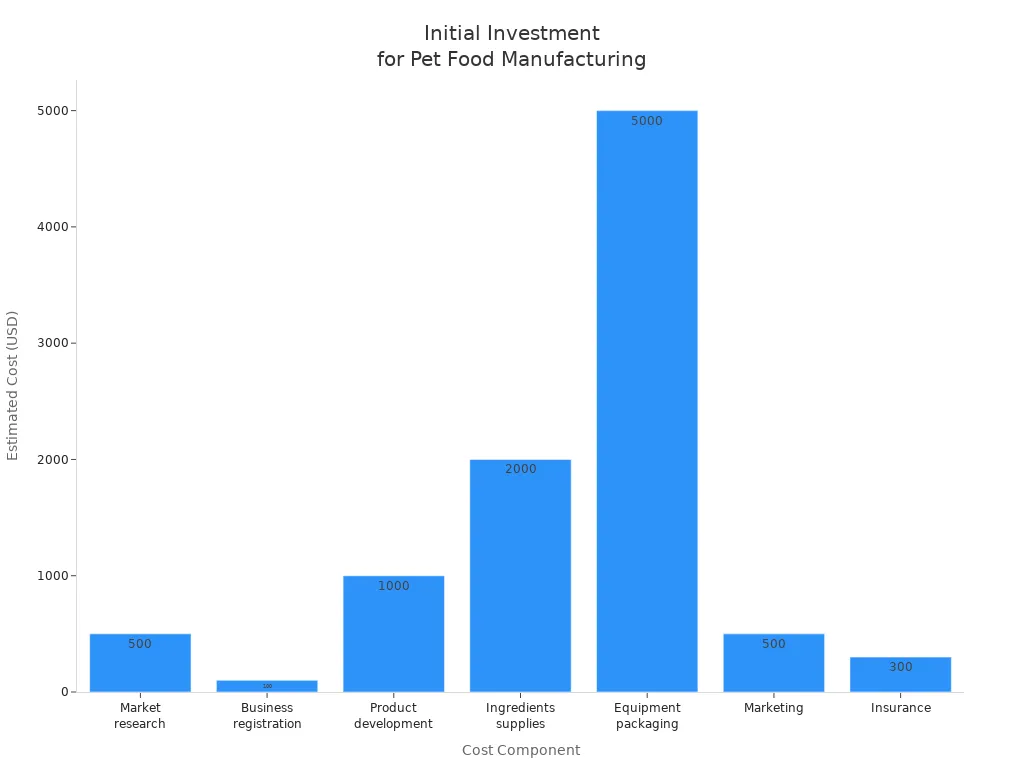
You see that equipment and packaging require the largest investment. You also need to budget for product development and supplies. These costs set the foundation for your production costs and affect your ability to scale.
Labor and Operational Expenses
You must hire workers and pay for ongoing operations. Labor costs depend on your region and the size of your business. As you grow, payroll increases. You also pay for ingredients, manufacturing processes, and digital advertising. The table below explains these expenses:
Expense Type | Description | Impact on Costs |
|---|---|---|
Ingredients & postbiotic | Largest variable cost at startup, covering raw materials and bioactive inputs | Drives product margin and ongoing cash outflow |
Manufacturing (extrusion/infusion) | Hands-on production cost that drives early cash burn | Sets unit economics for scaling |
Digital Ad Spend | Major early outflow for customer acquisition, modeled at 220% of revenue in 2026 | Controls time to break-even |
Fixed overhead | Recurring site and admin charges that must be paid monthly | Directly shortens runway before revenue ramps |
Labor costs change based on local wages and benefits.
Payroll grows as you hire more staff.
Subscriber growth and hiring pace drive these expenses.
You must track these costs closely to keep your business healthy.
Regulatory and Compliance Costs
You must follow strict rules to sell pet food. Regulatory costs include compliance with AAFCO in the United States and FEDIAF in Europe. The table below shows key compliance aspects:
Compliance Aspect | Description |
|---|---|
AAFCO Compliance | Ensures that pet food meets the standards set by the Association of American Feed Control Officials. |
FEDIAF Compliance | Adheres to the guidelines established by the European Pet Food Industry Federation. |
You must balance nutrition and cost efficiency.
You must ensure regulatory compliance.
You must maintain consistent quality.
You need to invest in testing, documentation, and certifications. These steps protect your brand and help you meet market standards.
Dog Cat Petfood Product Types and Cost Impact
Ingredient Sourcing and Bulk Purchasing
You need to pay close attention to ingredient sourcing when you make dog cat petfood. Raw materials often make up 40% to 55% of your total cost of goods sold. This means that the way you buy ingredients has a big impact on your overall costs. If you choose human-grade ingredients, your costs will go up compared to using regular feedstocks. Many brands lock in prices for key proteins and grains every quarter. This helps you keep your costs steady, even when the market changes.
Ingredient sourcing affects your cash flow.
Bulk purchasing lets you get better prices and build up inventory.
You must plan capital carefully, since a large part goes to fixed expenses and stocking up on ingredients.
When you manage ingredient sourcing well, you can control costs and keep your dog cat petfood business healthy. You also make sure you have enough inventory to meet demand.
Packaging and Distribution
Packaging and distribution play a big role in the cost of dog cat petfood. You need packaging that keeps food fresh and safe. Good packaging also makes your product stand out on store shelves. The cost of packaging depends on the materials you choose and the design you want. Simple bags cost less, but premium packaging can attract more customers.
Distribution costs include shipping, warehousing, and delivery to stores or customers. If you work with an OEM partner, you can use their global logistics network. This helps you save money and deliver dog cat petfood quickly. Efficient distribution means your products reach the market on time and in good condition.
Tip: Always review your packaging and distribution plans. Small changes can lead to big savings and help your dog cat petfood brand grow.
Contract Manufacturing Market Trends
Industry Growth and Competitive Pricing
You see the contract manufacturing market for pet food growing quickly. The market is expected to grow at a rate of 7.4% each year from 2026 to 2033. This growth comes from more people owning pets and wanting better food for them. Companies use new technology and smart machines to make pet food faster and with higher quality. These changes help keep prices competitive and give you more choices.
Here are some important trends in the contract manufacturing market:
More automation in factories makes production faster and more reliable.
Companies focus on sustainability, using eco-friendly materials and processes.
Smart technology helps track quality and improve efficiency.
Specialized equipment lets brands create unique products for different pets.
You benefit from these trends because they help lower costs and improve product quality. As technology advances, you can expect better pricing and more options for your pet food brand.
Nuzoko’s Position in the Market
Nuzoko stands out as a leader in the contract manufacturing market. You can rely on Nuzoko’s experience and advanced facility to meet your needs. The brand uses modern equipment and strict quality control to deliver safe, nutritious pet food. Nuzoko’s focus on innovation and sustainability matches the latest market trends.
You get more than just manufacturing when you work with Nuzoko. The brand helps you with sourcing, logistics, and product development. This support makes it easier for you to enter new markets and grow your business. Nuzoko’s strong position in the contract manufacturing market means you can trust them to deliver quality and value every time.
Note: Choosing a partner like Nuzoko helps you take advantage of industry growth and stay ahead in a changing market.
Comparing Cost Savings and Risks
Fixed vs Variable Costs
You need to understand the difference between fixed and variable costs when you compare OEM and in-house manufacturing. Fixed costs stay the same no matter how much pet food you make. Variable costs change based on how much you produce.
Here is a simple table to help you see the differences:
Cost Type | OEM Manufacturing | In-House Manufacturing |
|---|---|---|
Fixed Costs | Low (no factory or equipment) | High (factory, machines, staff) |
Variable Costs | Pay per order, flexible pricing | Ingredients, packaging, labor |
When you choose OEM, you avoid large fixed costs. You do not need to buy land, build a factory, or hire a big team. You pay only for the pet food you order. This helps you keep your business flexible. If your sales go up or down, your costs change with them.
If you run your own factory, you face high fixed costs. You must pay for the building, machines, and full-time workers. These costs do not go away if you sell less pet food. You also have variable costs like ingredients and packaging, but your fixed costs make it harder to adjust quickly.
Tip: If you want to keep your business flexible and lower your risk, focus on reducing fixed costs. OEM manufacturing helps you do this.
Risk Management and Returns
You face different risks with OEM and in-house manufacturing. You must know how to manage these risks to protect your brand and your profits.
Here are some main risks you need to watch:
Intellectual property (IP) protection. When you use OEM, you keep control over your product designs and trademarks. You can protect your brand and make sure no one copies your ideas.
Compliance with rules and standards. OEM lets you build your products to meet safety and quality rules from the start. This helps you avoid problems with laws in different countries.
Supply chain problems. If you make pet food in your own factory, you must handle every part of the supply chain. This includes buying ingredients, running machines, and shipping products. If something goes wrong, you must fix it yourself.
Market changes. If demand drops, you still pay for your factory and workers. This can hurt your profits. OEM lets you adjust your orders and costs more easily.
You can use smart strategies to manage these risks:
Sign non-disclosure agreements (NDAs) with your partners. This keeps your ideas safe.
Do factory audits before you choose a manufacturer. This helps you check quality and safety.
Register your product designs and trademarks. This protects your brand from copycats.
When you manage risks well, you can earn better returns. OEM manufacturing helps you lower your risk and keep your costs under control. You can focus on growing your brand and serving your customers. In-house manufacturing gives you more control, but you must handle more risks and higher costs.
Note: Always check your risk management plan before you choose a manufacturing method. Good planning helps you avoid surprises and keeps your business strong.
Practical Considerations for Pet Food Brands
Scalability and Growth
You want your pet food brand to grow. You need to think about how your manufacturing choice affects that growth. If you choose OEM production, you avoid spending a lot of money on building a factory or buying machines. This means you can use your money for marketing or creating new products. You can test new recipes or launch new flavors without worrying about big investments. This flexibility helps you respond quickly when the market changes. You can focus on what you do best—developing your brand and connecting with customers. You do not have to worry about running a factory or hiring a large team. OEM partners like Nuzoko give you the tools to scale up or down as your business needs change. You can grow your brand without taking on too much risk.
If you choose in-house manufacturing, you must invest a lot of money at the start. You need to buy equipment and set up your facility. This can slow down your growth. You may have less money for advertising or research. You also need to manage production, which can take time away from building your brand.
Quality Control and Brand Reputation
You must protect your brand’s reputation. Customers trust you to provide safe and healthy pet food. Consistent quality is essential for building customer trust. Poor quality control can result in product defects and customer complaints. Negative customer experiences can lead to bad reviews and costly returns, harming your brand reputation. You should make sure your manufacturer has strong quality control processes. These processes help ensure product safety and compliance with regulations.
When you work with an experienced OEM partner like Nuzoko, you benefit from their strict quality checks. They follow international standards and test every batch. This helps you deliver safe products and keep your customers happy. If you manage your own factory, you must set up your own quality systems. You need to train your team and check every step. Good quality control protects your brand and helps you grow.
You often find OEM manufacturing gives you lower costs and more flexibility than in-house production. Nuzoko helps you reach high quality, strong efficiency, and global markets. When you choose a manufacturing method, you should:
Check total cost of ownership, not just price per unit.
Review supplier capacity and ability to customize.
Demand proof of compliance with ISO 22000 and HACCP.
Use third-party audits for quality checks.
Compare minimum order quantities for financial planning.
Evaluate lead times to avoid supply gaps.
You should match your choice to your resources, goals, and product needs.
FAQ
What is the main benefit of OEM pet food manufacturing?
You save money and time with OEM pet food manufacturing. You do not need to build your own factory. You can focus on your brand and let experts handle production and quality.
How does OEM manufacturing help with environmental performance?
You improve environmental performance by working with OEM partners who use efficient processes. These partners often follow strict rules for waste and energy use. You help reduce your brand’s impact on the planet.
Why do consumer expectations matter in pet food production?
You must meet consumer expectations to build trust. People want safe, healthy, and high-quality pet food. If you deliver what they expect, you keep customers happy and loyal.
Can OEM partners help you meet consumer expectations?
You can meet consumer expectations with the help of OEM partners. They use advanced technology and strict quality checks. This ensures your products match what customers want every time.
Does in-house manufacturing affect environmental performance?
You control your own environmental performance with in-house manufacturing. You choose your equipment and processes. You must invest in upgrades if you want to lower your environmental impact.



