

If you want to make more money in pet food, OEM manufacturing usually saves more money than making your own factory. Many brands earn more by working with certified suppliers like Nuzoko. These suppliers use new technology and make production easier. It is important to check costs carefully, whether you sell Dog Cat Petfood or make homemade dog food. Your decision affects your profits and how well your brand does.
Key Takeaways
OEM manufacturing can save you money. It is cheaper than building your own factory. This means you can make more profit. It also lowers your risks.
You must look at all costs carefully. Check both direct and indirect costs. This helps you make smart choices about pet food production.
If you use an OEM partner like Nuzoko, you can focus on marketing. You can also grow your brand. The OEM partner will handle production and quality control.
OEM partners let you make special recipes and packaging. This helps your brand be different in the market.
OEM partners have lower minimum order quantities. This helps new brands try out ideas. You do not need to spend a lot of money at first.
Cost Analysis Overview
Cost analysis helps you make good choices in pet food manufacturing. Many brands wonder if they should use an OEM partner like Nuzoko or build their own factory. You need to know the main costs for each option before you decide.
OEM Manufacturing Costs
OEM manufacturing means you work with a partner who has the equipment and staff. Nuzoko uses a big, modern facility with advanced technology. This setup saves you money on big investments. You pay for the finished product, and the OEM does everything else.
Here is a table that shows the main cost parts in OEM pet food manufacturing:
Cost Component | Description |
|---|---|
Raw Materials & Housing Structure Costs | Includes costs for plastic housing and food-grade materials, influenced by design complexity. |
Electronics | Covers costs for WiFi modules, cameras, and other electronic components that vary in quality. |
Tooling, Mold Amortization & Engineering Investment | Involves fixed costs for injection molds and tooling adjustments that affect unit pricing. |
You get benefits from the OEM’s bulk buying and efficient work. This usually means lower unit costs, especially when you order a lot. Nuzoko’s model helps you avoid unused equipment and wasted materials. Many brands earn more profit because they do not spend money on building or running a factory.
In-House Manufacturing Costs
If you make pet food in your own factory, you control every step. You buy raw materials, hire workers, and take care of equipment. This gives you flexibility, but you pay more upfront and have more daily costs.
Let’s see what you might pay if you make dog or cat food yourself. Google search data shows:
Wet dog food costs between $1.24 and $3.50 per can. High-end brands can cost over $6 per day.
Dry dog food prices start at about $15 for a 15-pound bag. Premium brands can reach $32.
Homemade dog food costs about $1.21 per day for a 20-pound dog. This is close to lower-end commercial food, but you often use better ingredients.
When you run your own factory, you pay for utilities, repairs, and staff training. You need to buy or rent machines, and you must follow strict safety rules. These extra costs can add up fast. Your cost analysis should include both the money to start the factory and the money to keep it running each month.
A careful cost analysis shows that OEM manufacturing often gives you better value, especially if you want to grow or launch new products. You can focus on marketing and brand growth while your OEM partner handles production.
Dog Cat Petfood Cost Breakdown
Raw Materials
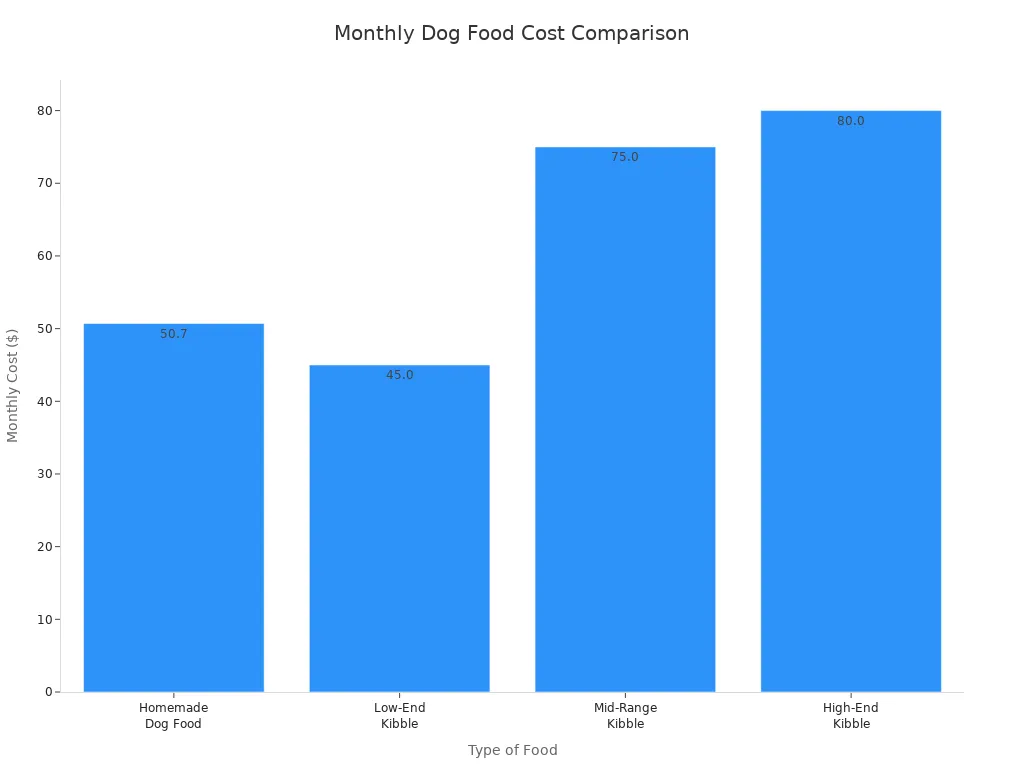
You must pick good ingredients for dog cat petfood. Nuzoko uses meats and grains that are high quality. Homemade dog food uses fresh veggies and proteins. Small batches cost more money. Big brands buy lots of ingredients at once. This makes each serving cheaper. The table below shows how homemade and commercial food costs compare:
Type of Food | Cost per Serving | Monthly Cost (30-pound dog) |
|---|---|---|
Homemade Dog Food | $50.70 | |
Low-End Kibble | $1.00 per pound | $45.00 |
Mid-Range Kibble | $1.67 per pound | $75.00 |
High-End Kibble | $2.67 per pound | $80.00 |
Labor and Overhead
You pay for workers and other costs to make petfood. If you make it yourself, you hire people and train them. You also pay for insurance. Nuzoko’s OEM model takes care of these costs. Their team does the production, checks quality, and packs the food. You save time and money by letting experts handle everything.
Equipment Investment
You need machines to make dog cat petfood. Factories need mixers, ovens, and tools for packing. These machines cost a lot and need fixing often. Nuzoko’s facility has new machines ready to use. You do not spend money on buying or fixing equipment if you use OEM manufacturing.
Scalability
You can grow your petfood business faster with OEM partners. Nuzoko lets you make more food without buying machines or hiring more people. OEM manufacturing gives you:
Choices to make special recipes.
Faster launch for new products.
More time for marketing and helping customers.
You can quickly follow market changes and meet what customers want. OEM partners help you start new dog cat petfood products with less risk.
Side-by-Side Cost Comparison

When you compare OEM, in-house, and homemade pet food, you see big differences in cost. You need to look at both direct and indirect costs. This helps you make the best choice for your business.
Direct Costs Table
You pay direct costs every time you make or buy pet food. These include raw materials, labor, equipment, and packaging. The table below shows how these costs look for each method:
Cost Type | OEM (Nuzoko) | In-House Manufacturing | Homemade Dog Food |
|---|---|---|---|
Raw Materials | Lower (bulk rates) | Medium to High | High (small batches) |
Labor | Included in price | High (staff, training) | Your time |
Equipment | None (OEM owns) | High (purchase, repair) | Kitchen tools |
Packaging | Included in price | Medium | Basic or none |
Quality Control | Included in price | High (testing, recalls) | Low |
Cost per Serving | $1.00–$1.67 | $1.00–$2.67 | $1.69 |
Tip: When you order more than 25,000 pounds of pet food, you can save 5–7% on average. Bulk purchasing helps you lower your costs. OEM partners like Nuzoko use this advantage to give you better prices.
Indirect Costs
Indirect costs do not show up right away, but they can affect your profits. You need to think about these when you choose how to make your pet food.
Product Returns: If you make mistakes in your own factory, you may have to deal with returns or recalls. This can cost you money and hurt your brand.
Storage and Inventory: You need space to store raw materials and finished products. OEM partners often handle this for you.
Regulatory Compliance: You must follow safety rules and get certifications. This takes time and money if you do it yourself.
Waste and Spoilage: Small batches can lead to more waste. OEM partners use better systems to reduce this problem.
Opportunity Cost: When you spend time on production, you have less time for marketing and sales.
You can focus on growing your brand when you let an OEM partner handle production. This saves you money and helps you avoid hidden costs.
You see that OEM manufacturing gives you lower direct costs and fewer indirect costs. In-house manufacturing gives you more control, but you pay more and take more risks. Homemade dog food works for small needs, but it costs more and takes more time.
Factors Affecting Nutritional Needs and Costs
Quality Control
You want your pet food to be safe and healthy. Quality control is important for both OEM and in-house manufacturing. If you work with a partner like Nuzoko, they check every step. This makes sure the food meets high standards for nutrition and ingredients. Here is how the process goes:
Phase | Description |
|---|---|
1 | First, they talk with you and learn what you need. |
2 | Next, they test samples before making a lot of food. |
3 | Then, they watch over big batches and check quality. |
You can trust each batch has the right nutrition. It is hard to do this well in your own factory if you want to save money.
Customization
You might want special recipes or cool packaging for your brand. OEM manufacturing lets you pick many things to change. You can choose the formula and how the package looks. This helps your food stand out and fit different pets’ needs. The table shows what you can change:
Manufacturing Type | Customization Options |
|---|---|
OEM | You can change almost everything, like inside parts, motor power, app look, housing, and packaging. |
ODM | You can change colors, logo spots, outside shell, and packaging, but not the inside parts. |
These choices help you make food with good nutrition and ingredients for your market.
Minimum Orders
Minimum order quantities (MOQs) change your costs and choices. High MOQs can make it tough for new brands. You may have to buy 1,000 to 5,000 units at once. This can use up your money and add risk. Some companies now let you order as few as 100 units. This helps you test your ideas and grow slowly. Lower MOQs let you spend less and focus on making good pet food.
Tip: Always ask about the MOQ before picking a partner. Lower MOQs help you save money and meet your customers’ needs without wasting anything.
Pet Product OEM vs In-House Pros and Cons
OEM Pros and Cons
When you choose a pet product oem partner, you gain many advantages. Nuzoko shows how a strong pet product oem can help your brand grow. You do not need to build your own factory or hire a big team. Instead, you work with experts who know how to make safe and healthy food for pets. Here are some key benefits you get from a pet product oem:
Customization and specialization let you create unique recipes for pet owners who want special nutrition.
Cost-effectiveness means you avoid spending money on buildings and machines.
Speed to market helps you launch new pet product oem lines quickly.
Regulatory compliance ensures your pet product oem meets safety and quality rules.
You can focus on marketing and building trust with pet owners.
However, you should also know the challenges. When you use a pet product oem, you depend on their team for quality and timing. If your pet product oem has delays, your brand may face problems. You must choose a reliable pet product oem like Nuzoko to protect your reputation with pet owners.
In-House Pros and Cons
If you decide to make pet food yourself, you control every step. You can change recipes or packaging any time. Some pet owners like brands that make their own food. Still, in-house manufacturing brings risks and hidden costs, especially for small businesses.
Description | |
|---|---|
Regulatory Compliance | You must follow strict rules from USDA and FDA for your pet product oem. |
Quality Control | Small teams may miss problems that a pet product oem would catch. |
Insurance Requirements | You need insurance to protect your pet product oem business. |
Potential Liabilities | If your food harms pets, you face big risks and costs. |
You also need several types of insurance for your pet product oem operation. Product liability insurance covers claims if pets get sick. General liability insurance protects against accidents. Workers’ compensation is needed if you hire staff. Commercial auto insurance is required for delivery vehicles.
Running your own pet product oem facility takes time and money. You may spend more on repairs, staff, and safety checks. These hidden costs can surprise you. Many pet owners trust brands that use a certified pet product oem because they know the food is safe and tested.
Choosing the Right Manufacturing Approach
Business Size
Think about how big your business is before you pick a method. Small brands want more control and flexibility. If your company is small, you might not have enough money for a factory or lots of workers. OEM partners like Nuzoko help you start fast. You can use their factory and team. This lets you spend time on marketing and growing your brand. Big companies sometimes want more control. They may choose in-house manufacturing to manage everything. You need to decide if you want to make products yourself or let an OEM partner do it.
Tip: If you want to grow quickly, OEM solutions help you expand without spending a lot. You can add new products and reach more customers.
Investment and Risk
Look at how much money and risk each method has before you choose. Each way costs different amounts and has its own challenges. Nuzoko’s solutions help you lower risks and manage costs. You get help with supply chain and quality checks. Here is a table that shows important investment and risk factors:
Investment/Risk Factor | Description |
|---|---|
Cost Control | You need to know prices to plan and grow your business. |
Quality Assurance | Skipping tests can cause bad products and unhappy customers. |
Tooling Ownership | If you do not own tooling, you may lose choices for updates later. |
MOQ Influence | Minimum order amounts change unit costs and affect supplier commitment. |
Engineering Challenges | Many projects fail because brands do not plan for engineering needs. |
System-Level Balance Issues | Electronics problems often come from system-level issues, not single parts. |
Check if you can handle these risks. OEM partners like Nuzoko help you avoid many problems. You get supply chain help and quality checks. This makes it easier to launch new products and keep your customers happy.
You need to weigh the cost per serving, monthly cost, and savings when choosing between pet product odm and in-house production. Pet product odm like Nuzoko helps you shorten your development timeline and lower risks. Store bought options often meet strict nutrition standards and offer complete meals. You get more savings and less stress with store bought pet food. Homemade diets can cost more and may not meet all nutritional needs. Always check quality and hidden costs before you decide.
Pet product odm gives you reliable nutrition and better savings.
Store bought food supports pets with special health needs.
Homemade food takes more time and can raise your monthly cost.
FAQ
What is the main difference between oem and odm pet food manufacturing?
You choose oem when you want a partner to make your recipe. You select odm if you want to use a ready-made formula and change the packaging. Both options help you launch products faster than building your own factory.
Can I customize recipes with oem and odm partners?
You can work with oem to create unique recipes for your brand. You can use odm to change packaging and branding. You get flexibility with oem and odm, so you can meet different pet needs and market demands.
Is homemade dog food cheaper than oem or odm pet food?
You spend more on homemade dog food because you buy small batches of ingredients. You save money with oem and odm because they buy in bulk. You also get better quality control with oem and odm partners.
How do oem and odm help with quality assurance?
You trust oem and odm partners to follow strict quality checks. You get tested ingredients and safe production. You avoid mistakes that can happen with homemade dog food. You protect your brand with oem and odm quality systems.
What is the minimum order for oem and odm pet food?
You usually need to order at least 1,000 units with oem and odm. Some oem and odm partners let you start with 100 units. You can test your product before you invest more. You get flexibility with oem and odm minimum orders.



