You see variation in minimum order quantity for pet food because each product type needs different production methods, ingredient sourcing, packaging, and equipment. Large-scale producers often set high minimums, while niche specialists give you more flexibility with smaller batches. The right equipment and clean facilities help keep your pet food safe and efficient to produce. In the pet food industry, Nuzoko helps you face these challenges by offering high-quality products and smart strategies. With their support, you can better understand the pet food market and make informed choices for your brand. This knowledge strengthens your position in the pet care industry and brings better nutrition to pets. Nuzoko’s guidance covers every aspect, from petfood catfood dogfood to specialized treats.
Key Takeaways
Minimum Order Quantity (MOQ) varies by pet food type due to different production methods and equipment needs.
Choosing products with lower MOQs, like treats or freeze-dried foods, allows you to test the market without large investments.
Nuzoko offers advanced manufacturing capabilities, helping you select the right product and MOQ for your brand’s needs.
Ingredient sourcing impacts MOQ; rare ingredients may require larger orders to manage costs and ensure consistency.
Custom packaging increases MOQ due to setup costs; plan for larger orders to spread these costs effectively.
Production Process and MOQ in Petfood Catfood Dogfood
Batch Size and Equipment Impact
You see many pet food types in the market, such as dry kibble, wet food, freeze-dried meals, and treats. Each type needs a special process and different machines. Dry kibble uses large mixers and ovens. Wet food needs canning lines and sterilizers. Freeze-dried food uses special freeze-drying machines. Treats often use smaller mixers and ovens. These machines set the batch size for each run. You cannot make a small batch in a giant oven without wasting energy and time. This is why the minimum order quantity, or MOQ, changes for each product.
When you order petfood catfood dogfood, you must think about the equipment. Large machines work best with big batches. If you want a small batch, the cost per bag or can goes up. This affects your price in the market. Some pet food types, like freeze-dried treats, allow smaller batches. Others, like dry kibble, need bigger runs to keep costs low. You must match your order size to the machine and the market demand.
Tip: If you want to test a new product in the market, start with a type that allows smaller MOQs, like treats or freeze-dried food. This helps you learn what your customers like before you invest in large batches.
Nuzoko’s Manufacturing Capabilities
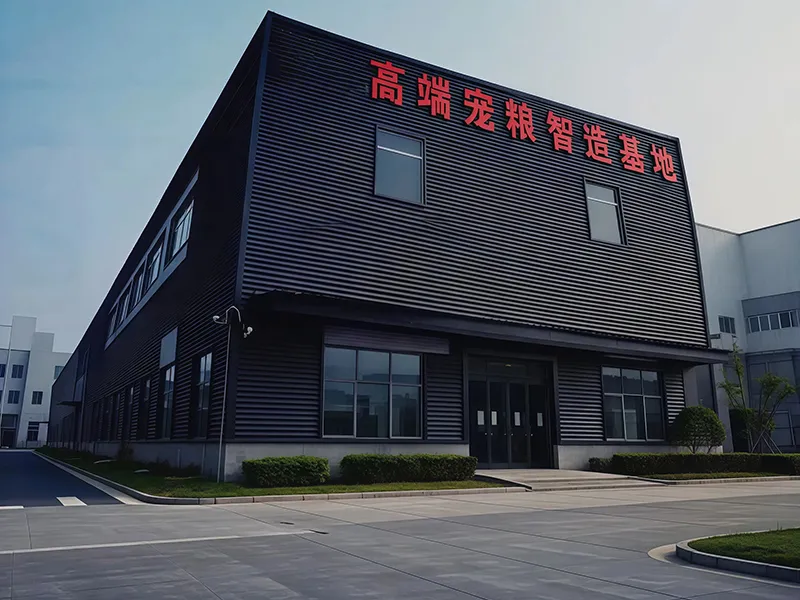
Nuzoko helps you handle these challenges with a modern, integrated facility. You get access to advanced machines for every petfood catfood dogfood type. Nuzoko’s team knows how to switch between dry, wet, freeze-dried, and treat production. This means you can choose the best product for your market and get the right MOQ for your needs.
Here is how Nuzoko manages different pet food types and their MOQ requirements:
Product Type | |
|---|---|
Dry Kibble | Typically higher MOQs, often 5-10 tons or more. |
Wet Food/Canned | Can range from tens of thousands of cans to smaller batches for pouches. |
Freeze-Dried | Often more flexible, with lower MOQs possible due to specialized processes. |
Treats/Supplements | MOQs can be lower, depending on customization. |
You see that dry kibble needs a bigger order. Wet food can be flexible, especially if you choose pouches. Freeze-dried food and treats give you more options for small batches. Nuzoko’s facility lets you pick the best fit for your market plan.
When you work with Nuzoko, you get more than just machines. You get a partner who understands the market. Nuzoko helps you plan your petfood catfood dogfood orders so you do not waste money or miss market trends. You can trust their experience to guide you through the process. This support helps you grow your brand and reach more customers in the market.
You must remember that the right MOQ helps you balance cost, quality, and market needs. Nuzoko’s advanced manufacturing gives you the tools to succeed with any pet food type. You can respond quickly to changes in the market and keep your products fresh and competitive.
Ingredient Sourcing and Minimum Order Quantity
Specialty Ingredients and Sourcing Challenges
You need to think about ingredient sourcing when you plan your pet food project. Ingredient availability can change your minimum order quantity. If you want to use custom or functional formulas, you may face more challenges. Some ingredients are hard to find or only come from one supplier. This can make your lead time longer and your MOQ higher. You must stay flexible with your recipes to keep your pet food consistent and trusted in the market.
Sourcing specialty ingredients for pet food brings extra steps. You must check for potency and bioavailability. You also need to follow strict rules for pet food safety and product safety. Regulations change often, so you must keep up to avoid problems. If you use rare ingredients, you may need to order more at once. This helps you manage costs and risks. Sometimes, you need smaller production runs to test new ideas or manage your budget. As demand grows, you must be ready to scale up your orders.
Note: Ingredient sourcing affects your market strategy. If you depend on one supplier or a rare ingredient, you may face delays or need to change your formula. Always plan for changes in supply and price.
Here is a table to show how supplier minimums for specialty ingredients can affect your MOQ:
Aspect | Description |
|---|---|
MOQ & Pricing | Affects startup costs and scalability |
Minimum Order Inquiry | What is your minimum order? Are volume discounts available? |
Flexibility | High MOQs with no flexibility for new brands |
You see that supplier rules can change your costs and your ability to grow in the market. You must ask the right questions before you start your pet food project.
Nuzoko’s Supplier Network
You can solve many sourcing problems with the right partner. Nuzoko gives you access to a global supplier network. This network helps you find the best ingredients for your pet food, no matter what type you need. You get more choices and better prices. You also get strong traceability, which is key for product safety and pet food safety. Top suppliers in the network help you keep your brand trusted in the market.
Nuzoko’s network covers many regions, including Shandong, Hebei, Henan, and Tianjin in China. These areas have strong supply chains and skilled workers. You benefit from fast ingredient sourcing and lower costs. Proximity to ports in Shandong makes export logistics smooth. This helps you reach the market faster and manage your MOQ better.
You get access to many suppliers for each ingredient.
You can adapt to changes in the market quickly.
You keep your product safety and quality high.
You can scale your orders as your market grows.
Nuzoko’s team supports you with procurement, price negotiation, and coordination. You do not need to worry about changing regulations or supply chain risks. You can focus on building your brand and meeting market demand. With Nuzoko, you get the flexibility and support you need to succeed in the pet food market.
Private-Labeling Pet Food and Custom Packaging
Customization and MOQ Requirements
When you choose private-labeling pet food, you get the chance to create a unique product for your market. Customization lets you design packaging, select recipes, and add your brand’s style. This process helps your product stand out, but it also affects the minimum order quantity you need to meet.
You face higher MOQs when you want custom packaging. Here’s why:
Custom packaging needs special molds and designs, which cost more to set up.
You must order larger quantities to spread these costs over more units.
Suppliers often require minimum production runs for custom designs.
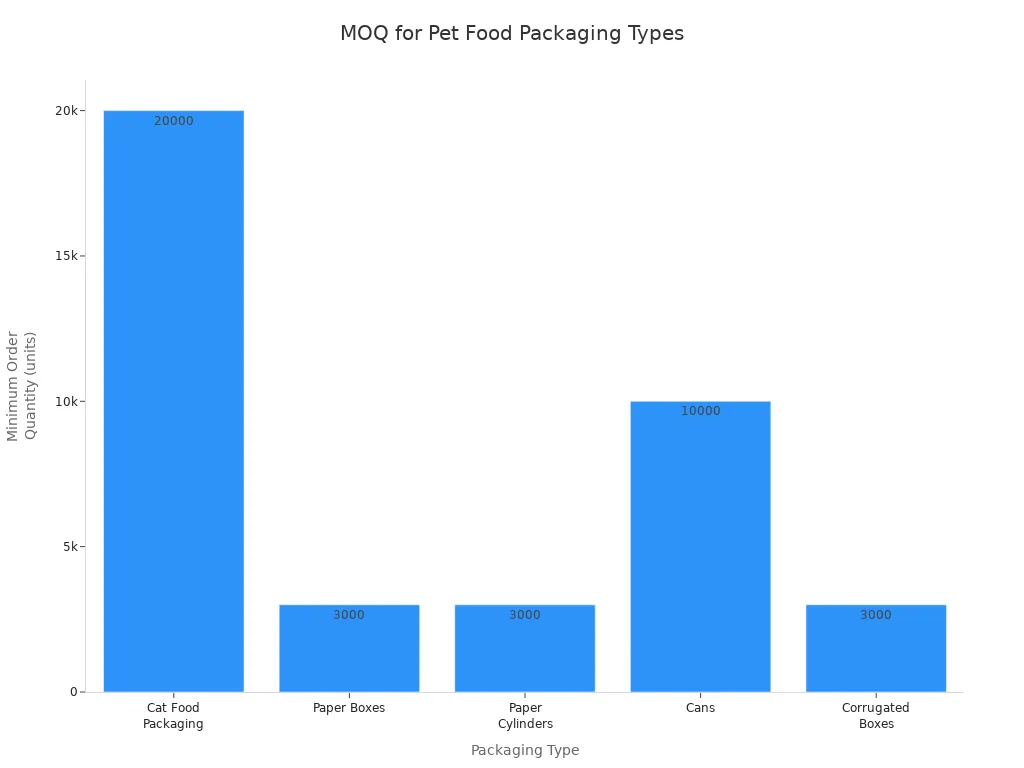
You can see how different packaging types have their own MOQ requirements in the table below:
Packaging Type | Minimum Order Quantity (MOQ) | Suitable For |
|---|---|---|
Cat Food Packaging | 20,000 units | Large-scale production |
Paper Boxes | 3,000 units | Small to medium-sized businesses |
Paper Cylinders | 3,000 units | Small-batch or niche products |
Cans | 10,000 units | Medium to large-scale production |
Corrugated Boxes | 3,000 units | Businesses of all sizes |
The pet food market is growing fast. More people want premium and specialty products. This trend means you need flexible manufacturing and private-labeling, but it can also lead to higher costs for custom packaging and health-focused features.
Nuzoko’s OEM/ODM Solutions
You need a private-label partner who understands the market and supports your product customization goals. Nuzoko offers tailored OEM and ODM solutions to help you succeed. As your private-label partner, Nuzoko gives you:
Recipe development for special diets or preferences.
Full branding services, including packaging design and compliance.
Flexibility to produce many formats, like kibble, cans, or treats.
Nuzoko acts as your private-label partner at every step. You can test new products with low MOQs, sometimes as few as 5-20 units. This helps you check quality before making a big commitment. Clear pricing structures mean you avoid surprises.
Nuzoko’s team helps you manage customization, packaging, and production. You get support for product customization, packaging choices, and market entry. As your private-label partner, Nuzoko helps you meet market demand, control costs, and build a strong brand.
Cost Efficiency and Pet Food Market Policies
Manufacturer Strategies for MOQ
You see that pet food manufacturers set minimum order quantities to balance cost and market demand. They want to keep production efficient and meet the needs of the pet food market. You can look at the main factors in the table below:
Factor | Description |
|---|---|
MOQ shapes batch sizes and helps manufacturers plan their schedules. | |
Cost-Effectiveness | Higher MOQs lower the cost per unit, but you need to invest more money upfront. |
Flexibility | Lower MOQs give you more options to react to market changes, but they can make production less efficient. |
Manufacturers use several steps to set the right MOQ for the pet food industry:
They check the cost of making each unit, including raw materials and packaging.
They look at supplier rules that can change profit margins.
They study demand by watching the pet food market and consumer trends.
They find the break-even point to avoid extra inventory.
They set the MOQ above this point to match market demands.
They adjust MOQs when the market or consumer needs change.
You see that higher MOQs make production runs longer and more efficient. You also see that lower MOQs help you adapt to market shifts but can raise the cost per unit.
Navigating MOQ with Nuzoko
You can manage MOQ challenges in the pet food industry with smart strategies. You should compare suppliers online to find the best fit for your market. Direct purchases from pet food manufacturers often save you money. You need to think about shipping, duties, and storage when you plan your total cost.
You must understand how MOQ affects your inventory. High MOQs can lead to extra stock if consumer demand drops. Low MOQs help you test new products in the pet food market without big risks. You should balance price discounts from bulk orders with the cost of holding inventory, especially for perishable pet food.
Nuzoko helps you with these choices. Their team knows the pet food market and can guide you through negotiations. You get support for sourcing, price talks, and planning. This makes it easier to meet market demands and keep your cost under control. With Nuzoko, you can respond to consumer trends and grow your brand in the pet food industry.
Tip: Always ask about flexible MOQ options. This helps you match your orders to market changes and consumer needs.
You see MOQ differences in pet food because each product type needs unique production, sourcing, and packaging. Customization and market demand also play a role. Nuzoko helps you make smart choices with strong support and proven results. You get safety, quality, and flexibility for your brand.
Key Factor | Description |
|---|---|
Meets AAFCO, FSMA, and ISO 22000 standards with regular testing. | |
Customization and Private Labeling | In-house nutritionists and full branding services for your needs. |
Production Capacity and Efficiency | Modern technology and scalable production for any order size. |
Explore Nuzoko’s solutions or contact their team for OEM/ODM support today.
FAQ
What does MOQ mean in pet food manufacturing?
MOQ stands for Minimum Order Quantity. You must order at least this amount when you buy from a manufacturer. MOQ helps factories run machines efficiently and keep costs low.
Why do different pet food types have different MOQs?
Each pet food type uses different machines and ingredients. Dry kibble often needs bigger batches. Treats or freeze-dried foods can use smaller batches. You see different MOQs because of these production needs.
How can you lower your MOQ when starting a new pet food brand?
You can start with treats or freeze-dried products. These usually have lower MOQs. You can also ask your supplier about flexible options or test runs before making a big order.
How does Nuzoko help you manage MOQ challenges?
Nuzoko gives you access to advanced machines and a global supplier network. You get support for sourcing, production, and packaging. Nuzoko helps you choose the right product and MOQ for your market.