You can see big differences in petfood for large and small breeds. Large breed dogs need food with less calcium and calories. This helps them grow well and keeps their joints healthy. Small breed dogs need more calories in their food. They burn energy fast because of their quick metabolism. Kibble size is important too. It should fit your dog’s mouth and how they chew. Picking the right food helps your dog stay healthy and happy. Brands like nuzoko make food for each breed’s needs.
Dog Size Category | Key Features | |
|---|---|---|
Small Breed Dogs | More calories because they use energy fast | Kibble fits small mouths, gives steady energy |
Large Breed Dogs | Less calcium and calories for safe growth | Bigger kibble, helps joints, special fiber types |
Key Takeaways
Large breed dogs need food with fewer calories. They also need less calcium. This helps them grow healthy. It keeps their joints strong.
Small breed dogs need food with more calories. Their bodies use energy quickly. They need food that gives them lots of energy.
Kibble size is important. Pick the right size for your dog’s breed. This helps your dog chew safely. It also helps your dog digest food better.
Large breed dog food should have joint support ingredients. Look for glucosamine and omega-3s. These help your dog move easily.
Always pick food that fits your dog’s breed size. Choose food for your dog’s age. This keeps your dog healthy and happy.
Nutritional Needs for Large and Small Breeds

Calorie Density in Large Breed Dog Food
You need to know that calorie density plays a big role in the right kind of dog food for your pet. Large and giant breed dogs have slower metabolisms than smaller breeds. This means they need fewer calories per pound of body weight. If you feed a large dog food that is too calorie-dense, it can lead to unhealthy weight gain and joint problems. On the other hand, small breed dog food is packed with more calories to match their higher caloric needs and fast metabolism.
Large breed dog food has a lower caloric density because large dogs burn energy more slowly.
For example, a mastiff weighing 150 pounds needs about 3,000 calories per day, which is 20 calories per pound.
A small dog weighing 10 pounds needs only 400 calories per day, but that is 40 calories per pound.
Small breeds burn calories quickly, so their food must be calorie-dense to keep up with their energy.
Here is a table showing daily caloric intake for different dog weights:
Dog Weight | Daily Caloric Intake |
|---|---|
10 lb | 218 calories |
20 lb | 366 calories |
40 lb | 616 calories |
60 lb | 835 calories |
100 lb | 1225 calories |
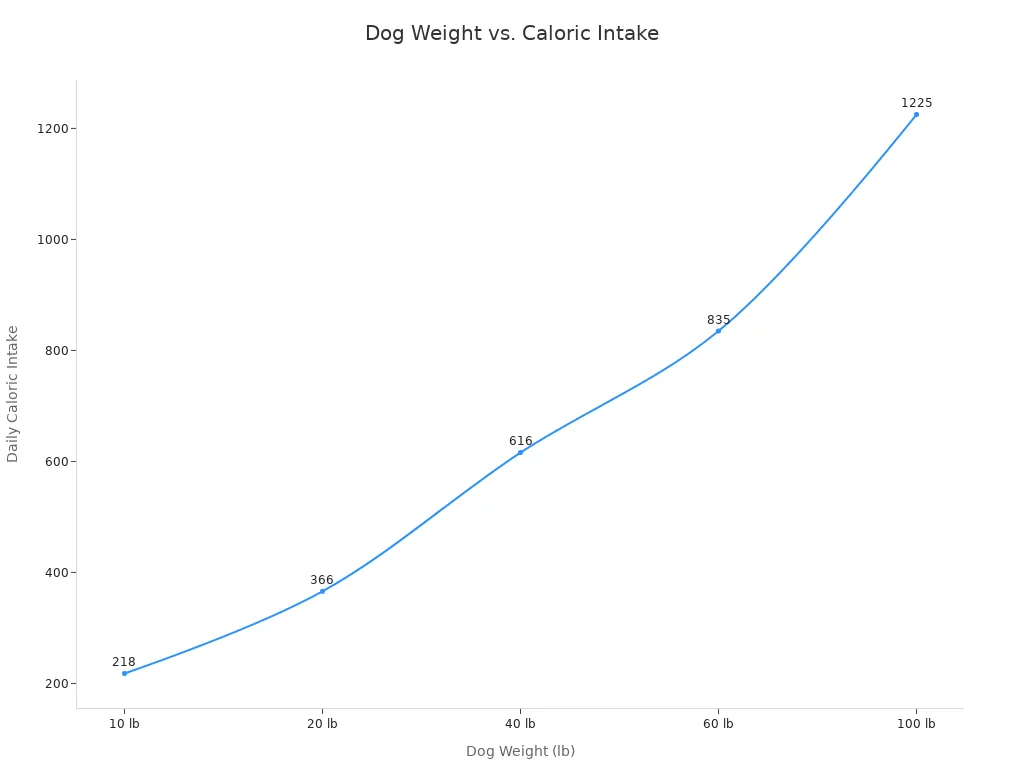
You can see that as dogs get larger, they need more total calories, but fewer calories per pound. This is why petfood for large breeds is less calorie-dense than food for small breeds.
Protein and Fat Levels for Your Dog
Protein and fat are important for your dog’s health. The right balance supports growth, energy, and muscle strength. Large breed nutrition focuses on steady growth and joint support. Small breeds need more protein and fat to fuel their active lives.
Breed Type | Protein Percentage | Fat Percentage |
|---|---|---|
Large Breed | 26% | 14% |
Small Breed | 30% | 20% |
Puppies grow fast and need food with higher protein, fat, and calories. However, large breed puppies need carefully balanced nutrition. Too much protein or fat can cause them to grow too quickly, which may lead to joint problems. For large breed puppies, a protein/fat ratio of 26/14 helps support a slower, healthier growth rate. Small breeds, with their higher caloric needs, do best with food that has more protein and fat to match their energy.
As your dog grows, their diet changes. Large breeds need fewer calories per pound as adults. Small breeds may need food with more calories to keep up with their energy. Senior dogs often need fewer calories but more fiber and nutrients for joint health.
Tip: Always choose a complete and balanced food that matches your dog’s breed size and life stage.
Calcium and Phosphorus in Petfood
Calcium and phosphorus are key minerals for bone health. Large breed dog food must have the right balance to support slow, steady growth. Too much calcium or phosphorus can cause bone and joint issues in large breed puppies. The recommended calcium to phosphorus ratio for large breed nutrition is between 1.1:1 and 2:1. For large breed puppies, the ideal range is 1.1 to 1.3:1.
Calcium and phosphorus help form strong bones, especially in growing puppies.
Large breed dog food uses controlled levels of these minerals to prevent bone problems.
Small breed dog food meets the higher energy and nutritional needs of smaller dogs.
Feeding small dogs large breed food can cause nutritional imbalances, especially in calcium and phosphorus, which may harm bone health.
You should always pick food designed for your dog’s unique nutritional needs. This helps support a balanced diet and keeps your dog healthy at every stage.
Dog Food Ingredients and Sourcing
Joint Support Ingredients for Large Breeds
You want your big dog to run and play. The right food can help protect their joints as they get older. Large breed formulas have special nutrients for joint health. These nutrients work together to keep your dog moving well.
Glucosamine helps keep cartilage in your dog’s joints healthy.
Chondroitin works with glucosamine to protect and strengthen cartilage.
Omega-3 fatty acids, like EPA and DHA, lower swelling and help with joint pain.
Many studies show glucosamine and chondroitin are good for cartilage. Omega-3 fatty acids are important too. They help lower swelling and make it easier for dogs with joint problems to move. When you pick food for a large breed, check for these ingredients on the label.
Nuzoko uses science to pick the best dog food ingredients. The team learns which nutrients help large dogs most. Nuzoko gets high-quality glucosamine, chondroitin, and omega-3s for joint health. The brand follows strict rules to make sure every batch is good.
Tip: Always check the ingredient list for joint support nutrients when you choose food for your large dog.
Digestibility and Fiber for Small Breeds
Small breed dog food should be easy to digest. Small dogs have fast metabolisms and small stomachs. They need food that gives energy and helps their gut stay healthy. The right fiber mix helps your dog digest food and keeps their stool healthy.
There are two main types of fiber in dog food: soluble and insoluble. Soluble fibers, like those from fruits, can be broken down and help your dog’s gut. Insoluble fibers, like those from cereals, add bulk and help with regular pooping. Beet pulp is a good ingredient because it has both types of fiber. This balance helps with good digestion and healthy stools.
Mixing different fiber sources makes food even better for your dog. Fruits add pectins, and cereals give inulin. These fibers work together to help your dog digest food and stay healthy. Good fiber also affects poop quality. Insoluble fiber makes more stool, and soluble fiber helps control moisture.
Nuzoko picks dog food ingredients carefully. The team uses research to find the best fiber for small breeds. Nuzoko’s focus on quality means your dog gets food that is healthy and easy to digest. The brand follows international rules to make sure every bag is safe and the same.
Note: Look for foods with different fiber sources to help your small dog digest food well and stay healthy.
Kibble Size and Texture in Petfood
Chewing Safety for Your Dog
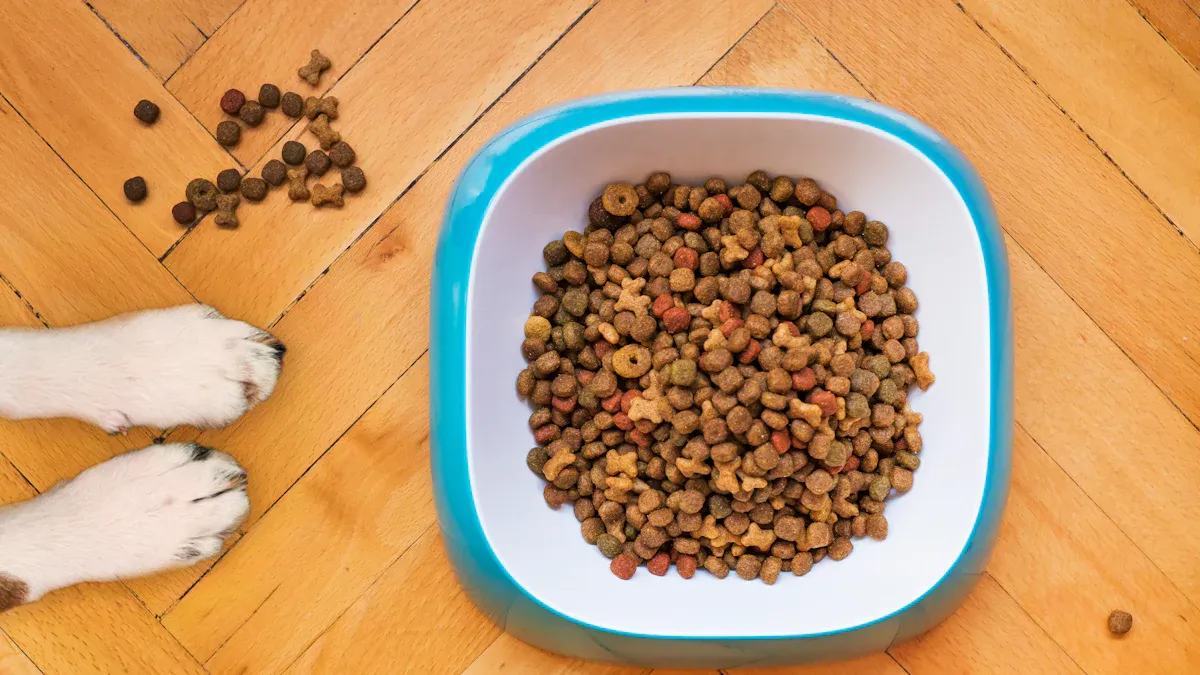
You want your dog to eat safely and enjoy every meal. Kibble size matters for chewing safety. If you have a small breed, you should choose kibble that is about 7–8 mm in diameter. This size fits their mouths and helps them chew without trouble. Medium kibble, around 11–12 mm, works well for mid-sized breeds. Large breeds need kibble that is 15–16 mm in diameter. This bigger size matches their strong jaws and helps keep their teeth clean.
Kibble Size | Recommended Dimensions | Suitable Breeds |
|---|---|---|
Small Kibble | 7–8 mm diameter | Small breeds |
Medium Kibble | 11–12 mm diameter | Mid-sized breeds |
Large Kibble | 15–16 mm diameter | Large breeds |
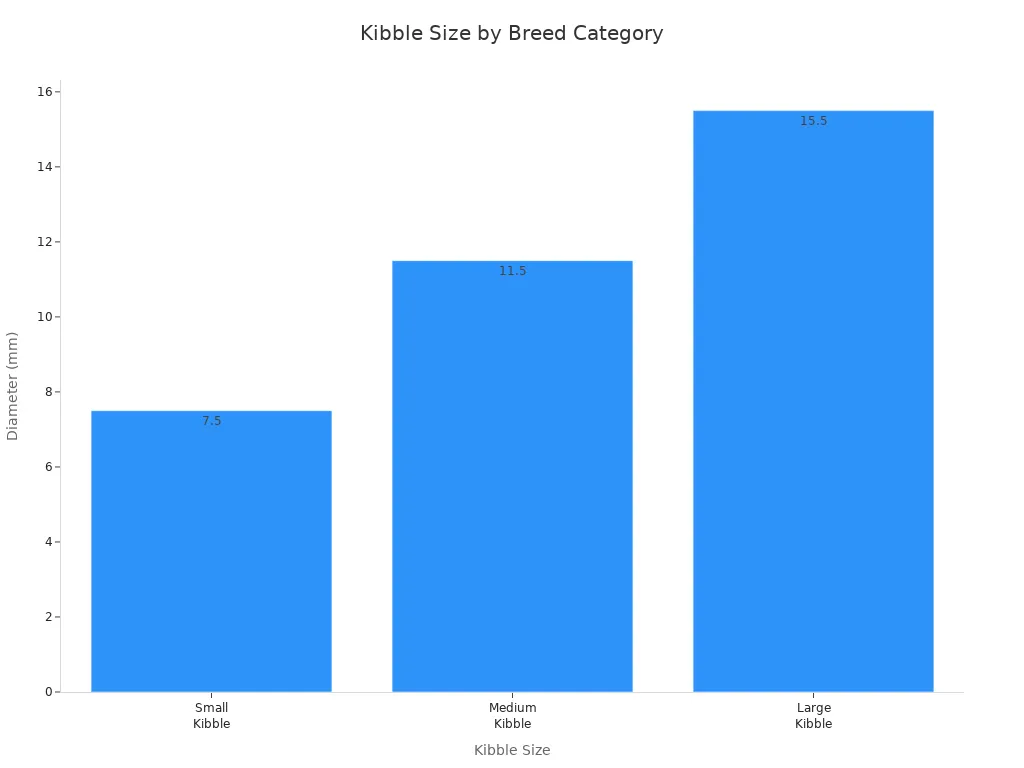
Proper kibble size helps your dog chew well and digest food better. Large kibble can also help reduce plaque and tartar, which supports dental health. If your dog has dental issues, you may need to pick a softer kibble.
Digestive Health: The right kibble size helps your dog digest food easily.
Dental Care: Larger kibble can clean teeth as your dog chews.
Appetite Satisfaction: Correct kibble size makes your dog feel full and happy.
Palatability for Best Food for Your Breed
You want your dog to love their food. Palatability means how much your dog enjoys the taste, smell, and texture of their meals. Dogs have different needs based on their breed and size. Large breeds may need food with joint-support nutrients. Small breeds often prefer smaller kibble that is easy to chew and swallow. Many small dogs like food that smells and tastes strong.
Your dog’s age can also affect what they like. Older dogs may not smell or taste as well as before. You may need to try different textures or flavors to find what your dog enjoys most. When you choose the best food for your breed, look for options that match your dog’s chewing style and taste preferences.
Tip: Watch how your dog eats. If they leave food behind or struggle to chew, try a different kibble size or texture.
Manufacturing and Quality by Nuzoko
Batch Size and Quality Control
You want your big dog to eat safe food every day. Nuzoko checks every step to make sure food is safe. When they get new ingredients, they look for freshness and safety. They test for germs and harmful things. During cooking, they watch the heat and water to keep food safe. Before packing, Nuzoko uses screens and metal detectors to find things that should not be in the food. The team checks for protein, vitamins, and other nutrients. This makes sure each batch is good for your dog. They also test for things like salmonella to keep your dog safe. After all these checks, Nuzoko uses special bags to keep food fresh and clean. Each bag has clear labels so you know what is inside.
Note: Quality checks make sure every batch of large breed dog food is safe and healthy before you buy it.
Specialized Equipment for Large Breed Dog Food
Large breed dogs need food that fits their big mouths. Nuzoko uses special machines to make big kibble that is easy to chew. These machines can change the size and shape for different breeds. The machines also help keep the food’s nutrients strong when cooking.
Nuzoko works around the world and has lots of experience. Here is how Nuzoko helps you:
Product planning uses new ideas and science to make the right food.
Recipe teams make special diets, like grain-free and senior food.
Packaging uses strong bags to keep food fresh and safe from air.
Shipping support helps send food safely to many places.
Staff who speak many languages help work with people everywhere.
You can trust Nuzoko to give your large dog good food. The team uses science, machines, and strong checks to make sure your pet gets the best.
Health and Life Stage in Dog Food
Puppy Growth Rate Management
You want your puppy to grow up strong and healthy. Large breed puppies grow slower than small breeds. Small breeds become adults faster. All puppies need more nutrients for their size when they are growing. The right food helps your puppy get what they need.
If a puppy eats too much energy, they can grow too fast. This can make them overweight and hurt their joints later. If the food does not have the right nutrients, bones can have problems. These problems include weak bones or not enough vitamin D. Always pick puppy food with the right amount of energy, calcium, phosphorus, and vitamin D.
Too much energy can make puppies overweight and shorten their lives.
High energy food can cause bone and joint problems.
Puppies need food with 350 to 400 kcal per 100 grams and not too much fat.
The calcium-to-phosphorus ratio must be safe for strong bones.
Source | Key Findings |
|---|---|
Purina Institute | Giving too much food makes bones grow too fast and adds weight, which is hard on young bones. |
Today’s Veterinary Nurse | Being overweight hurts bones and movement; feeding the right amount lowers bone disease risk. |
VCA Hospitals | Too much energy can make bones grow wrong and hurt joints. |
Weight and Joint Health for Adult Dogs
When your dog gets older, keeping a good weight helps their joints. Large breeds often have hip or elbow problems. Small breeds can have knee or elbow issues. Joint problems can make dogs hurt and move less.
Large breeds can get hip and elbow problems or torn ligaments.
Small breeds can have knee or elbow issues.
Joint problems can cause pain and sickness early.
You can help your dog by keeping their weight healthy. Studies show losing weight and exercise help with pain and movement. Being overweight can make swelling and joint problems worse.
Keep your dog at a good weight if they have joint issues.
Losing weight helps with pain and movement.
Being overweight makes swelling and joint problems worse.
Nutrients like glucosamine, chondroitin, and omega-3 fatty acids help joints and lower swelling. Food with the right calcium-to-phosphorus ratio helps stop joint problems. Always choose food that fits your dog’s age and health.
Tip: Take your dog to the vet and feed them the right food so they can stay active and feel good as they get older.
You now know that large and giant breed dogs need petfood with lower calories and special nutrients for joint health. Small breeds need more energy in their diet. Always pick food that matches your dog’s breed and life stage. Check labels for the right balance for large breeds. Ask experts or trusted brands like nuzoko for help. Quality ingredients and safe manufacturing keep your dog healthy.
FAQ
What happens if you feed large breed food to a small dog?
You may notice your small dog does not get enough energy. Large breed food has fewer calories. Your small dog could lose weight or feel tired. Always pick food made for your dog’s size.
Can puppies eat adult dog food?
No, puppies need more protein, fat, and minerals. Adult food does not support healthy growth. You should choose puppy food for the right nutrients.
How do you know if kibble size is right for your dog?
Watch your dog eat. If your dog chews easily and does not choke, the kibble size fits. Small dogs need small kibble. Large dogs need bigger pieces.
Why do large breeds need joint support in their food?
Large breeds put more stress on their joints. Ingredients like glucosamine and omega-3s help protect cartilage and reduce swelling. You help your dog stay active and comfortable.